Breakfast · Part 2 of 3: Instructions
Velvety Custard-Style Scrambled Eggs on Charred Brioche Step-by-step instructions
- Prep
- Cook
- Total
- Serves
- 1
Before you start
Before you begin cooking, ensure all your ingredients are measured and ready, as this process happens quite quickly once the heat is applied. Have your brioche pre-toasted and sitting on your serving plate so the eggs can be plated immediately upon completion.
Keep your silicone spatula clean and within reach, and have your chives snipped and ready to go. Because the cooking process relies on precise timing, having an organized workspace is essential for maintaining the focus required to cycle the pan effectively.
Ingredients at a glance (6)
- 3 cold pasture-raised eggs
- 25 grams cold unsalted butter, cubed
- 15 grams cold crème fraîche
- 3 grams freshly snipped chives
- flaky Maldon salt, to taste
- 1 slice charred brioche
Instructions
Phase 1: Cold Incorporation
- Initial SetupPlace the cold eggs and cubed unsalted butter directly into a cold, heavy-bottomed copper saucepan. Avoid pre-whisking the eggs, as the direct heat and agitation in the pan will incorporate them perfectly during the cooking process.Look for Ingredients are in the pan coldTip Using a copper pan provides excellent heat conductivity for delicate egg dishes.
The eggs and butter are combined in the pan while cold. The mixture should look like a simple, un-whisked combination of ingredients.
Ensure the pan is placed on a cold burner before starting the heat cycle to allow for a gradual temperature increase, which is crucial for the success of the velvety texture.
Phase 2: The Heat Cycle
- Cycling HeatTurn the heat to medium-high. Vigorously stir the mixture with a silicone spatula, cycling the pan on the heat for 30 seconds and then off the heat for 15 seconds. Repeat this process for approximately 3 minutes until the eggs form soft, velvety curds.Look for Eggs are beginning to thicken into soft curdsSafe temperature 160°F (71°C) internal temperature (egg dishes)Tip Constant agitation is vital for that signature custard texture.
The eggs are transforming into thick, custard-like curds. You should observe small, soft curds forming as you stir vigorously. The mixture should be glistening and smell rich and buttery. Ensure the cycle of 30 seconds on heat and 15 seconds off is maintained to keep the temperature steady and controlled.
Phase 3: The Final Fold
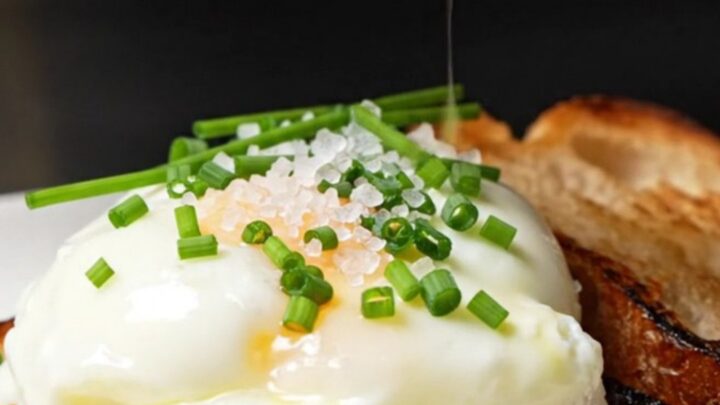
- Finishing and ServingOnce the eggs reach a custard-like consistency, remove the pan from the heat entirely. Gently fold in the cold crème fraîche to stop the cooking and add richness. Immediately spoon the eggs over the charred brioche and top with freshly snipped chives and flaky Maldon salt.Look for Eggs are glossy and softSafe temperature 160°F (71°C) internal temperature (egg dishes)Tip Serve immediately while warm for the best mouthfeel.
The eggs are removed from the heat and the crème fraîche is folded in. The mixture should be smooth, velvety, and hold a soft, custard-like structure. The chives and salt are added as a final touch. The eggs should look glossy, indicating they are perfectly cooked and ready to be served immediately.
Common mistakes
A common mistake is using too much heat, which causes the eggs to scramble too quickly and develop a rubbery or grainy texture. Another error is failing to stir constantly; the agitation is what creates the small, uniform curds.
Do not be tempted to add salt to the raw eggs before cooking, as this can break down the structure and affect the final texture. Finally, do not overcook the eggs; they will continue to firm up slightly after they are removed from the heat.
How to tell it’s done
The eggs are done when they appear glossy, soft, and have formed small, delicate curds that hold their shape on the spatula. They should resemble a loose custard or a thick, creamy sauce rather than a solid mass.
Using an instant-read thermometer, ensure the internal temperature has reached 160°F (71°C) to ensure they are safely cooked while maintaining that signature custard-like, velvety texture that defines this professional-style dish.
- Egg dishes: 160°F (71°C) in the thickest part
Up next · Part 3 of 3
2 variations · storage & make-ahead · 3 answers · printable card
Tips, FAQ & printable recipe (Part 3)← Back to the ingredients (Part 1)