Desserts · Part 2 of 3: Instructions
Ultra-Soft Zebra Marble Hazelnut Loaf Cake Step-by-step instructions
- Prep
- Cook
- Total
- Serves
- 10
Before you start
Preheat the oven to 340°F (170°C). Grease a 9x5-inch loaf pan with butter or nonstick spray, then line with parchment paper, leaving an overhang on two opposite sides for easy lifting. Measure all ingredients.
Bring eggs and milk to room temperature if time permits, as this helps the batter emulsify. Have the chopped hazelnuts ready to sprinkle on top. Whisk the flour and baking powder together in a small bowl to ensure even distribution.
Ingredients at a glance (9)
- 3 large eggs
- 1 cup granulated sugar
- 1/2 cup vegetable oil
- 1/2 cup whole milk
- 2 1/2 cups all-purpose flour
- 2 tsp baking powder
- 1 tsp vanilla extract
- 2 tbsp unsweetened cocoa powder
- 1/2 cup chopped roasted hazelnuts
Instructions
Mixing the Batter
- Mix the Wet IngredientsIn a large bowl, whisk the eggs and sugar together until pale and frothy, about 2 minutes. Add the oil, milk, and vanilla, and whisk until combined.Look for The mixture looks light and slightly thickened.Tip Use room-temperature eggs for a smoother batter.
- Add Dry IngredientsAdd the flour and baking powder to the wet mixture. Whisk until just combined and smooth, being careful not to overmix. The batter should be glossy and thick.Look for No streaks of flour remain, but the batter is not overworked.Tip Whisk the flour and baking powder together first for even distribution.
The wet mixture should be pale, frothy, and slightly thickened from whisking. After adding the dry ingredients, the batter is smooth and glossy, with no streaks of flour. The chocolate portion is dark and uniform. The texture should be thick but pourable, similar to a muffin batter. If it seems too stiff, add a tablespoon of milk, but the consistency is usually perfect as written.
Assembling the Loaf
- Create the Marble EffectPour half of the plain batter into a separate bowl. Whisk the cocoa powder into that portion until fully blended. Now you have one vanilla and one chocolate batter.Look for The chocolate batter is uniform and dark.Tip For a stronger chocolate flavor, use a rounded tablespoon of cocoa.
- Layer the BattersSpoon alternating dollops of vanilla and chocolate batter into the prepared loaf pan, creating a checkerboard pattern. Then swirl gently with a knife or skewer to form zebra stripes.Look for The top shows distinct light and dark swirls.Tip Don't over-swirl; a few strokes are enough for a marbled effect.
The pan is filled with alternating spoonfuls of vanilla and chocolate batter, creating a distinct checkerboard pattern. A few gentle swirls with a knife or skewer blend the edges while keeping the stripes visible.
The top is evenly covered with chopped hazelnuts, which will toast during baking. The batter should reach about three-quarters up the pan, leaving room for the cake to rise.
Baking and Finishing
- Top with HazelnutsSprinkle the chopped roasted hazelnuts evenly over the top of the batter, covering the surface completely.Look for The nuts form a single layer on top.Tip Press the nuts lightly so they adhere to the batter.
- Bake the LoafBake at 340°F (170°C) for 40 minutes, or until a toothpick inserted in the center comes out clean. The top should be golden brown and cracked down the middle.Look for The cake is tall, cracked, and golden.Safe temperature 160°F (71°C) internal temperature (egg dishes)Tip If the top browns too quickly, tent loosely with foil.
- Cool and SliceLet the cake cool in the pan for 10 minutes, then transfer to a wire rack to cool completely before slicing. For clean slices, use a serrated knife and a gentle sawing motion.Look for The loaf is firm and cool enough to handle.Tip Wrap leftovers in plastic to keep the cake moist.
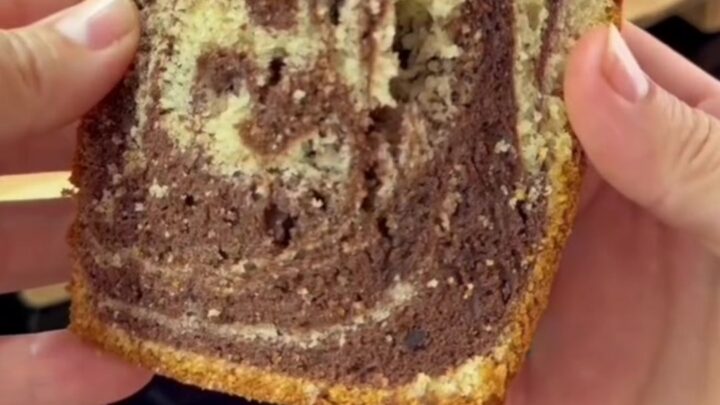
As the cake bakes, the kitchen fills with a warm hazelnut and chocolate aroma. The top turns golden brown and cracks down the center, a classic sign of a well-risen loaf. A toothpick inserted in the center comes out clean. After cooling, the loaf is tall, moist, and sliceable, revealing beautiful zebra swirls. The nuts are toasted and crunchy, adding a delightful texture.
Common mistakes
Overmixing the batter can make the cake tough and dense. Stop mixing as soon as the flour is incorporated. Over-swirling the batters can blur the zebra stripes; use just a few gentle strokes.
Opening the oven door during baking can cause the cake to sink; wait until the minimum baking time has passed. If the cake sticks to the pan, it may not have been greased well or cooled long enough; always line the pan with parchment for easy removal.
How to tell it’s done
The cake is done when the top is deep golden brown and cracked down the center, and a toothpick inserted into the thickest part comes out clean or with only a few moist crumbs.
The internal temperature should read at least 160°F (71°C) on an instant-read thermometer inserted into the center. If the top is browning too quickly, tent loosely with foil. Let the cake cool in the pan for 10 minutes, then transfer to a wire rack to cool completely before slicing.
- Egg dishes: 160°F (71°C) in the thickest part
Up next · Part 3 of 3
4 variations · storage & make-ahead · 5 answers · printable card
Tips, FAQ & printable recipe (Part 3)← Back to the ingredients (Part 1)