Appetizers · Part 2 of 3: Instructions
Ultra-Crispy 15-Layer Potato Pavé with Crème Fraîche Step-by-step instructions
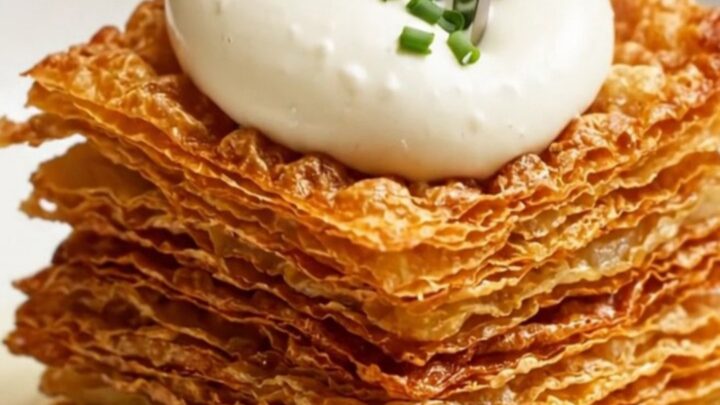
- Prep
- Cook
- Total
- Serves
- 8
Before you start
Before starting, make sure you have a Japanese mandoline, a 9x5-inch loaf pan, parchment paper, and a heavy weight such as a second loaf pan filled with cans. Peel the potatoes and keep them in a bowl of cold water to prevent browning.
Warm the duck fat just until liquid, and have the kosher salt and fresh thyme ready. The recipe requires at least 8 hours of chilling time, so plan to make the potato loaf a day ahead. For the final searing, have a heavy stainless steel skillet and a wire rack ready.
Ingredients at a glance (6)
- 800 g Agria potatoes (about 1 3/4 lb)
- 75 ml duck fat (about 1/3 cup)
- 2 tsp kosher salt
- 1 tbsp fresh thyme leaves
- 1/2 cup crème fraîche, for serving
- 2 tbsp fresh chives, snipped, for serving
Instructions
Building the Potato Loaf
- Slice and Layer the PotatoesPeel the potatoes and rinse them under cold water. Using a Japanese mandoline set to 1 mm, slice the potatoes into translucent rounds, working quickly and stacking them in a bowl of cold water to prevent browning. Pat the slices completely dry with a clean kitchen towel. Warm the duck fat until liquid but not hot. Line a 9x5-inch loaf pan with parchment paper, leaving overhang on two sides.Look for The slices are thin enough to see through and the layers are tightly packed.Tip Keep the slices submerged in water while slicing to prevent oxidation.
- Bake Under WeightHeat the oven to 350°F (175°C). Place the weighted loaf pan on a rimmed baking sheet and bake for 60 to 75 minutes, until the potatoes are completely tender when pierced with a skewer. The weight will compress the layers into a solid block. Remove the pan from the oven and let it cool to room temperature on a wire rack. Then transfer the entire loaf pan to the refrigerator and chill for at least 8 hours or overnight, still under the weight.Look for The potato block feels firm and holds together when pressed.Tip Chilling overnight makes the pavé much easier to slice into neat rectangles.
After baking, the potato loaf should be firm and cohesive, with the layers visibly compressed. The top should be lightly golden and the edges slightly caramelized from the duck fat. When you press the top, it should feel solid, not spongy. The aroma is buttery and herbal, with a rich, savory scent. Before moving on, make sure the loaf has cooled completely and chilled for at least 8 hours; otherwise, it will not slice cleanly.
Searing to Crisp Perfection
- Unmold and Slice into PortionsRemove the chilled potato loaf from the refrigerator. Unfold the parchment and lift the block out onto a cutting board. Using a sharp chef's knife, trim the edges to make a neat rectangle. Cut the block crosswise into 8 equal pieces, each about 1 1/2 inches wide. Pat each piece dry with paper towels to remove any surface moisture; this helps achieve maximum crispness during searing.Look for Each piece shows distinct, compressed layers.Tip If the slices stick to the knife, dip the blade in hot water and wipe dry.
- Sear All Sides in a Hot PanHeat a heavy stainless steel skillet over medium-high heat until a drop of water sizzles instantly. Add a thin layer of duck fat or oil to coat the bottom. Carefully place the potato pieces in the pan, leaving space between them. Sear for 2 to 3 minutes per side, turning with tongs, until every exposed edge is deeply browned and crackly. Work in batches if needed to avoid overcrowding. Transfer the seared pavé to a wire rack set over a baking sheet to keep warm while searing the remaining pieces.Look for The edges turn a deep mahogany and sound crisp when tapped.Tip Don't move the pieces too soon; let them develop a crust before turning.
During searing, the pavé pieces should develop a deep mahogany crust on every side, with a satisfying crackle when you tap them with tongs. The edges will look blistered and glossy from the duck fat. The interior should remain tender and moist, with distinct layers visible when you cut into a piece. The kitchen will smell richly of roasted potatoes and herbs. Before plating, ensure each piece is heated through and the crust is crisp.
Finishing and Serving
- Top and Serve ImmediatelyArrange the seared potato pavé on a serving platter. Place a small quenelle or dollop of crème fraîche on top of each piece. Sprinkle with snipped chives. Serve immediately while the crust is at its crispiest. The contrast between the crackly exterior and the tender, buttery interior is the highlight of this dish.Look for The crème fraîche softens slightly against the hot potato.Tip If making ahead, sear just before serving to preserve the crunch.
The finished pavé should be served immediately, with the crème fraîche still cool and the chives bright green. When you cut into a piece, the top layers should fracture with a loud crunch, revealing a creamy, steaming interior.
The contrast between the crispy exterior and the tender, buttery inside is the hallmark of a successful pavé. The crème fraîche should melt slightly against the hot potato, adding a tangy richness that balances the dish.
Common mistakes
One common mistake is slicing the potatoes too thick, which prevents them from fusing into a solid block and results in a crumbly pavé. Another is skipping the overnight chill; without it, the layers will separate when sliced.
Overcrowding the pan during searing lowers the temperature and steams the potatoes instead of crisping them, so work in batches. Also, don't skip patting the slices dry before searing—excess moisture creates steam and prevents browning. Finally, avoid moving the pieces too soon in the pan; let them develop a crust before turning.
How to tell it’s done
The potato pavé is done when it is deeply browned and crackly on all sides, and the interior is tender and fully cooked. To test for doneness, insert a thin skewer into the center of a piece; it should slide in with little resistance and come out hot.
The internal temperature of the potatoes should be at least 205°F (96°C) to ensure the starches are fully gelatinized. Since this recipe contains no raw proteins, no additional temperature check is needed, but the potatoes must be piping hot throughout before serving.
Up next · Part 3 of 3
4 variations · storage & make-ahead · 5 answers · printable card
Tips, FAQ & printable recipe (Part 3)← Back to the ingredients (Part 1)