Appetizers · Part 1 of 3: Ingredients
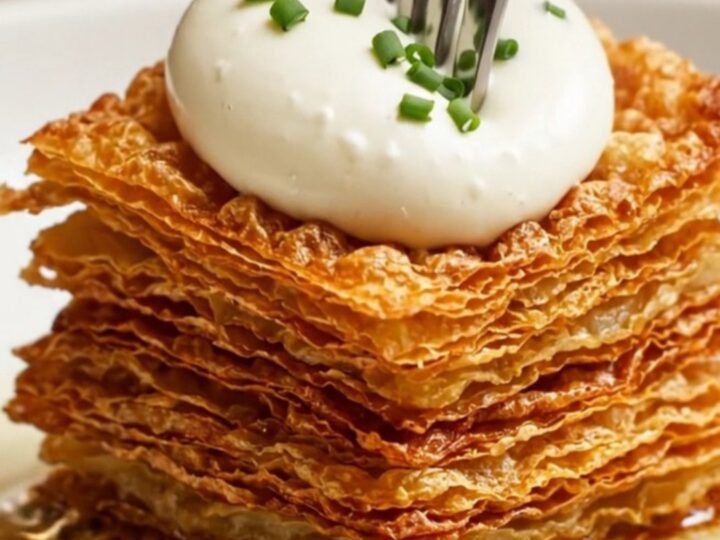
Ultra-Crispy 15-Layer Potato Pavé with Crème Fraîche
- Prep
- Cook
- Total
- Serves
- 8
This potato pavé takes the humble spud and turns it into a towering stack of fifteen impossibly thin, buttery layers, each one crisped to a shattering crunch on the outside while staying tender and moist within. The secret is a double cooking method: first, the potatoes are baked under a heavy weight until they fuse into a dense, sliceable block, then each portion is seared in a screaming-hot pan until every edge turns mahogany and crackly.
Potato pavé is the ultimate make-ahead showstopper: a loaf of paper-thin potato slices, layered with rich duck fat and herbs, baked under pressure, chilled until firm, then seared to order. The result is a study in texture—fifteen distinct layers that fracture with a satisfying crunch, revealing a creamy, almost confit-like interior.
This recipe walks through every step, from mandoline slicing to the final sear, so the pavé comes out perfectly crisp every time. It's an ideal make-ahead dish for holidays or dinner parties, because the hard work happens a day ahead, leaving only the final sear for serving.
Ingredients
- 800 g Agria potatoes (about 1 3/4 lb)
- 75 ml duck fat (about 1/3 cup)
- 2 tsp kosher salt
- 1 tbsp fresh thyme leaves
- 1/2 cup crème fraîche, for serving
- 2 tbsp fresh chives, snipped, for serving
Why this recipe works
The method behind this pavé is all about building structure and maximizing surface area. Slicing the potatoes to a uniform 1 mm thickness ensures they cook evenly and compress into a solid block when baked under a heavy weight.
The weight forces out excess moisture and fuses the layers together, so the chilled loaf can be sliced into neat rectangles without falling apart. Then, searing each piece in a hot pan creates a deeply caramelized crust on every exposed surface, while the interior stays tender and moist.
Duck fat is the secret to the pavé's extraordinary flavor and crispness. It has a high smoke point, which allows the potatoes to sear at a high temperature without burning, and its rich, savory notes complement the earthy potatoes and thyme.
Baking the potatoes in duck fat also helps them cook gently and evenly, resulting in a silky, almost buttery texture. If duck fat isn't available, butter or a neutral oil can work, but the flavor and crispness will be slightly different.
Notes and substitutions
Agria potatoes are ideal for this recipe because they are low in moisture and high in starch, which helps them hold their shape and absorb the duck fat beautifully. If you can't find Agria, Yukon Gold or Russet potatoes are excellent substitutes.
Avoid waxy varieties like red or new potatoes, as they contain too much water and won't compress as well. A Japanese mandoline is essential for achieving the thin, even slices; a sharp chef's knife can work, but it will be more time-consuming and less consistent.
The duck fat can be substituted with unsalted butter or a high-quality neutral oil, but note that butter has a lower smoke point, so watch the pan carefully during searing to prevent burning. For a lighter option, you can skip the crème fraîche and use a simple sprinkle of flaky salt and chives, but the tangy cream really balances the richness of the potatoes. If you don't have a heavy weight, use a second loaf pan filled with cans or a cast-iron skillet placed on top.
- Agria potatoes: Yukon Gold or Russet potatoes work well; avoid waxy varieties that won't compress as neatly.
- duck fat: Substitute unsalted butter or a neutral oil like canola; the flavor will be less rich but still crisp.
- crème fraîche: Use sour cream or Greek yogurt thinned with a little milk for a similar tangy topping.
- fresh thyme: Use 1 tsp dried thyme, or swap for rosemary or sage for a different herb note.
Equipment
- Japanese mandoline
- Loaf pan (9x5-inch)
- Parchment paper
- Heavy skillet or ovenproof pan
- Weights (2 kg or about 4 1/2 lb)
- Paper towels
- Chef's knife
- Wire rack
Up next · Part 2 of 3
5 steps · 1 h 15 min of cooking · what to look for at each stage
Step-by-step instructions (Part 2)