Dinner · Part 2 of 3: Instructions
Turkish Stuffed Grape Leaves with Garlic Yogurt Step-by-step instructions
- Prep
- Cook
- Total
- Serves
- 6
Before you start
Before starting, gather all ingredients and equipment. If using brined grape leaves, rinse them under cold water and pat dry. If using fresh leaves, blanch them in boiling water for 2 minutes, then drain.
Grate the onion and tomato and set aside. Have a large pot and a porcelain plate that fits inside it ready. The filling comes together quickly, so having everything prepped makes the rolling process smooth and enjoyable.
Ingredients at a glance (15)
- 30 fresh or brined grape leaves
- 300 g ground beef or lamb
- 1/2 cup Baldo rice
- 1 large grated onion
- 1 grated tomato
- 1 tbsp tomato paste
- 1 tbsp red pepper paste
- 2 tbsp olive oil
- 1 tsp dried mint
- 1 tsp black pepper
- 1 tsp salt
- 2 cups hot water
- 2 tbsp lemon juice
- 2 tbsp butter
- Garlic yogurt, for serving
Instructions
Filling and Rolling
- Prepare the fillingIn a large bowl, combine the ground beef, rice, grated onion, grated tomato, tomato paste, red pepper paste, olive oil, dried mint, black pepper, and salt. Knead the mixture with your hands for 2–3 minutes until everything is well blended and the mixture feels slightly sticky.Look for The filling should be uniform and hold together when pressed.Tip Grate the onion and tomato directly over the bowl to catch all the juices.
- Roll the grape leavesLay a grape leaf on a cutting board, vein-side up, with the stem end facing you. Trim any thick stems. Place a small cylinder of filling (about 1 tablespoon) across the base of the leaf. Fold the sides inward over the filling, then roll tightly away from you into a pencil-thin parcel. Repeat with the remaining leaves and filling.Look for Each roll should be snug but not too tight, so the rice has room to expand.Tip Keep the rolls small and uniform for even cooking.
At the end of this phase, you should have a bowl of well-blended filling and a tray of neat, pencil-thin rolls.
The filling should be aromatic with mint and spices, and the rolls should be tight enough to hold their shape but not so tight that they feel hard. If any leaves are torn, patch them with a smaller piece or use them to line the pot.
Simmering in Lemon Butter
- Pack the potArrange the rolled leaves in a heavy pot, placing them snugly in concentric circles. Tuck any smaller or torn leaves into the gaps. Pour the lemon juice and hot water over the rolls, then dot with the butter. Place a porcelain plate upside down on top of the rolls to weigh them down and keep them submerged.Look for The rolls should be packed tightly so they don't unravel during cooking.Tip The plate should fit just inside the pot and press evenly on the rolls.
- Simmer until tenderBring the pot to a gentle simmer over medium heat, then reduce the heat to low. Cover and cook for 45 minutes, or until the rice is tender and the leaves are soft. Check occasionally to ensure there is enough liquid; add a little hot water if needed.Look for The rolls should be glossy and the liquid mostly absorbed.Safe temperature 160°F (71°C) internal temperature (ground meat)Tip Do not stir the rolls while cooking; the plate keeps them in place.
After 45 minutes of gentle simmering, the pot will release a fragrant steam redolent of lemon, butter, and herbs. The rolls should be glossy and the liquid reduced to a light sauce. The grape leaves will have deepened in color and turned silky. Carefully lift the plate to check that the rolls are submerged and cooking evenly.
Resting and Serving
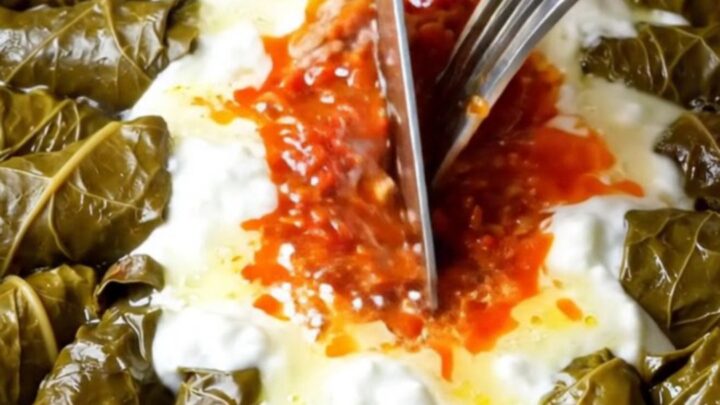
- Rest and serveRemove the pot from the heat and let the sarma rest for 5 minutes. Carefully remove the plate. Transfer the warm rolls to a serving platter, spoon thick garlic yogurt down the center, and drizzle with red pepper butter if desired. Serve warm.Look for The rolls should be tender and hold their shape when lifted.Tip Let the sarma rest briefly so the flavors meld and the rolls set.
Once rested, the rolls should be firm enough to lift without breaking, yet tender enough to yield to a fork. The garlic yogurt should be thick and cold, contrasting with the warm rolls. The red pepper butter, if used, should sizzle when drizzled. The finished dish looks elegant, with glossy rolls nestled in a creamy white sauce.
Common mistakes
A common mistake is rolling the leaves too tightly, which leaves no room for the rice to expand and can cause the rolls to burst. Conversely, rolling too loosely lets the filling fall out.
Another pitfall is not packing the pot tightly enough; loose rolls can unravel during cooking. Use a plate to weigh them down and keep them submerged. Finally, avoid boiling the rolls; a gentle simmer is key to tender, intact sarma.
How to tell it’s done
The sarma are done when the grape leaves are tender and the filling is cooked through. To check, carefully lift one roll with a fork and cut into it; the rice should be fully tender and the meat should be no longer pink, with an internal temperature of 160°F (71°C) for ground meat.
The rolls should hold their shape and feel soft but not mushy. The cooking liquid should be mostly absorbed, leaving a glossy, buttery glaze.
- Ground meat: 160°F (71°C) in the thickest part
- Steaks, chops and roasts: 145°F (63°C) in the thickest part, then a 3-minute rest
Up next · Part 3 of 3
4 variations · storage & make-ahead · 5 answers · printable card
Tips, FAQ & printable recipe (Part 3)← Back to the ingredients (Part 1)