Dinner · Part 1 of 3: Ingredients
Turkish Stuffed Grape Leaves with Garlic Yogurt
- Prep
- Cook
- Total
- Serves
- 6
Etli yaprak sarma is a cornerstone of Turkish home cooking: tender grape leaves wrapped around a savory filling of ground beef, rice, and aromatic spices, then simmered in lemon butter until meltingly soft.
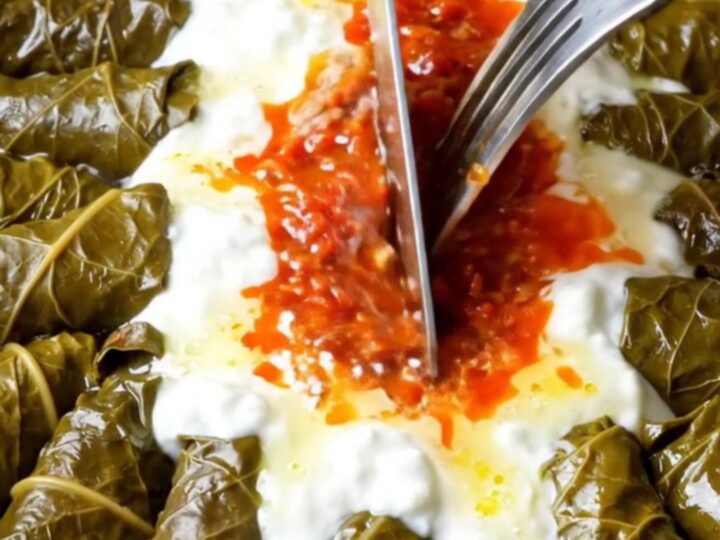
Served with cool, tangy garlic yogurt and a drizzle of sizzling red pepper butter, each bite balances rich, bright, and creamy flavors. This recipe walks through every step, from preparing the filling to rolling the leaves and cooking them to perfection.
These stuffed grape leaves, known as etli yaprak sarma, are a beloved Turkish dish that turns simple ingredients into something extraordinary. The filling combines ground beef, rice, grated onion and tomato, and a touch of pepper paste and mint, all wrapped in tender grape leaves.
Simmered gently in a lemony butter broth, the rolls become silky and infused with flavor. Served with garlic yogurt and red pepper butter, they make a satisfying main course or a show-stopping appetizer.
Ingredients
- 30 fresh or brined grape leaves
Filling
- 300 g ground beef or lamb
- 1/2 cup Baldo rice
- 1 large grated onion
- 1 grated tomato
- 1 tbsp tomato paste
- 1 tbsp red pepper paste
- 2 tbsp olive oil
- 1 tsp dried mint
- 1 tsp black pepper
- 1 tsp salt
Cooking
- 2 cups hot water
- 2 tbsp lemon juice
- 2 tbsp butter
For serving
- Garlic yogurt, for serving
Why this recipe works
The method here is all about building layers of flavor and texture. Kneading the filling ensures the seasonings are evenly distributed, while the grated onion and tomato release their juices directly into the meat, keeping the filling moist and aromatic. The rice absorbs the cooking liquid as it simmers, plumping up and binding the filling together, so each roll is tender and cohesive.
Packing the rolls tightly in a single layer and weighing them down with a plate guarantees they cook evenly and stay intact. The lemon juice in the cooking liquid brightens the rich meat and adds a gentle tang that balances the earthy grape leaves.
Simmering low and slow lets the leaves soften to a silky texture while the filling cooks through completely, resulting in rolls that are both delicate and satisfying.
Notes and substitutions
For the grape leaves, both fresh and brined work well. If using brined leaves, rinse them thoroughly to remove excess salt. Fresh leaves may need a quick blanch in boiling water to soften them. Baldo rice is the traditional choice, but any short-grain rice, such as arborio, will give a creamy texture. Ground beef or lamb both work; lamb adds a richer, more traditional flavor.
The garlic yogurt is essential for serving; it provides a cool, creamy contrast to the warm, tangy rolls. If you prefer a lighter sauce, you can use plain yogurt mixed with a little minced garlic and salt.
The red pepper butter is optional but highly recommended—it adds a subtle heat and a beautiful color. For a non-dairy version, use olive oil instead of butter and serve with a dairy-free yogurt alternative.
- ground beef: ground lamb for a richer, more traditional flavor
- Baldo rice: short-grain rice like arborio or sushi rice
- fresh grape leaves: brined grape leaves (rinse well before using)
- red pepper paste: 1 tbsp tomato paste mixed with 1/2 tsp red pepper flakes
Equipment
- large pot
- porcelain plate
- mixing bowl
- cutting board
- knife
- measuring cups and spoons
- serving platter
Up next · Part 2 of 3
5 steps · 45 min of cooking · what to look for at each stage
Step-by-step instructions (Part 2)