Breakfast · Part 2 of 3: Instructions
Turkish Black Sea Mıhlama: One-Pan Melting Cheese Fondue Step-by-step instructions
- Prep
- Cook
- Total
- Serves
- 4
Before you start
Before you begin, bring 1 cup of water to a boil in a kettle or small pot. Shred the cheese if you have not already; you want it ready to pile on quickly. Have your serving bread sliced and on the table.
Set a heavy-bottomed skillet or sahan over medium heat and gather your wooden spoon and measuring spoons. Because the cooking moves fast once the water goes in, having everything within reach ensures a smooth, stress-free process.
Ingredients at a glance (5)
- 3 tbsp Turkish village butter (tereyağı) or unsalted butter
- 3 tbsp yellow cornmeal (mısır unu)
- 1 cup boiling water
- 200 g (7 oz) Turkish Kolot or Trabzon cheese (or aged kashar/provolone), shredded
- crusty village bread, for serving
Instructions
Toast the Cornmeal
- Toast the Cornmeal in ButterMelt the butter in a heavy copper sahan or a small skillet over medium heat. Add the cornmeal and stir constantly with a wooden spoon. Toast for 3 minutes, until the cornmeal turns fragrant and golden and the butter smells nutty.Look for The cornmeal sizzles gently and turns a pale toasty gold, releasing a nutty aroma.Tip Keep the heat moderate so the cornmeal toasts without burning; constant stirring is essential.
- Add Boiling WaterSlowly pour in the boiling water while stirring continuously. The mixture will bubble and thicken quickly. Keep stirring until the cornmeal absorbs the water and becomes a smooth, thick porridge that pulls away from the sides of the pan.Look for The mixture transforms from loose and watery to a glossy, thickened porridge in about 2 minutes.Tip Pour the water in a steady stream to avoid lumps; stir in one direction for a smooth texture.
The butter is melted and foaming, and the cornmeal has turned a few shades darker, releasing a nutty, toasty aroma. The mixture looks dry and sandy, with every grain coated in butter. It should not be browning or smoking. If it smells burnt, lower the heat and move quickly to the next step.
Add Water and Cheese
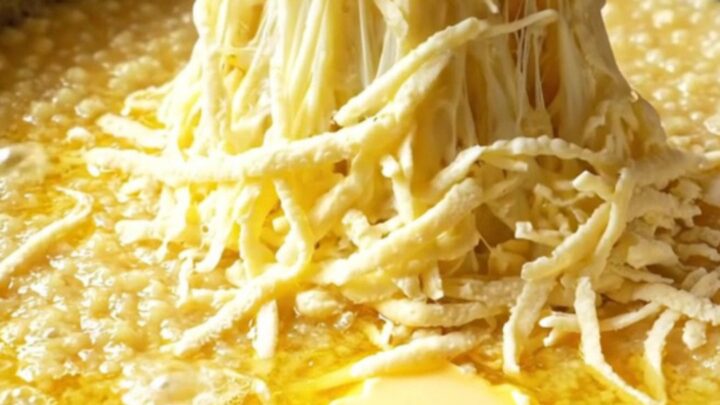
- Pile the Shredded Cheese on TopScatter the shredded cheese evenly over the hot cornmeal porridge. Do not stir. Let the cheese melt into the cornmeal as the butter rises and pools across the surface. This takes about 3 to 4 minutes; the cheese should be fully melted and creamy when gently folded in.Look for The cheese softens and sinks into the cornmeal while golden butter glistens on top.Tip Resist the urge to stir immediately; letting the cheese melt undisturbed creates the signature layered texture.
The water has transformed the cornmeal into a thick, bubbling porridge that pulls away from the pan. The shredded cheese sits in a mound on top, slowly melting and sinking into the hot base.
Golden butter is beginning to pool at the edges, and the aroma is rich and savory with a hint of toasted corn.
Fold and Serve
- Fold and StretchOnce the cheese has melted, use a wooden spoon to gently fold the mixture from the edges toward the center. Stir just enough to combine the cheese into the cornmeal, creating a stretchy, glossy mass. The mixture should be thick but fluid enough to pull into long strands.Look for The mixture becomes cohesive and elastic, with cheese strands stretching as you lift the spoon.Tip Fold rather than stir vigorously to keep the texture silky and avoid breaking the cheese strands.
- Serve Immediately from the PanBring the sahan to the table while the mıhlama is still bubbling and the butter is molten. Serve with chunks of crusty village bread for scooping. Pull the bread through the cheese to capture long, glossy strands.Look for The surface shimmers with butter and the cheese pulls into long, unbroken strands.Tip Mıhlama sets as it cools, so serve right away while it is at its most stretchy and luxurious.
The cheese has melted into the cornmeal, creating a glossy, cohesive mass that stretches when you lift the spoon. The surface shimmers with butter, and the mixture is thick but still fluid enough to pool slightly when you tilt the pan. It is ready to be scooped up with bread.
Common mistakes
The most common mistake is stirring the cheese in too early. If you stir while the cheese is still solid, it can clump and become rubbery, and the butter won't pool on top. Another pitfall is using too high heat, which can scorch the cornmeal or cause the cheese to seize.
Keep the heat at medium and be patient. Also, do not skip toasting the cornmeal—this step is essential for flavor and texture. Finally, avoid using pre-shredded cheese, which often contains anti-caking agents that prevent smooth melting.
How to tell it’s done
The mıhlama is done when the cheese is fully melted and the mixture is thick, glossy, and pulls away from the sides of the pan. When you lift a spoonful, it should stretch into long, unbroken strands. The texture should be creamy and slightly fluid, not stiff or dry.
If it seems too thick, you can add a splash of hot water, but the traditional consistency is a soft, spoonable porridge that still holds its shape. There is no protein to check for temperature, so rely on visual and textural cues.
Up next · Part 3 of 3
4 variations · storage & make-ahead · 5 answers · printable card
Tips, FAQ & printable recipe (Part 3)← Back to the ingredients (Part 1)