Dinner · Part 2 of 3: Instructions
Truffle Soy Dashi Glass Noodles in One Pan Step-by-step instructions
- Prep
- Cook
- Total
- Serves
- 4
Before you start
Before the pan goes on the heat, get every component staged, because this recipe moves quickly once the butter foams. Wipe and slice the mushrooms, keeping the king trumpet rounds and shiitake halves separate so the trumpets, which take slightly longer, can start first if needed. Mince the garlic, slice the scallions, and park each in its own pile.
Measure the dark soy, mirin and dashi into small cups, and unwrap the glass noodles, snipping the bundle in half with kitchen shears if the strands are long. Set out the serving bowls too; the dish should go from pan to table within a minute of being finished, while the noodles are at their bounciest. If the dashi is homemade and chilled, warm it briefly so the pan does not lose heat when it is poured.
Ingredients at a glance (9)
- 10 oz shiitake and king trumpet mushrooms, sliced
- 3 tbsp black truffle butter
- 4 cloves garlic, minced
- 3 tbsp dark soy sauce
- 2 tbsp mirin
- 10 oz sweet-potato glass noodles
- 1 2/3 cups shiitake dashi broth (made ahead or store-bought)
- 3 scallions, thinly sliced, for serving
- Shaved black truffle, optional, for serving
Instructions
Stage the ingredients
- Slice the mushroomsWipe the shiitake and king trumpet mushrooms with a damp paper towel and trim any tough stem ends. Slice everything about 1/4 inch thick so the pieces sear quickly and stay meaty. King trumpets cut into plump rounds, shiitakes into caps or halves, so every bite has contrast.Look for Even, uniform slices that look dry on the surface, never wet or slimy.Tip Skip rinsing; mushrooms drink up water and will steam instead of sear.
- Prep the aromaticsMince the garlic cloves finely so they melt into the butter without burning, and slice the scallions on a steep angle, separating the pale and green parts. Keep them in separate little piles near the stove, since the garlic goes in mid-cook and the greens only appear at the very end.Look for Garlic minced to rice-sized bits, scallion slices feathery and even.Tip Crush the garlic with the flat of the knife first; the oils release faster.
- Measure the sauce and brothMeasure the dark soy sauce, mirin and shiitake dashi broth and set them within arm's reach. This dish moves fast once the butter is hot, and the noodles go straight into the simmering broth, so everything needs to be ready to pour. Snap the noodle bundle in half if it will not fit the pan.Look for Broth measured, sauce bottles lined up, noodles unwrapped and standing by.Tip Room-temperature broth reaches a simmer faster and keeps the pan temperature steady.
By the end of the first phase, the counter should look like a broadcast kitchen: even mushroom slices, minced garlic and sliced scallions in separate piles, measured soy, mirin and dashi, and a halved noodle bundle standing by. Nothing needs cooking yet, and that is the point. Check that the skillet is at least 12 inches wide and dry, and that every ingredient sits within arm's reach of the burner. If the dashi is cold, warm it briefly now. The dish will move fast in the next two phases, and this staging is what keeps the garlic from burning while the soy is being measured.
Sear and glaze the mushrooms
- Sear the mushrooms in truffle butterSet a large deep skillet over medium-high heat and add the black truffle butter. Once it foams and smells nutty, add the sliced mushrooms in a fairly even layer. Sear undisturbed for a minute, then toss and keep sautéing until the edges brown and the mushrooms shrink and glisten.Look for Deep golden edges, a meaty sizzle, and a buttery truffle aroma filling the kitchen.Tip Crowding the pan steams the mushrooms; work in two batches if the skillet looks full.
- Add the garlicStir the minced garlic into the mushrooms and cook for about 30 seconds, tossing constantly so the tiny bits toast evenly in the butter. The pan should smell intensely savory at this point, truffle and garlic layered over roasted mushroom, with no hint of raw sharpness left in the air.Look for Fragrant, pale gold garlic with no dark specks forming on the pan bottom.Tip If the garlic colors fast, slide the pan off the heat for a few seconds.
- Glaze with soy and mirinPour in the dark soy sauce and mirin, scraping the pan bottom to lift every browned bit. Let the sauce bubble and reduce for a minute or two until it coats the mushrooms in a glossy dark glaze. Turn the heat to low to hold the mushrooms while the noodles cook.Look for A syrupy glaze that clings to each mushroom and leaves slow, thick bubbles.Tip Dark soy is salty on its own; taste before adding any extra salt.
The mushrooms should now be deeply browned at the edges, shrunken and glistening, and coated in a dark syrupy glaze that clings rather than runs. The kitchen should smell of toasted truffle butter, roasted mushroom, and sweet soy, with no raw garlic sharpness left. Drag a spoon through the pan: the glaze should leave a slow, thick trail and pool briefly before closing.
If the liquid is still watery, raise the heat for another minute of reduction. Turn the burner to low to hold everything while the noodles cook, and taste a mushroom; it should be intensely savory and only pleasantly salty, since the broth will concentrate further.
Simmer, glaze and serve
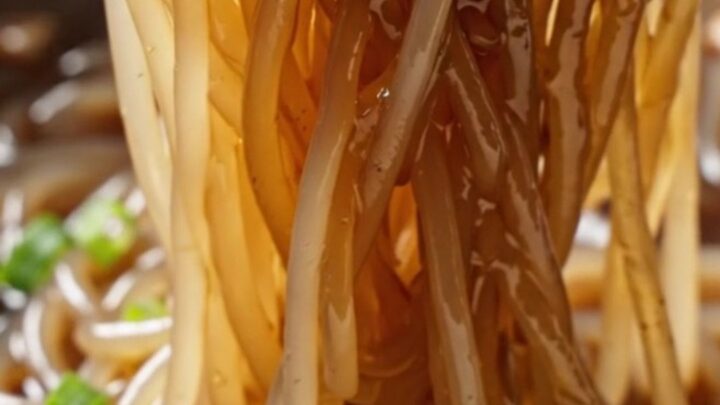
- Simmer the noodles in dashiPour the shiitake dashi broth into the pan around the mushrooms and bring it to a lively 203°F (95°C) simmer. Add the glass noodles directly to the broth and cook for about 5 minutes, stirring so they do not stick, until fully translucent, chewy, and drinking up the dark broth.Look for Noodles turn crystal clear and springy, and the broth reduces to a shallow glaze.Tip Pull them when they bend without a white core; carryover heat keeps softening them.
- Toss, plate and finishToss the translucent noodles through the glazed mushrooms until every strand shines, adding a spoonful of broth if the pan looks dry. Lift the noodle tangle into warm bowls, crown with the pale scallion slices and shaved black truffle, scatter the green tops over, and serve immediately while bouncy and steaming.Look for Glossy strands that clump and lift as one, with the glaze pooling slightly at the bowl's edge.Tip Twirl the noodles into a nest with tongs for that dramatic lifted-serve look.
The finished dish should fill the pan with glistening, crystal-clear noodle tangles woven through lacquered mushrooms, the liquid reduced to a shine rather than a pool. Lift a strand: it should stretch slightly, look translucent from center to edge, and spring back when bitten. The aroma is layered, truffle and butter over roasted shiitake and sweet soy. Check the texture before plating, because the noodles firm as they cool and absorb the last of the glaze. Serve within a minute, crowned with scallion greens and truffle shavings, into warm bowls, while everything is steaming and at its bounciest.
Common mistakes
The most common error is rinsing or soaking the mushrooms, which makes them release water and steam instead of searing; wipe them with a damp towel only. The second is crowding the pan, which drops the temperature and turns the sear into a braise; use two batches if needed. Overcooking the noodles is easy to do because they keep softening in the hot broth, so pull them while a faint firmness remains at the center.
Burning the garlic is the classic mid-recipe failure; it goes in after the mushrooms are browned, not before, and cooks for only half a minute. Finally, adding extra salt before tasting is a trap: dark soy and dashi are both salty, and reducing the liquid concentrates that salt further. Season at the end, if at all.
How to tell it’s done
The dish is done when three things line up. First, the noodles: fully translucent from edge to center, with no chalky white core, and springy when bitten, bouncing back rather than dissolving. Second, the sauce: the liquid in the pan should have reduced to a glossy glaze that clings to the noodles and mushrooms and leaves a slow trail when a spoon is dragged through, not a watery pool.
Third, the mushrooms: deeply browned at the edges and lacquered dark by the soy reduction. There is no protein in this recipe, so no internal temperature check is needed; the simmer itself, at roughly 203°F (95°C), fully cooks the noodles. Taste one strand straight from the pan: it should be chewy, savory, and seasoned all the way through.
Up next · Part 3 of 3
4 variations · storage & make-ahead · 5 answers · printable card
Tips, FAQ & printable recipe (Part 3)← Back to the ingredients (Part 1)