Breakfast · Part 2 of 3: Instructions
Tropical Mango Passion Fruit Danish with Flaky Puff Pastry Step-by-step instructions
- Prep
- Cook
- Total
- Serves
- 6
Before you start
Set the oven to 400°F (200°C) and place a rack in the center. Line the baking tray with parchment so the pastries release cleanly. Chill the cream cheese for about 15 minutes so it grates into clean shavings. Beat the egg in a small bowl until smooth for the wash. Toast the coconut flakes in a dry skillet over medium heat until light golden, then move them to a plate to cool. Have the cutting board, long knife, box grater, pastry brush and spoon within reach, so the work moves smoothly from the mango to the tray without pauses.
Ingredients at a glance (6)
- 1 sheet pre-baked puff pastry, store-bought or made ahead, cut into 6 rectangles
- 4 oz cream cheese, firm and chilled
- 1 ripe mango, peeled and sliced into fan-cut segments
- 2 passion fruits, halved, seeds and pulp scooped out
- 1 large egg, beaten, for egg wash
- 2 tbsp unsweetened coconut flakes, toasted
Instructions
Fruit and filling ready
- Prepare the mango and passion fruitSlice the mango into thin fan-cut segments with a long chef's knife on a cutting board. Halve the passion fruits and scoop the seeds and pulp into a small bowl, keeping the pulp close at hand.Look for Mango slices are thin, even and fan out cleanly from the stone.Tip Cut the mango while it is cold so the thin slices hold their shape.
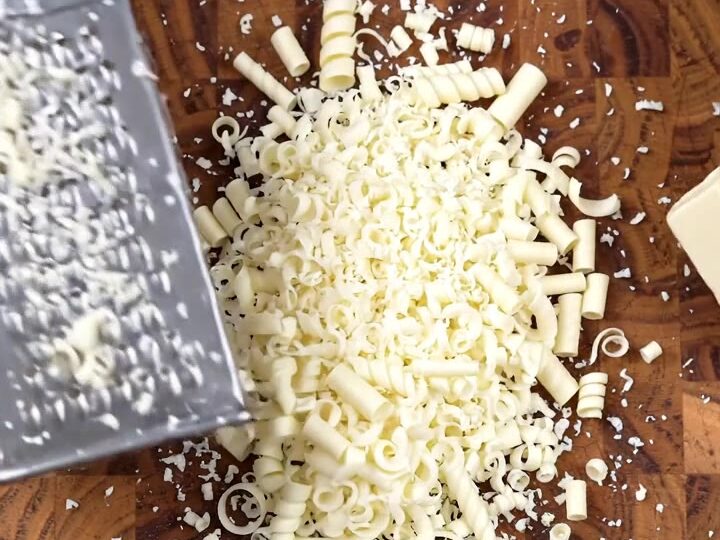
- Cut the pastry and grate the cream cheeseCut the pre-baked puff pastry into six golden rectangles. Grate the chilled block of cream cheese over the box grater so fine shavings fall onto the board.Look for Cream cheese falls as fine, pale shavings with no large lumps.Tip Chill the cream cheese for 15 minutes so it grates into clean shavings.
At the end of phase one, the mango is cut into thin, even fan segments and the passion fruit pulp sits in its bowl with the seeds. The cream cheese has been grated over the board into fine, pale shavings with no large lumps. The pastry rectangles are cut and set aside on the board.
Check that the shavings are light and fluffy rather than packed, and that the mango slices are thin enough to bend slightly without tearing. If the cream cheese softens too quickly while you work, return it to the refrigerator for a few minutes before spreading it across the pastry.
Pastries assembled and brushed
- Spread the filling and arrange the pastriesSpread the grated cream cheese in a thin, even layer across each pastry rectangle. Arrange the pastries in neat rows on the parchment-lined baking tray, leaving space between them.Look for The filling covers each rectangle in an even, thin layer.Tip Keep the layer thin so the pastry stays crisp and flaky.
- Brush the edges with egg washBrush the beaten egg over the edges of each pastry rectangle. Arrange the thin mango slices in overlapping rows over the filling.Look for The edges look glossy and evenly coated.Tip Keep the egg wash off the cut edges so the layers rise freely.
- Top with passion fruit and coconutSpoon the passion fruit pulp and seeds over the mango so each piece looks glossy and jewel-toned. Bake the danishes until the pastry is golden and puffed, then sprinkle toasted coconut flakes over each one.Look for The pastry turns deep golden and the passion fruit looks shiny.Safe temperature 160°F (71°C) internal temperature (egg dishes)Tip Toast the coconut separately so it browns evenly before sprinkling.
At the end of phase two, each pastry rectangle carries a thin, even layer of grated cream cheese and the rows of mango overlap neatly across the filling. The egg wash coats the edges with a glossy shine, and the passion fruit pulp and seeds cover the mango in a jewel-toned layer.
Before the tray goes into the oven, check that the pastries sit with clear space between them, that no egg wash has dripped over the cut edges, and that the coconut is ready to sprinkle. Bake until the pastry is deep golden and puffed, which will take about 10 minutes.
Baked, cooled and served
- Cool and serve the danishesLet the danishes cool on the tray for a few minutes so the cream filling sets. Lift each pastry with a spatula and serve while the edges are still crisp and the coconut is fragrant.Look for The cream filling looks set and the pastry feels crisp at the edges.Tip Serve within a few hours for the crispest pastry.
At the end of phase three, the danishes are golden and crisp at the edges, the cream filling has firmed and looks set, and the coconut flakes smell toasty and sweet on top. Lift each pastry gently with a spatula to check that the base is dry and flaky underneath. Leave them to cool on the tray for a few minutes so the filling holds its shape. Serve when the edges still crackle and the passion fruit glistens, because the pastry loses its crispness as it sits.
Common mistakes
The most common problem is a soggy base caused by too much cream cheese or by fruit juice soaking into the pastry. Keep the cream cheese layer thin and grate it rather than spreading it soft. Blot the mango slices lightly with a paper towel before arranging them, and spoon the passion fruit pulp over the fruit instead of pooling it on the pastry.
Another mistake is brushing egg wash onto the cut edges, which can seal the layers and stop them rising. Brush only the outer border. Finally, do not crowd the tray: the pastries need air around them to puff and brown evenly, so leave clear space between each rectangle.
How to tell it’s done
The danishes are done when the pastry is deep golden all over, puffed at the edges and crisp when tapped gently. The cream filling should look set and matte, not shiny or sunken, and the coconut should be lightly browned.
Because the filling contains eggs in the egg wash and cream cheese, the pastry needs to reach 160°F (71°C) in the center of the cream layer to cook the eggs fully. A quick check with an instant-read thermometer inserted through the side confirms this. Once the filling reads 160°F (71°C) and the pastry is golden, the danish is ready to cool and serve.
- Egg dishes: 160°F (71°C) in the thickest part
Up next · Part 3 of 3
2 variations · storage & make-ahead · 5 answers · printable card
Tips, FAQ & printable recipe (Part 3)← Back to the ingredients (Part 1)