Dinner · Part 2 of 3: Instructions
Torta Ahogada: Guadalajara’s Drowned Pork Sandwich Step-by-step instructions
- Prep
- Cook
- Total
- Serves
- 1
Before you start
Get everything in place before the comal gets hot, because the final assembly moves fast. Measure the refried beans and warm them gently so they spread easily. Have the carnitas crisped and ready at room temperature for no more than 30 minutes before it goes into the sandwich.
Set out the dried chiles and cover them with hot water first, since they need about fifteen minutes to soften while the tomatoes roast. Put the oregano and garlic next to the blender, and have a medium saucepan ready on a back burner.
Ingredients at a glance (8)
- 1 birote roll (crusty bolillo), split open
- 1/3 cup warm refried beans
- 6 oz crispy pork carnitas, slow-cooked, store-bought or made ahead
- 4 Roma tomatoes, roasted
- 6 dried chile de árbol peppers, soaked
- 2 garlic cloves, roasted
- 1/2 tsp dried oregano
- Lime-pickled red onions, store-bought or made ahead, for serving
Instructions
Build the torta
- Split and hollow the rollSlice the birote roll in half lengthwise with a serrated knife, leaving a hinge so it opens like a book. Pull out a little of the soft interior from each half to make room for the filling, keeping the crust intact all the way around. That shallow well is what keeps the sandwich from bursting open once the sauce arrives.Look for The crust stays whole, with a shallow, even well carved into each half.Tip Use a light sawing motion and let the knife do the work so the crust never tears.
- Spread beans and pack carnitasSpread the warm refried beans in a thin, even layer over both cut sides of the roll. Pack the crispy carnitas onto the bottom half in a compact layer, close the sandwich gently, and press once. The beans act as a moisture barrier, so take the extra seconds to cover every bit of cut bread.Look for No cut bread shows through the bean layer, and the carnitas sit packed and even.Tip Warm the beans first; cold beans tear the crumb and chill the pork.
At the end of this phase the sandwich is assembled but not yet cooked. The cut surfaces are fully covered with a thin, even layer of warm refried beans, no bare bread showing, and the carnitas sit in a compact layer that does not spill over the sides. The roll closes gently under light pressure and holds its shape when lifted. Check that the hinge is intact, since a torn-through roll cannot be toasted and drowned cleanly later.
Roast, blend, and toast
- Roast the tomatoes and garlicSet a dry comal or cast-iron skillet over medium heat. Lay the Roma tomatoes on the hot surface and turn them often until the skins blister and blacken in spots, about 8 minutes. Add the unpeeled garlic cloves for the last 3 minutes so they soften and pick up dark char without burning through.Look for The tomato skins are blistered and black in patches, and the cloves feel soft when squeezed.Tip Char, do not burn: burnt tomato skin turns the sauce bitter and dull.
- Soak the chile de árbolsWhile the tomatoes roast, put the dried chile de árbol peppers in a small bowl and cover them with very hot tap water. Let them soak for about 15 minutes, until they bend easily and feel supple. Pull off the stems and shake out most of the seeds, which carry much of the harshest heat.Look for The chiles are pliable and leathery, no longer brittle at the fold.Tip Leave a few seeds in if a fiercer sauce is the goal; they are the hottest part.
- Blend the sauce smoothPeel the garlic cloves. Combine the roasted tomatoes, soaked chiles, garlic, and oregano in a blender and blend on high for a full minute, until the sauce is completely smooth with no visible specks of skin. It should pour like thin tomato sauce; blend longer rather than adding water to thin it.Look for The sauce is a vivid red-orange, silky, with no flecks of chile skin left.Tip Strain it if the skin bothers anyone; the flavor survives the sieve just fine.
- Simmer the saucePour the blended sauce into a medium saucepan and set it over medium heat. Bring it to a gentle bubble, then lower the heat and let it simmer for about 10 minutes, stirring now and then. The raw tomato edge mellows, the color deepens, and the sauce thickens just enough to cling to a spoon.Look for The sauce darkens a shade and leaves a coated trail when the spoon crosses the pan.Tip Taste after simmering and adjust the seasoning in small pinches; heat sharpens as it reduces.
- Toast the sandwich on the comalHeat the comal to 375°F (190°C). Set the filled sandwich on the dry surface and toast for 2 minutes, pressing gently with a spatula, then flip and toast the other side the same way. The crust should crackle and firm up while the beans warm through and the carnitas heat through to at least 145°F (63°C); let the pork rest at least 3 minutes before drowning the torta.Look for The crust sounds crisp when tapped and the bottom shows deep golden toasting.Safe temperature 145°F (63°C) internal temperature (steaks, chops and roasts)Tip No oil needed; the dry comal is what gives the crust its staying power in the sauce.
The sauce should now be a vivid red-orange, completely smooth, and just thick enough to leave a coated trail when a spoon crosses the pan; it smells roasted and fruity with a sharp, clean chile edge. The sandwich comes off the comal with a crackling crust, deep golden toasting on the bottom, and warm beans and carnitas inside, the pork having reached at least 145°F (63°C) with a short rest.
Drown and serve
- Drown the torta hotPlace the toasted torta in a shallow bowl. Ladle about 1 1/2 cups of the hot chile de árbol tomato sauce directly over the sandwich, letting it soak into the crust and pool around the base. Work quickly while everything is steaming; the contrast of crackly crust and soaked-through bottom is the whole point.Look for The sauce steams on contact and the bread darkens as it drinks it in.Tip Hold back a little sauce at first; the bread keeps absorbing as it sits.
- Crown and serve immediatelyScatter the lime-pickled red onions over the sauced torta and bring it to the table right away, with a fork and plenty of napkins. Eat it while the crust still has fight left in it, adding more sauce from the bowl with each bite. A torta ahogada waits for no one.Look for Onions sit bright on the red surface and the sandwich is still steaming.Tip Serve the extra sauce in a small bowl on the side for dedicated dippers.
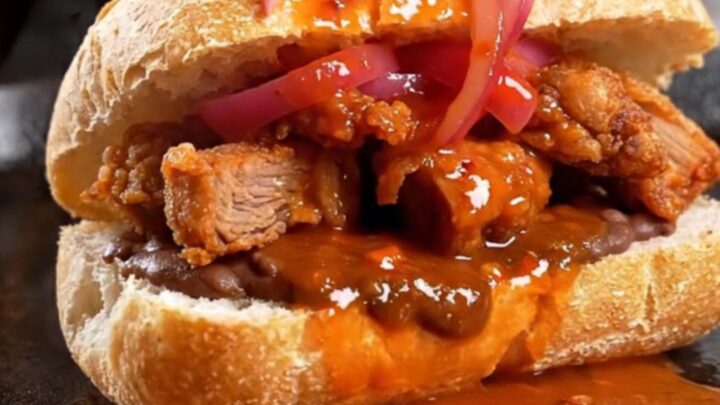
The finished torta sits in its shallow bowl, visibly darkened where the hot sauce has soaked in, with a pool of red at the base and steam rising off the surface. The lime-pickled red onions sit bright on top, offering tang against the heat.
The crust should still offer resistance to a fork; if it has gone soft in under a minute, the sauce went on too cool or the toast was too brief. Eat immediately, adding extra sauce from the bowl with each bite.
Common mistakes
The most common failure is a watery sauce, usually caused by adding water to the blender instead of trusting the roasted tomatoes and soaked chiles; blend longer instead, and simmer to reduce. The second is drowning the torta too early: sauce applied to a cold, untoasted sandwich turns the bread to paste before the first bite.
Burning the tomato skins is third; char adds depth, but blackened-to-ash tomatoes turn the whole sauce bitter, so turn them often. Skipping the bean layer is a quieter mistake, since cut bread without a barrier drinks sauce unevenly.
How to tell it’s done
The sauce is done when it has simmered for about ten minutes, darkened a shade, and coats the back of a spoon lightly; taste it and adjust the seasoning, expecting a clean, rising heat rather than a blunt burn.
The sandwich is done when the crust crackles when tapped, the bottom shows deep golden toasting, and the beans feel warm through the bread. The carnitas should reach at least 145°F (63°C) on the comal, then rest at least 3 minutes before the sauce goes on.
- Steaks, chops and roasts: 145°F (63°C) in the thickest part, then a 3-minute rest
Up next · Part 3 of 3
4 variations · storage & make-ahead · 5 answers · printable card
Tips, FAQ & printable recipe (Part 3)← Back to the ingredients (Part 1)