Dinner · Part 2 of 3: Instructions
Torched Wagyu on Crispy Garlic Rice: 8-Second Blowtorch Bite Step-by-step instructions
- Prep
- Cook
- Total
- Serves
- 2
Before you start
Start by cooking the sushi rice according to the package instructions and letting it cool slightly. While the rice cooks, slice the Wagyu ribeye into thin pieces if not already sliced.
Prepare the garlic soy glaze by mixing soy sauce, minced garlic, and a sweetener like honey or sugar.
Have all ingredients and equipment ready: the blowtorch, a basting brush, a small bowl of water for shaping rice, and a serving plate. If using a whole quail egg, carefully separate the yolk and keep it refrigerated until ready to use.
Ingredients at a glance (6)
- 1 cup cooked sushi rice
- 15 ml garlic soy glaze
- 4 oz A5 Wagyu ribeye, thinly sliced
- 1 golden quail egg yolk
- flaky Maldon sea salt, to taste
- fresh wasabi, grated, to taste
Instructions
Shape and Glaze the Rice
- Shape the Rice Blocks and GlazeUsing wet hands, shape the cooked sushi rice into four compact blocks, each about 2 inches square and 1 inch thick. Pat them firmly so they hold together. Brush each block with the garlic soy glaze, covering the top and sides evenly.Look for Rice blocks are firm and evenly glazed with a glossy sheen.Tip Keep a small bowl of water nearby to wet your hands; this prevents sticking and helps shape neat blocks.
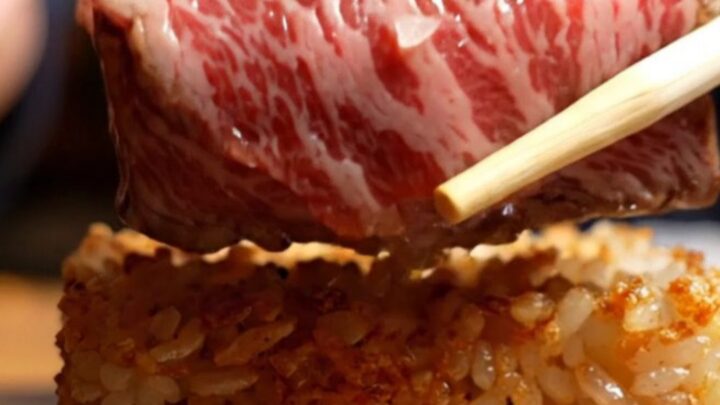
- Drape the Wagyu SlicesLay the thinly sliced A5 Wagyu ribeye over each rice block, letting the slices drape over the edges. Press gently so the meat adheres to the rice.Look for The Wagyu covers the rice like a blanket, with marbling visible.Tip Use a sharp knife to slice the beef thinly if needed; aim for 1/8-inch thickness.
The rice blocks should be firm, about 2 inches square, and evenly coated with the garlic soy glaze. They should look glossy and appetizing, ready for the Wagyu. The beef slices should be draped neatly, covering the tops and sides completely.
Torch to Perfection
- Torch the WagyuUsing a butane blowtorch, sear the Wagyu-topped rice blocks with a sweeping motion, keeping the flame about 2 inches above the meat. Torch for 8 seconds total, moving continuously, until the fat renders into bubbling amber droplets and the edges char with a smoky aroma. Let it rest for 3 minutes before slicing.Look for The fat glistens and bubbles, edges crisp and slightly charred.Safe temperature 145°F (63°C) internal temperature (steaks, chops and roasts)Tip Keep the torch moving to avoid burning one spot. The goal is even caramelization.
- Rest the Torched WagyuTransfer the torched rice bites to a plate and let them rest for at least 3 minutes. This allows the juices to redistribute and the meat to finish cooking gently.Look for The meat rests, and the surface remains glossy with rendered fat.Tip Resting is essential for tenderness; do not skip it even for a short cook.
The Wagyu should be seared with a deep amber crust, fat bubbling and edges charred. The rice will crisp up, and the whole bite will smell smoky and savory. The internal temperature of the beef should be 145°F (63°C) if desired, but rare is acceptable. Let it rest for 3 minutes.
Finish and Serve
- Add the Quail Egg YolkCarefully place one golden quail egg yolk on top of each torched rice bite. The yolk should sit in the center, ready to break and coat the meat.Look for The yolk is glossy and intact, contrasting with the charred meat.Safe temperature 160°F (71°C) internal temperature (egg dishes)Tip Use fresh quail eggs for best flavor and texture. If you prefer, you can pasteurize the yolk by gently poaching for 30 seconds.
- Season and ServeSprinkle each bite with flaky Maldon sea salt and a small mound of grated fresh wasabi. Serve immediately while the rice is crisp and the yolk is still glossy.Look for The dish is ready with flaky salt and fresh wasabi on top.Tip Serve on a warm plate to keep the bites at their best.
The quail egg yolk should sit proudly on top, glossy and intact. The flaky salt and fresh wasabi add the final touch. The bites should be served immediately while the rice is still crisp and the yolk is cool and creamy.
Common mistakes
One common mistake is not drying the rice blocks before torching; excess moisture will prevent browning. Also, avoid torching the Wagyu for too long—8 seconds is usually enough; otherwise, the meat becomes tough and loses its buttery texture.
Be careful not to over-glaze the rice, as too much sauce can make it soggy. Finally, don't skip the rest time; it allows the meat to relax and the juices to redistribute, ensuring each bite is perfect.
How to tell it’s done
The Wagyu is done when the surface is seared and the fat has rendered, but the interior remains rare to medium-rare. For food safety, the beef should reach an internal temperature of 145°F (63°C) if you prefer it more cooked, but traditionally this dish is served rare.
The rice should be crispy on the outside and tender inside. The quail egg yolk should be glossy and runny, not fully set. If you prefer the yolk cooked, you can poach it briefly, but the classic version is raw.
- Steaks, chops and roasts: 145°F (63°C) in the thickest part, then a 3-minute rest
- Egg dishes: 160°F (71°C) in the thickest part
Up next · Part 3 of 3
4 variations · storage & make-ahead · 5 answers · printable card
Tips, FAQ & printable recipe (Part 3)← Back to the ingredients (Part 1)