Dinner · Part 2 of 3: Instructions
Three-Packet Dijon Cream Pork Shoulder: Slow-Cooker Comfort Step-by-step instructions
- Prep
- Cook
- Total
- Serves
- 8
Before you start
Before starting, make sure the slow cooker is clean and dry. Measure out the seasonings, sour cream, Dijon, and au jus so they are ready to go.
If using a large roast, check that it fits in the slow cooker with at least an inch of space above the liquid. No need to preheat the slow cooker; it will heat gradually.
Ingredients at a glance (8)
- 4 lb boneless pork shoulder roast
- 1 oz dry ranch seasoning mix
- 0.7 oz zesty Italian dressing mix
- 1 oz brown gravy mix
- 1/2 cup sour cream
- 2 tbsp coarse whole-grain Dijon mustard
- 1 cup beef au jus
- Steamed white rice, for serving
Instructions
Layer and Season
- Layer the RoastPlace the pork shoulder roast in the center of the slow cooker. There is no need to trim or sear it—the slow cooking will render the fat and make the meat tender.Look for The roast should sit snugly in the slow cooker.Tip If the roast is larger than the slow cooker, cut it into large chunks to fit.
- Add the Seasoning PacketsSprinkle the dry ranch seasoning, Italian dressing mix, and brown gravy mix evenly over the entire surface of the pork. Use your hands or a spoon to rub the seasonings into the meat.Look for The roast should be evenly coated with the dry seasonings.Tip Tear open the packets and sprinkle from a height for even distribution.
- Top with Cream and MustardDollop the sour cream over the seasoned roast. Spread the Dijon mustard over the top as well. Pour the au jus along the side of the roast, not directly over the seasonings.Look for The sour cream and mustard will look like white and yellow patches on the roast.Tip Do not stir; the layers will meld during cooking.
After this phase, the slow cooker contains the raw roast covered in dry seasonings, with sour cream and mustard dolloped on top and au jus poured around the edges. The aromas of the seasonings are already fragrant. The roast is not yet cooked, so do not taste.
Slow Cook and Shred
- Cook Low and SlowCover the slow cooker and cook on low for 8 to 10 hours, or on high for 5 to 6 hours. The pork is done when it shreds easily with a fork and the internal temperature reaches at least 145°F (63°C). Let it rest for 3 minutes before slicing.Look for The meat should be fork-tender and the gravy bubbling.Safe temperature 145°F (63°C) internal temperature (steaks, chops and roasts)Tip Avoid opening the lid during cooking to keep the heat steady.
- Shred the PorkOnce the pork is fully cooked, transfer it to a cutting board. Use two forks to shred the meat into bite-sized pieces, discarding any large pieces of fat. Return the shredded pork to the slow cooker and stir it into the gravy.Look for The pork should pull apart easily with little resistance.Tip For extra flavor, let the shredded pork sit in the gravy for 10 minutes before serving.
At the end of cooking, the kitchen smells of savory herbs and roasted pork. The meat is deeply browned and falling apart, submerged in a bubbling, creamy gravy.
The sour cream and mustard have fully melded into the sauce, which is smooth and rich. The pork shreds effortlessly with forks.
Serve and Enjoy
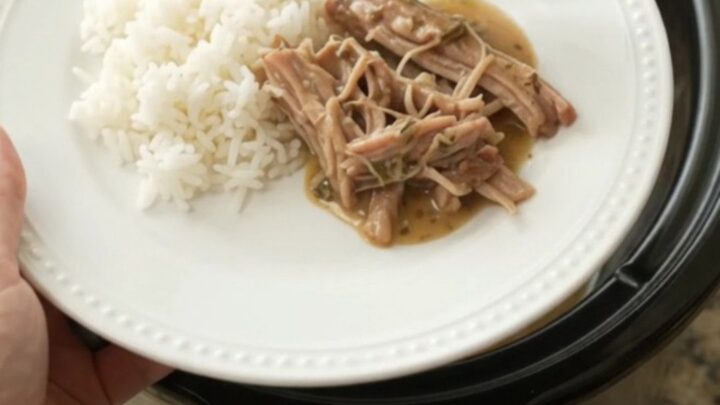
- Serve Over RiceSpoon the shredded pork and creamy gravy over steamed white rice. Serve hot, with extra mustard on the side if desired.Look for The gravy should be thick and creamy, coating the pork.Tip Warm the plates for a more comforting presentation.
The shredded pork is coated in a velvety, tangy gravy, and the rice is fluffy and hot. The dish looks hearty and comforting, with steam rising from the plate. The first bite is tender, juicy, and full of flavor. The gravy clings to the meat, and the mustard provides a subtle kick.
Common mistakes
One common mistake is lifting the lid to check on the roast, which releases heat and extends cooking time. Another is using a lean cut like pork loin, which will dry out.
Also, do not skip the sour cream and Dijon—they are essential for the creamy gravy. If the gravy seems thin after shredding, simmer it on the stovetop to reduce.
How to tell it’s done
The pork is done when it is fork-tender and easily shreds. The internal temperature should read at least 145°F (63°C) on an instant-read thermometer.
The meat should be moist and juicy, not dry. The gravy should be bubbly and slightly thickened. If the pork is not shredding easily, continue cooking for another hour.
- Steaks, chops and roasts: 145°F (63°C) in the thickest part, then a 3-minute rest
Up next · Part 3 of 3
4 variations · storage & make-ahead · 5 answers · printable card
Tips, FAQ & printable recipe (Part 3)← Back to the ingredients (Part 1)