Dinner · Part 2 of 3: Instructions
Three-Packet Brown Gravy Pork Shoulder Step-by-step instructions
- Prep
- Cook
- Total
- Serves
- 8
Before you start
Before starting, pat the pork shoulder dry with paper towels to help the seasonings adhere. If the roast is tied, remove the twine. Measure out the seasonings and have the gravy and butter ready.
There's no need to sear the meat—the slow cooker does all the work. If you plan to serve on sliders, toast the buns just before serving. For best results, start this in the morning so it's ready by dinner time.
Ingredients at a glance (6)
- 4 lb boneless Boston butt pork shoulder roast
- 1 oz dry ranch seasoning mix
- 0.7 oz zesty Italian dressing mix
- 1 oz brown gravy mix
- 2 cups savory brown bone-broth gravy
- 4 tbsp unsalted butter, cut into pats
Instructions
Layer and Season
- Layer the RoastPlace the pork shoulder roast in the center of the slow cooker insert. It's okay if it doesn't fit perfectly; it will shrink as it cooks.Look for The roast sits snugly in the slow cooker.Tip If the roast is larger than the insert, trim it slightly to fit.
- Sprinkle the Seasoning PacketsEvenly sprinkle the dry ranch seasoning, zesty Italian dressing mix, and brown gravy mix over the entire surface of the roast. Use your fingers to rub the seasonings in lightly if needed.Look for The roast is coated with a colorful layer of seasonings.Tip Sprinkling from a height helps distribute the powders evenly.
- Add Gravy and ButterPour the brown bone-broth gravy over the roast, then dot the top with the butter pats. The liquid should come about halfway up the side of the roast.Look for The gravy coats the bottom of the insert, and butter melts into the liquid.Tip The butter adds richness and helps create a glossy sauce.
At the end of this phase, the roast sits in the slow cooker with a colorful crust of seasonings, and the gravy and butter have pooled around it. The butter begins to melt into the liquid, and the aroma of herbs and spices fills the kitchen. Everything looks promising, but the real transformation is yet to come.
Slow-Cook and Shred
- Cook Low and SlowCover the slow cooker and cook on LOW for 8 to 10 hours, or on HIGH for 5 to 6 hours, until the pork is fork-tender and pulls apart easily. Let it rest for 3 minutes before slicing.Look for The meat is tender enough to shred with a fork.Safe temperature 145°F (63°C) internal temperature (steaks, chops and roasts)Tip Low and slow yields the most tender results.
- Shred the PorkTransfer the roast to a cutting board and let it rest for at least 3 minutes. Using two forks, shred the meat into bite-sized pieces, discarding any excess fat.Look for The meat shreds easily into juicy ribbons.Safe temperature 145°F (63°C) internal temperature (steaks, chops and roasts)Tip Resting the meat before shredding keeps it moist.
- Return to the GravyReturn the shredded pork to the slow cooker and stir it into the gravy. Let it sit on the warm setting for 10 minutes so it soaks up the sauce.Look for The pork absorbs the gravy and becomes glossy.Tip Stir gently to avoid breaking the meat into mush.
After hours of simmering, the kitchen smells richly savory. The pork is fork-tender, and the gravy has deepened to a glossy mahogany.
The meat shreds easily into juicy ribbons, and when returned to the gravy, it soaks up the sauce, becoming even more succulent. The slow cooker is full of tender, glistening pork in a thick, aromatic sauce.
Serve and Enjoy
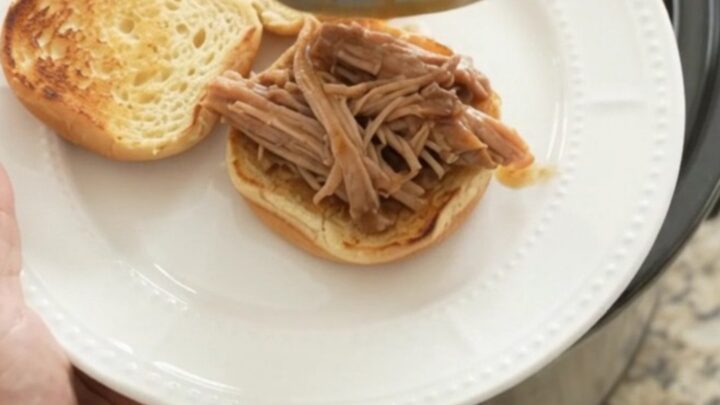
- Serve on Slider BunsSpoon the saucy pulled pork onto toasted brioche slider buns or over mashed potatoes. Top with a little extra gravy from the slow cooker.Look for The pork is piled high on the buns, drenched in gravy.Tip Toasting the buns adds a nice crunch.
The final dish is a pile of succulent pulled pork, drenched in rich brown gravy, ready to be piled onto toasted slider buns. The buns are soft with a slight crunch, and the pork is juicy and flavorful, with every bite coated in the savory, herby sauce. It's a satisfying, comforting meal that looks as good as it tastes.
Common mistakes
One common mistake is lifting the lid too often to check on the roast. Every time the lid is lifted, heat escapes, which can extend the cooking time and dry out the meat. Another is using a lean cut like pork loin—it won't have enough fat to become tender and will turn out dry.
Also, be careful not to overseason: the packets are salty, so avoid adding extra salt until after tasting. Finally, don't skip the resting time after cooking, as it keeps the meat juicy.
How to tell it’s done
The pork is done when it is fork-tender and easily pulls apart with little resistance. The internal temperature should reach at least 145°F (63°C) for safety, but because it's cooked low and slow, it will typically reach 190°F to 205°F (88°C to 96°C), which is ideal for shredding.
Let the meat rest for at least 3 minutes before shredding to allow the juices to redistribute. The gravy should be rich and slightly thickened, coating the back of a spoon.
- Steaks, chops and roasts: 145°F (63°C) in the thickest part, then a 3-minute rest
Up next · Part 3 of 3
4 variations · storage & make-ahead · 3 answers · printable card
Tips, FAQ & printable recipe (Part 3)← Back to the ingredients (Part 1)