Dinner · Part 1 of 3: Ingredients
Thai Red Curry Prawn Skillet in One Pan in 30 Minutes
- Prep
- Cook
- Total
- Serves
- 4
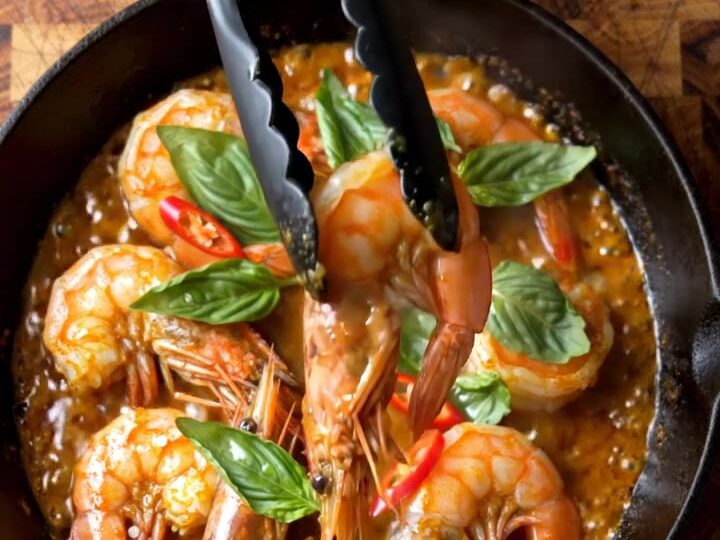
Fragrant ginger, a spoonful of red curry paste and a can of coconut milk turn into a glossy, deep-red sauce in one cast iron skillet. Plump prawns cook right in it, and torn basil and sliced chilies finish the dish at the table. This Thai red curry prawn skillet comes together in about half an hour.
This Thai red curry prawn skillet is built on a simple idea: build the flavor in the pan, then let the seafood finish in the sauce. You start with raw shell-on prawns, sliced red bell pepper, green chilies, basil and crushed peppercorns, all prepped on one board. Fresh ginger or galangal goes onto a box grater so the aromatics fall into fine shreds that cook quickly.
Frying them in oil until fragrant wakes up the whole dish. Red curry paste goes in next and is stirred until it darkens and releases its scent. Coconut milk follows and simmers gently, seasoned with fish sauce, palm sugar and lime juice until the base tastes balanced and rich. The red pepper and prawns go in last, and the sauce thickens and turns a warm red while the prawns curl.
Ingredients
- 1 lb raw shell-on prawns, peeled or shell-on as preferred
- 1 red bell pepper, seeded and sliced
- 2 fresh green chilies, thinly sliced
- fresh red chilies, sliced, for garnish, to taste
- 1 handful fresh basil leaves, torn
- whole black peppercorns, crushed, to taste
- 2 inches fresh ginger or galangal, peeled and finely grated
- 2 tbsp neutral vegetable oil
- 2 tbsp red curry paste
- 1 can (13.5 oz) coconut milk
- 1 tbsp fish sauce
- 1 tsp palm sugar, or light brown sugar
- 1 lime, for a squeeze of juice
Why this recipe works
The method works because each layer of flavor is cooked before the next one goes in. Frying grated ginger first softens its sharp edge and releases its aroma into the oil, so the base carries more depth than a sauce made by adding everything at once.
Stirring the red curry paste into hot oil until it darkens blooms the spices and deepens their color, which is why the finished sauce looks so vivid. Those few minutes of patient frying are the foundation of the whole dish.
Simmering the coconut milk gently rather than boiling it hard keeps the sauce smooth and creamy. Fish sauce adds savory depth, palm sugar rounds off the heat and lime juice brightens everything at the end. Adding the sliced red pepper and prawns only at the last stage keeps the seafood tender, because it cooks in the hot sauce for a few minutes and does not stay in the pan long enough to turn tough.
Notes and substitutions
Choose shell-on prawns if you want the most flavor from the pan, since the shells add sweetness to the sauce as they cook. Peel them first if you prefer to eat without shells.
The curry paste matters most for the final taste: a good red curry paste from the Asian aisle brings chili, lemongrass and shrimp-paste notes, so taste the sauce before adding the seafood and adjust the heat with a little more paste or lime. Palm sugar is sold in tubs or discs and gives a gentle caramel note, but light brown sugar is a reliable stand-in.
A cast iron skillet is the best vessel for this dish because it holds heat evenly and goes straight from the stove to the table. A box grater is the simplest tool for fine ginger or galangal shreds, and a sharp chef's knife keeps the red pepper and chilies neat.
Use a wooden spoon to stir the paste so the bottom of the pan stays free of scorched bits. If you have no cast iron, a wide heavy skillet works, though the sauce will not hold its heat quite as long at the table.
- palm sugar: light brown sugar, packed, in the same amount
- fresh ginger or galangal: ginger only, if galangal is not available at your market
- shell-on prawns: peeled shrimp, cooked for the same short time
Equipment
- Cast iron skillet
- Box grater
- Chef's knife
- Cutting board
- Wooden spoon
- Measuring spoons
Up next · Part 2 of 3
5 steps · 12 min of cooking · what to look for at each stage
Step-by-step instructions (Part 2)