Dinner · Part 1 of 3: Ingredients
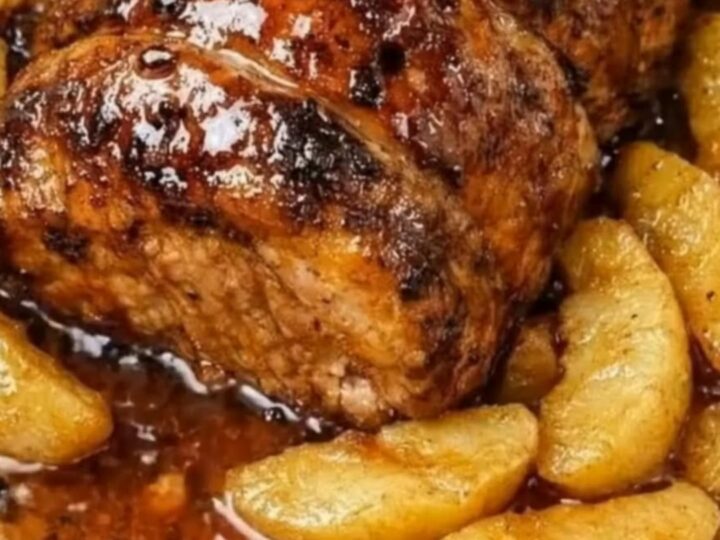
Brown Sugar Glazed Pork Roast with Cinnamon Apples
- Prep
- Cook
- Total
- Serves
- 6
This brown sugar glazed pork roast is a showstopper: a juicy, tender pork loin coated in a sweet and tangy glaze, roasted alongside cinnamon-spiced apples until everything is caramelized and golden. The apples soak up the savory drippings, becoming soft, buttery, and fragrant with cinnamon.
Slicing into the roast reveals moist, succulent meat with a glossy, sticky crust. It's an elegant yet surprisingly simple dinner that feels special enough for a holiday table but easy enough for a weeknight.
This recipe transforms a simple pork loin into a caramelized, company-worthy centerpiece. A quick glaze of brown sugar, Dijon mustard, and apple cider vinegar forms a sticky, flavorful crust as the roast cooks.
Meanwhile, apple wedges tossed with cinnamon roast right alongside the meat, absorbing the savory juices and turning into a tender, sweet-tart side dish. The result is a complete, impressive meal from one pan—juicy pork, glazed apples, and a pan sauce that ties it all together. Perfect for a cozy Sunday dinner or a special occasion.
Ingredients
- 3 lb boneless pork loin roast
Glaze
- 1/2 cup packed brown sugar
- 2 tbsp Dijon mustard
- 1 tbsp apple cider vinegar
- 1 tsp garlic powder
- 1 tsp salt
- 1/2 tsp black pepper
Apples
- 3 firm apples (such as Honeycrisp or Fuji), cored and cut into wedges
- 1 tsp ground cinnamon
- 2 tbsp unsalted butter, cut into small pieces
Why this recipe works
The brown sugar glaze does double duty: it creates a beautifully caramelized crust on the pork while also sweetening the apples as they roast. The sugar caramelizes in the oven, locking in moisture and adding a deep, complex flavor. The Dijon mustard and vinegar cut through the sweetness, balancing the dish with a subtle tang that keeps every bite interesting.
Roasting the apples alongside the pork is a clever one-pan technique. As the meat cooks, its juices mingle with the butter and cinnamon, basting the apples and infusing them with savory flavor. The apples soften and caramelize, becoming a delicious accompaniment that needs no extra preparation. This method saves time and cleanup while building layers of flavor in a single pan.
Notes and substitutions
Choose a boneless pork loin roast for this recipe; it's lean, tender, and easy to slice. If you prefer, a pork shoulder or butt can be used, but you'll need to increase the cooking time and adjust for the higher fat content.
For the apples, use firm, slightly tart varieties like Honeycrisp, Fuji, or Granny Smith—they hold their shape during roasting and provide a nice contrast to the sweet glaze.
The glaze is simple to whisk together with pantry staples. If you don't have Dijon mustard, whole grain or yellow mustard works as a substitute. Apple cider vinegar adds brightness, but white wine vinegar or lemon juice can stand in.
Feel free to adjust the cinnamon to your taste, or add a pinch of nutmeg for extra warmth. The butter helps the apples caramelize and adds richness, but you can omit it for a dairy-free version.
- Dijon mustard: Whole grain mustard or yellow mustard
- Apple cider vinegar: White wine vinegar or lemon juice
- Firm apples: Any baking apple such as Granny Smith or Braeburn
Equipment
- Roasting pan
- Aluminum foil
- Small bowl
- Chef's knife
- Cutting board
- Meat thermometer
- Tongs
- Serving platter
Up next · Part 2 of 3
6 steps · 1 h 15 min of cooking · what to look for at each stage
Step-by-step instructions (Part 2)