Dinner · Part 3 of 3: Tips & recipe card
Sweet Vidalia Molasses Beef Short Ribs Tips, FAQ & printable recipe
- Prep
- Cook
- Total
- Serves
- 6
Tips for success
For the most tender short ribs, always cook on LOW. The low, slow heat is what breaks down the collagen and turns the meat silky. If you're short on time, you can cook on HIGH for 5 to 6 hours, but the texture won't be quite as perfect.
Another tip: trim any large pieces of surface fat from the ribs before cooking, but leave the marbling intact—that's where the flavor lives.
If you prefer a thicker sauce, remove the ribs from the slow cooker after they're done and transfer the sauce to a saucepan. Simmer it on the stovetop for 10 to 15 minutes until it reduces and thickens to your liking.
You can also whisk in a cornstarch slurry (1 tablespoon cornstarch mixed with 2 tablespoons water) and simmer for a few minutes. This is great if you're serving the ribs over mashed potatoes and want the sauce to cling.
Variations
- Spicy Kick: Add 1 to 2 minced chipotle peppers in adobo sauce along with the BBQ sauce for a smoky heat that balances the sweetness. You can also sprinkle in a pinch of cayenne pepper with the brown sugar.
- Beer-Braised: Replace 1/2 cup of the BBQ sauce with a dark beer, such as stout or porter, and reduce the brown sugar to 1/3 cup. The beer adds a malty depth that pairs beautifully with the molasses.
- Herb-Infused: Tuck a few sprigs of fresh thyme or rosemary into the slow cooker before adding the onions. The herbs infuse the sauce with an earthy note that complements the beef. Remove the sprigs before serving.
- No-Sugar-Added: Swap the brown sugar for a sugar-free brown sugar substitute and use a no-sugar-added BBQ sauce. The onions still provide natural sweetness, and the molasses flavor can be enhanced with a few drops of molasses extract.
Storage and make-ahead
- Fridge
- Store in an airtight container in the refrigerator for up to 4 days. The sauce will thicken when cold; add a splash of broth when reheating.
- Freezer
- Freeze in a freezer-safe container for up to 3 months. Thaw overnight in the refrigerator before reheating.
- Reheat
- Reheat gently on the stovetop over low heat, adding a little broth or water to loosen the sauce, or microwave in 30-second bursts until hot.
Store leftover short ribs in an airtight container in the refrigerator for up to 4 days. The sauce will solidify slightly when cold, but that's normal.
To reheat, place the ribs and sauce in a covered pot over low heat, adding a splash of water or beef broth to loosen the sauce. Alternatively, microwave individual portions in 30-second bursts, stirring in between, until heated through.
This recipe is perfect for making ahead. You can assemble the ingredients in the slow cooker insert the night before, cover, and refrigerate overnight. In the morning, place the insert in the slow cooker base and cook on LOW as directed.
If you're cooking the ribs fully in advance, they reheat beautifully. Cook them as directed, let them cool completely, then store in the refrigerator for up to 3 days. Reheat gently on the stovetop or in the oven at 325°F (165°C) until warmed through.
Serving ideas
These short ribs are incredibly versatile. Serve them over creamy mashed potatoes, soft polenta, or buttered egg noodles to soak up the rich sauce. A side of roasted green beans or a crisp green salad balances the sweetness. For a more casual meal, pile the shredded meat onto soft rolls with a spoonful of the caramelized onions and a drizzle of sauce—it makes an amazing sandwich.
For a cozy dinner, pair the ribs with a glass of full-bodied red wine, like a Zinfandel or Syrah, which complements the sweet and smoky flavors. If you prefer beer, a dark stout or porter works well too. Garnish with a sprinkle of fresh thyme or chopped parsley for a pop of color, though the dish is delicious as is. Leftover sauce is great over roasted vegetables or stirred into rice.
Frequently asked questions
Can this recipe be made without a slow cooker?
How do you know when the short ribs are done?
Can you use boneless short ribs instead?
What is the best way to reheat leftovers?
Can this dish be frozen?
Sweet Vidalia Molasses Beef Short Ribs
Ingredients
- 5 lb bone-in English-cut beef short ribs
- 3 medium Vidalia onions, thinly sliced
- 1/2 cup packed light brown sugar
- 1 1/2 cups molasses garlic BBQ sauce
Instructions
- Place the beef short ribs in the bottom of a 6-quart slow cooker, arranging them in a single layer as much as possible. They can overlap slightly if needed, but try to keep them even so they cook uniformly.
- Scatter the sliced Vidalia onions evenly over the ribs, then sprinkle the brown sugar over the onions. Use your hands to spread the sugar so it covers the onions and some falls between the ribs.
- Pour the molasses garlic BBQ sauce over the onions and ribs, using a spatula to scrape every last bit from the measuring cup. Tilt the slow cooker slightly to ensure the sauce spreads evenly, but do not stir.
- Cover the slow cooker with the lid and set it to LOW. Cook for 8 to 10 hours, until the meat is fork-tender and nearly falling off the bone. Do not lift the lid during the first 6 hours to keep the heat steady. Let it rest for 3 minutes before slicing.
- After 8 hours, test the ribs with a fork. The meat should be so tender that it twists easily and begins to separate from the bone. If not, continue cooking for another hour and check again. Let it rest for 3 minutes before slicing.
- Turn off the slow cooker and let the ribs rest in the sauce for at least 10 minutes. This allows the juices to redistribute and makes the meat even more tender.
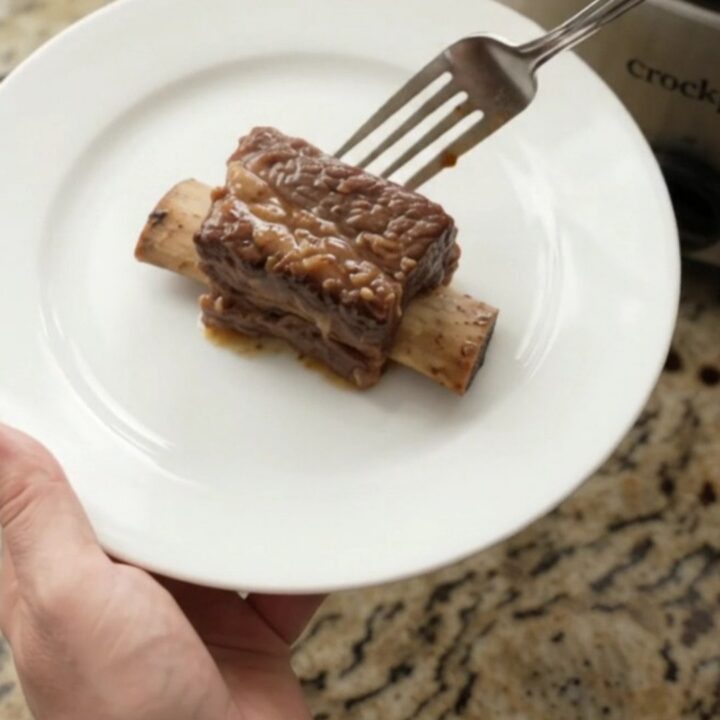
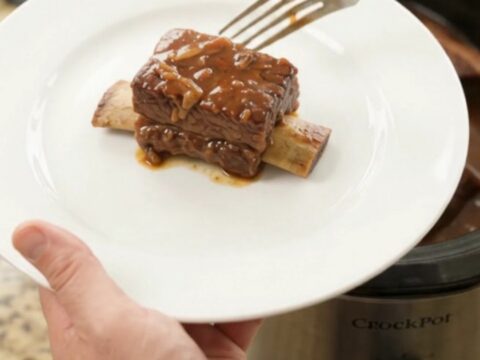
- Using tongs, carefully lift each short rib out of the slow cooker and place it on a serving plate. Spoon some of the caramelized onions and sauce over the top. Serve hot.
Estimated nutrition per serving
- Calories
- 720
- Protein
- 45 g
- Carbohydrates
- 32 g
- Fat
- 45 g
Next recipe
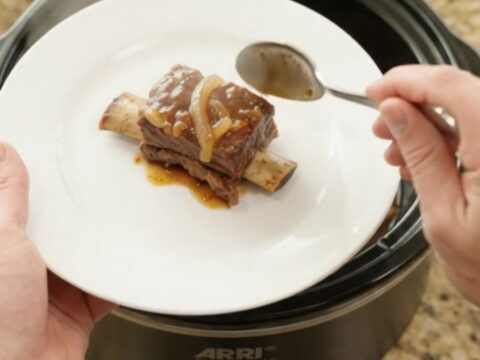
Root Beer BBQ Short Ribs: 5-Ingredient Crockpot Dinner
See the recipe → →This recipe is based on a short cooking video and is published under the pen name Clara Weller. It was checked before publication, but errors can slip through. Nutrition, when shown, is an estimate. Read more in our editorial policy and on our food safety page.
More recipes to try
Smoky Paprika BBQ Short Ribs: 5-Ingredient Slow Cooker
Total time: 8 h 10 min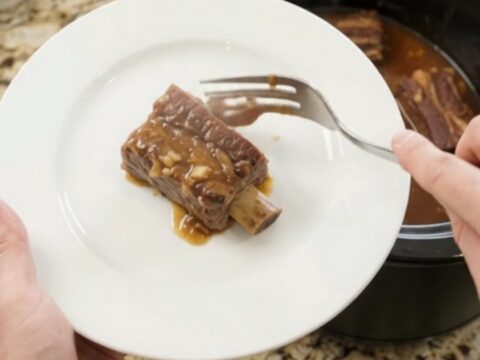
Smoky Maple Bourbon Beef Short Ribs Crockpot
Total time: 8 h 20 min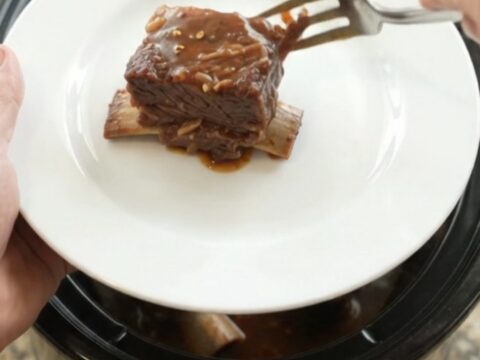
Slow Cooker Smoky Paprika Honey Hickory Beef Short Ribs
Total time: 8 h 20 min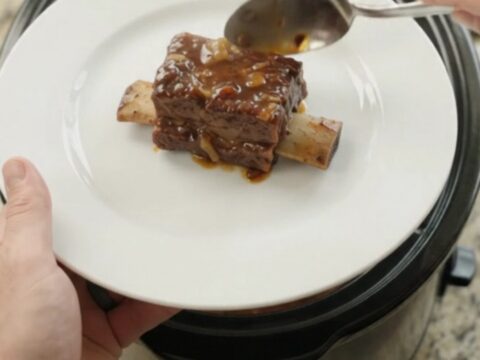
Smoky Paprika Molasses Beef Short Ribs: Crockpot
Total time: 8 h 10 min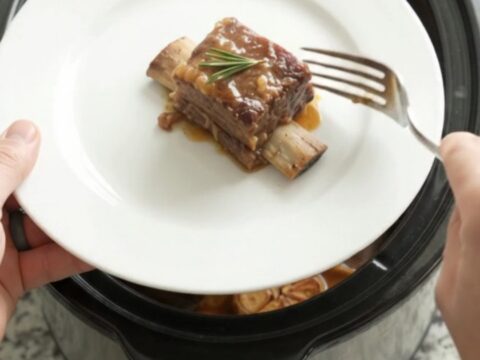
Garlic Herb Maple Bourbon Beef Short Ribs
Total time: 8 h 20 min