Dinner · Part 2 of 3: Instructions
Sticky Pineapple Chicken with Caramelized Glaze Step-by-step instructions
- Prep
- Cook
- Total
- Serves
- 4
Before you start
Before starting, ensure all your ingredients are measured and ready to go, as the glaze cooks quickly. Drain the pineapple rings well to prevent excess liquid from watering down the sauce.
Have your skillet on the stove and a clean cutting board ready for slicing the chicken once it has finished its rest period. Keeping everything organized allows you to focus on the caramelization process, which is the most important part of achieving that signature sticky, amber finish.
Ingredients at a glance (4)
- 2 lb boneless skinless chicken thighs
- 1 can pineapple rings, drained
- 1 cup prepared sticky amber glaze, store-bought or made ahead
- 2 tbsp chopped scallions
Instructions
Searing the Chicken
- Sear the ChickenHeat a large skillet over medium-high heat. Place the chicken thighs in the pan and sear until they are golden brown on both sides. Ensure the chicken cooks through to an internal temperature of 165°F (74°C).Look for The chicken should be golden brown and opaque throughout.Safe temperature 165°F (74°C) internal temperature (poultry)Tip Avoid overcrowding the pan to ensure the chicken sears properly rather than steaming.
The chicken should be golden brown and firm to the touch. It is essential to ensure the chicken is seared on both sides to build a savory crust. Before adding the glaze, check that the pan is hot enough to continue the cooking process efficiently. The aroma of browning poultry should fill the kitchen, signaling that the foundation of the dish is properly prepared and ready for the next layer of flavor.
Glazing and Caramelizing
- Glaze and CaramelizePour the prepared glaze over the chicken in the skillet. Add the pineapple rings. Continue to cook, basting the chicken frequently with the bubbling glaze until the sauce thickens to an amber, glossy consistency.Look for The sauce will bubble and thicken into a sticky, amber glaze.Tip Baste the chicken continuously for the best flavor penetration and a beautiful, shiny finish.
As the sauce reduces, it will transform into a thick, syrupy consistency that coats the chicken. The pineapple rings will begin to take on a golden, caramelized appearance. Watch the pan closely, as the sugar content means the sauce can go from perfectly reduced to burnt very quickly. You should smell the sweet, savory combination of the glaze as the liquid reaches its peak viscosity and begins to cling to the chicken.
Finishing and Resting
- Final Touch and ServeRemove the pan from the heat. Allow the chicken to rest for at least 5 minutes before slicing. Garnish with chopped scallions before serving hot.Look for The scallions should add a fresh pop of color to the dish.Tip Letting the meat rest helps retain the juices inside the chicken thighs.
The chicken is ready for its final rest, which allows the juices to redistribute for maximum tenderness. The glaze should be dark, shiny, and perfectly sticky. Once the chicken has rested, it is time to add the fresh scallions for a pop of color and bite.
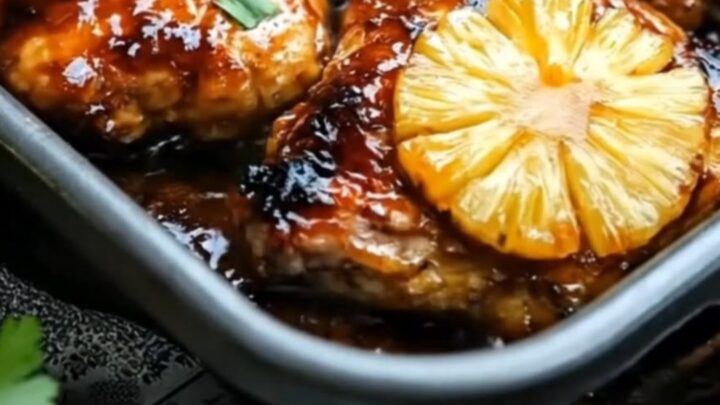
The final dish should look vibrant, with the caramelized pineapple rings sitting prominently atop the glazed chicken, ready to be served immediately while still warm and aromatic.
Common mistakes
A common mistake is using too much heat, which can cause the sugars in the glaze to burn rather than caramelize. Maintain a medium heat to keep the sauce bubbling gently.
Another error is not letting the chicken rest; skipping this step causes the juices to run out immediately upon slicing, leading to drier meat. Finally, avoid using high-heat settings, as the reduction process naturally intensifies the flavors of the sauce.
How to tell it’s done
The chicken is done when it reaches an internal temperature of 165°F (74°C). The glaze should be thick, glossy, and amber-colored, clinging tightly to the meat. The pineapple rings should appear slightly charred and softened.
Always use a digital thermometer to check the thickest part of the chicken thigh to ensure it is cooked through while remaining juicy. The sauce should coat the back of a spoon, indicating it has reduced sufficiently.
- Poultry: 165°F (74°C) in the thickest part
Up next · Part 3 of 3
2 variations · storage & make-ahead · 3 answers · printable card
Tips, FAQ & printable recipe (Part 3)← Back to the ingredients (Part 1)