Dinner · Part 2 of 3: Instructions
Sticky Gochujang Maple Glazed Salmon Step-by-step instructions
- Prep
- Cook
- Total
- Serves
- 4
Before you start
Before starting, remove the salmon from the refrigerator and let it sit at room temperature for no more than 30 minutes. Pat the fillets dry with paper towels.
Grate the garlic and measure all glaze ingredients into a small bowl. Set the oven rack to the top position and preheat the broiler to high (475°F/246°C). Have a cast-iron skillet ready on the stove.
Ingredients at a glance (8)
- 2 tbsp gochujang paste
- 3 tbsp pure maple syrup
- 2 tbsp soy sauce
- 1 tbsp toasted sesame oil
- 3 cloves garlic, grated
- 4 salmon fillets (about 6 oz each), skin on
- 1 tsp toasted sesame seeds
- 2 scallions, cut into curls
Instructions
Prep and Sear
- Make the GlazeIn a small bowl, whisk together the gochujang paste, pure maple syrup, soy sauce, toasted sesame oil, and grated garlic until smooth and fully combined. The glaze will be thick and glossy. Set it aside near the stove.Look for The glaze should be a uniform deep crimson with no streaks of gochujang or oil.Tip Grate the garlic directly into the bowl to capture all the juices.
- Prep the SalmonPat the salmon fillets dry with paper towels. Check for pin bones and remove any with tweezers. Leave the skin on and score the skin lightly in a crosshatch pattern, being careful not to cut into the flesh.Look for The skin should be dry to the touch, which helps it crisp during searing.Tip Scoring helps the glaze penetrate and prevents the skin from curling.
After searing, the salmon skin should be deep golden and crisp, with the flesh turning opaque from the bottom. The glaze should be whisked and ready.
The kitchen will smell of toasted sesame and garlic, with a hint of sweet maple. Check that the skillet is hot enough to sizzle immediately when the salmon touches it.
Glaze and Broil
- Sear the SalmonHeat a cast-iron skillet over medium-high heat until smoking. Add a thin layer of oil with a high smoke point. Place the salmon fillets skin-side down in the skillet, pressing gently with a spatula for 10 seconds to ensure even contact. Sear for 4 minutes without moving.Look for The skin will turn deep golden and crisp, and the edges of the fillets will look opaque.Tip Resist the urge to move the fillets; letting them sit builds a crispy crust.
- Add the GlazePour the gochujang maple glaze over the salmon fillets while they are still in the skillet. Use a pastry brush to spread it evenly over the tops and sides. The glaze will bubble and thicken immediately.Look for The glaze should coat each fillet thickly and start to caramelize at the edges.Tip Work quickly so the glaze doesn't burn before broiling.
- Broil Until CaramelizedTransfer the skillet to the broiler preheated to 475°F (246°C). Broil for 3 minutes, watching closely, until the glaze is bubbling and deeply caramelized. The salmon should be just cooked through and flake easily with a fork.Look for The glaze will be dark reddish-brown at the edges and glossy in the center.Safe temperature 145°F (63°C) internal temperature (fish)Tip Broilers vary; check at 2 minutes to avoid burning the sugar.
The glaze should be bubbling and starting to caramelize, with a sticky, glossy sheen. The salmon will have a deep crimson color, and the edges may look slightly charred. The aroma will be intensely sweet and spicy. Check that the glaze hasn't burned—if it darkens too quickly, reduce broiling time.
Rest and Serve
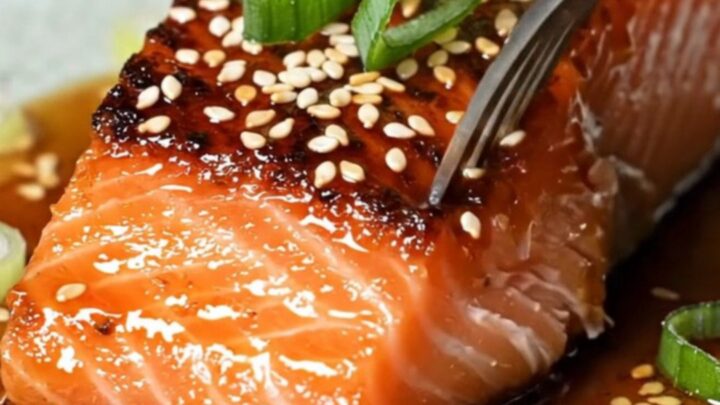
- Rest and GarnishRemove the skillet from the broiler and let the salmon rest for 2 minutes. Sprinkle with toasted sesame seeds and scallion curls. Serve immediately while the glaze is still sticky and the skin is crisp.Look for The glaze will set slightly as it rests, and the sesame seeds will cling to the surface.Safe temperature 145°F (63°C) internal temperature (fish)Tip Letting it rest keeps the juices in the fish and prevents the glaze from running off.
After resting, the glaze will have set into a tacky coating. The sesame seeds and scallions add a fresh, nutty contrast. The salmon should be moist and flaky, with the skin still crisp. The glaze should cling to the fork as you lift a piece. Serve immediately for the best texture.
Common mistakes
One common mistake is overcrowding the skillet, which lowers the temperature and steams the salmon instead of searing. Cook in batches if needed.
Another is brushing the glaze on too early, causing it to burn before the fish is cooked. Always sear first, then add the glaze and broil briefly. Also, don't move the fillets while searing—let them develop a crust.
How to tell it’s done
The salmon is done when the thickest part flakes easily with a fork and the internal temperature reaches 145°F (63°C). The glaze should be bubbling and caramelized, with a deep reddish-brown color.
The skin should be crisp and shatter when tapped. If you prefer your salmon slightly translucent in the center, cook to 135°F (57°C) and rest for 2 minutes.
- Fish: 145°F (63°C) in the thickest part
Up next · Part 3 of 3
4 variations · storage & make-ahead · 5 answers · printable card
Tips, FAQ & printable recipe (Part 3)← Back to the ingredients (Part 1)