Dinner · Part 2 of 3: Instructions
Sticky Chuck Roast BBQ Burnt Ends for Tender Bites Step-by-step instructions
- Prep
- Cook
- Total
- Serves
- 6
Before you start
Before beginning, ensure that your workspace is clean and that you have all your ingredients measured and ready. Prepare the beef by trimming any excessively large pieces of fat, although some marbling is desirable. Have your oven preheated and your aluminum foil pan ready on a stable surface.
Proper organization at the start allows you to focus on the cooking process and ensures that the transition between roasting and glazing happens smoothly, which is essential for maintaining the ideal temperature and texture of the beef.
Ingredients at a glance (3)
- 3 lb beef chuck roast, cut into 1-inch cubes
- 1/4 cup barbecue dry rub
- 1 cup barbecue sauce
Instructions
Seasoning and Preparation
- Season the BeefPreheat the oven to 250°F (121°C). Cut the beef chuck roast into uniform 1-inch cubes. Place the cubes into a large bowl and toss them thoroughly with the barbecue dry rub until every side is evenly coated.Look for The beef cubes should be evenly coated in the dry rub with no dry patches remaining.Tip Ensure the cubes are roughly the same size to promote even cooking throughout the process.
At the end of this phase, the beef cubes should be uniformly coated in the dry rub. The aroma of the spices should be noticeable, and the meat should be arranged in a single layer in the pan. Check that no cubes are overlapping, as this ensures even heat circulation and consistent roasting throughout the entire batch.
Slow Roasting the Beef
- Slow Roast the BeefArrange the seasoned beef cubes in a single layer inside an aluminum foil pan. Place the pan in the oven and roast for about 3 to 4 hours. The beef must reach an internal temperature of at least 145°F (63°C). Once finished, remove from the oven and let the beef rest for at least 3 minutes.Look for The beef should look browned, slightly shrunk, and have a firm yet tender exterior texture.Safe temperature 145°F (63°C) internal temperature (steaks, chops and roasts)Tip Covering the pan with foil during the last hour can help retain moisture if the edges look too dry.
By the end of the roast, the beef should be significantly reduced in size and have a firm, dark exterior. The fat should have rendered into the meat, making it feel heavy and soft.
The pan should contain some rendered juices, which is normal. Confirm the internal temperature is at least 145°F (63°C) before proceeding to the glaze.
Glazing and Finishing
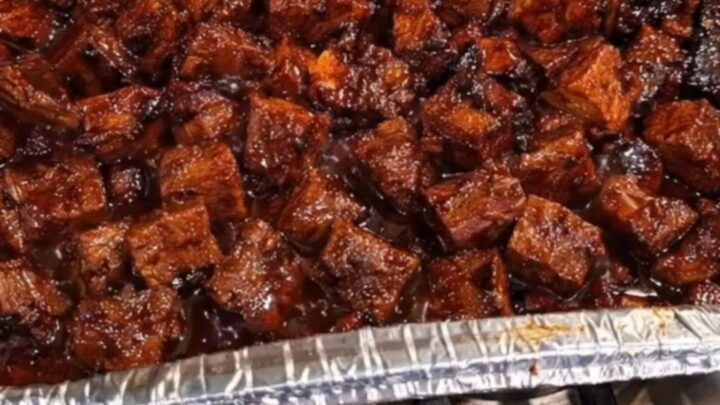
- Glaze and CaramelizePour the barbecue sauce over the roasted beef cubes and toss gently to ensure every piece is thoroughly glazed. Return the pan to the oven for an additional 20 to 30 minutes until the sauce is bubbly and caramelized. Remove and serve immediately while hot.Look for The sauce should become glossy, sticky, and cling tightly to the meat when stirred.Tip Keep a close eye during the final glaze to prevent the sugars in the sauce from burning.
The burnt ends are ready when the barbecue sauce has transformed into a thick, sticky, and glossy coating that clings to every piece of beef. The smell should be deeply savory and sweet. Ensure the sauce is bubbling evenly across the pan before removing it from the oven to serve while hot and tender.
Common mistakes
A common mistake is cutting the beef into uneven pieces, which leads to some cubes becoming dry while others remain undercooked. Another error is rushing the roasting phase; the low-temperature, long-duration cook is essential for achieving the correct texture.
Additionally, avoid adding the barbecue sauce too early, as the high sugar content can cause the sauce to char and become bitter before the meat is fully tender. Always monitor the oven closely during the final glazing step to ensure the sauce caramelizes perfectly.
How to tell it’s done
The burnt ends are done when the beef is tender enough to be easily split with a fork and the internal temperature reaches at least 145°F (63°C). The cubes should have a deep, mahogany color from the roasting process, and the final glaze should be thick, sticky, and glossy.
If the meat still feels resistant when pressed, continue roasting for a short period, as the connective tissue needs more time to break down fully for the best possible eating experience.
- Steaks, chops and roasts: 145°F (63°C) in the thickest part, then a 3-minute rest
Up next · Part 3 of 3
2 variations · storage & make-ahead · 3 answers · printable card
Tips, FAQ & printable recipe (Part 3)← Back to the ingredients (Part 1)