Dinner · Part 2 of 3: Instructions
Sticky Balsamic Garlic Glazed Pork Tenderloin Step-by-step instructions
- Prep
- Cook
- Total
- Serves
- 4
Before you start
Before you begin, ensure your pork tenderloin is removed from the refrigerator about 20 minutes prior to cooking to take the chill off, which helps it cook more evenly.
Pat the meat thoroughly dry with paper towels; moisture on the surface of the pork is the enemy of a good sear, as it will steam the meat instead of browning it. Prepare your garlic by mincing it finely and have your balsamic glaze and fresh thyme ready near the stove so you can add them quickly when the time is right.
Ingredients at a glance (4)
- 1 lb pork tenderloin, trimmed
- 1/2 cup balsamic glaze
- 3 cloves garlic, minced
- fresh thyme, for serving
Instructions
Searing the Pork
- Sear the porkHeat a heavy-bottomed skillet over medium-high heat. Once hot, place the pork tenderloin into the pan to sear. Cook until the exterior develops a deep, golden-brown crust on all sides, ensuring the meat is evenly browned for maximum flavor development.Look for The pork should sizzle loudly when it hits the pan and develop a dark, caramelized crust on the outside.Tip Ensure the pan is hot enough before adding the meat to prevent sticking and to achieve a proper sear.
The pork should be a deep, rich golden brown on the exterior. You should hear a consistent, loud sizzle, and the kitchen should smell savory as the meat begins to caramelize. Ensure the surface is dry before it hits the pan for the best color.
Applying the Glaze
- Glaze the tenderloinLower the heat to medium and use a brush to apply the balsamic garlic glaze generously over the searing pork. Continue cooking, turning the pork occasionally, until the glaze thickens into a glossy, sticky coating that clings to the meat. Ensure the pork reaches an internal temperature of 145°F (63°C) and let it rest for at least 3 minutes.Look for The glaze will bubble and thicken, turning into a dark, syrupy consistency that coats the back of a spoon.Safe temperature 145°F (63°C) internal temperature (steaks, chops and roasts)Tip Watch the garlic closely to ensure it becomes fragrant without burning, which can happen quickly in a hot pan.
The glaze should be thick, glossy, and clinging to the pork. It should look like a dark, syrupy coating. The garlic should be fragrant and softened into the glaze, and the sauce should have reduced enough that it does not run off the meat.
Resting and Serving
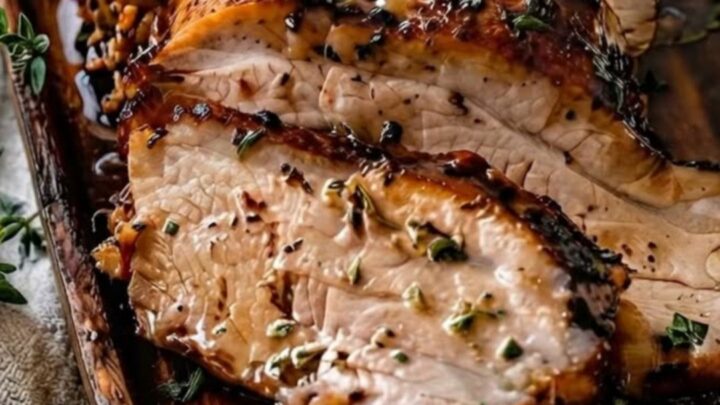
- Slice and serveTransfer the rested pork to a cutting board. Slice the pork into thick medallions, drizzle with any remaining pan sauce, and garnish with fresh thyme.Look for The juices should remain inside the meat, and the center should be slightly pink and very tender.Tip Resting is essential to keep the meat juicy; cutting too early will cause the precious juices to run out onto the board.
The pork should have rested for at least 3 minutes, and the juices should have settled. When sliced, the medallions should show a consistent, tender texture. Drizzle with the remaining pan sauce to ensure every slice is fully coated and flavorful.
Common mistakes
A common mistake is overcrowding the pan or using a pan that is not hot enough, which results in the pork steaming rather than searing.
Another frequent error is failing to allow the meat to rest after cooking; resting for at least 3 minutes is non-negotiable, as it allows the internal juices to redistribute throughout the meat fibers.
Additionally, avoid using high heat throughout the entire glazing process, as the sugars in the balsamic glaze can burn and turn bitter if the temperature is not lowered to a gentle simmer once the glaze is added.
How to tell it’s done
The pork is done when it reaches an internal temperature of 145°F (63°C). Use an instant-read meat thermometer inserted into the thickest part of the tenderloin to check the temperature accurately. At this temperature, the meat will be perfectly cooked, tender, and juicy.
If you prefer your pork slightly more cooked, you can take it to 150°F (65°C), but be careful not to overcook it, as the lean nature of the tenderloin means it can become dry very quickly if heated beyond this point.
- Steaks, chops and roasts: 145°F (63°C) in the thickest part, then a 3-minute rest
Up next · Part 3 of 3
2 variations · storage & make-ahead · 3 answers · printable card
Tips, FAQ & printable recipe (Part 3)← Back to the ingredients (Part 1)