Dinner · Part 2 of 3: Instructions
Soft Homemade Sandwich and Hotdog Buns Step-by-step instructions
- Prep
- Cook
- Total
- Serves
- 10
Before you start
Before starting, measure all ingredients and bring the milk and water to a warm temperature. Have a clean, lightly greased bowl ready for the first rise, and line a baking sheet with parchment paper.
Set a kitchen towel nearby for covering the dough. The entire process takes about 2 hours, including rising and baking, so plan accordingly.
Ingredients at a glance (11)
- 1 cup warm milk
- 1/2 cup warm water
- 1/2 cup vegetable oil
- 1/4 cup granulated sugar
- 2 1/4 tsp active dry yeast (one packet)
- 1 1/2 tsp salt
- 1 large egg white
- 4 cups all-purpose flour, plus more for dusting
- 1 large egg yolk
- 2 tbsp milk
- 2 tbsp unsalted butter, melted
Instructions
Make and Knead the Dough
- Make the DoughIn a large bowl, combine the warm milk, warm water, oil, sugar, and yeast. Let sit for 5 minutes until the yeast is foamy. Add the egg white, salt, and 2 cups of flour. Stir to combine. Gradually add the remaining 2 cups of flour, stirring until a shaggy dough forms.Look for The yeast mixture should be foamy and fragrant. The dough will be soft and slightly sticky.Tip If the dough is too sticky, add a little more flour, a tablespoon at a time.
- Knead the DoughTurn the dough out onto a lightly floured surface. Knead for 8 to 10 minutes until smooth and elastic. The dough should be soft and supple, not stiff. Place in a greased bowl, cover with a clean kitchen towel, and let rise in a warm spot for 1 hour, or until doubled in size.Look for The dough should be smooth, stretchy, and spring back when poked.Tip To test if the dough is kneaded enough, gently stretch a small piece; it should form a thin membrane without tearing.
After kneading, the dough should be smooth, elastic, and slightly tacky. It should hold its shape when formed into a ball.
After the first rise, it will have doubled in volume and feel airy when pressed. The kitchen should smell pleasantly yeasty and slightly sweet.
Shape and Proof
- Shape the BunsPunch down the risen dough. Turn it out onto a lightly floured surface and divide into 10 equal pieces. Shape each piece into a ball, then flatten into a rectangle. Roll each rectangle into a tight cylinder, pinching the seam to seal. Place the rolls seam-side down on a parchment-lined baking sheet, spacing them about 2 inches apart.Look for The rolls should be evenly shaped and smooth on top.Tip For hotdog buns, roll the cylinders a bit longer. For sandwich buns, keep them rounder.
- Second RiseCover the shaped buns with a clean kitchen towel and let them proof for 20 minutes, until puffy and almost doubled in size.Look for The buns should look airy and feel light when gently pressed.Tip Keep the buns away from drafts; a warm, humid spot is ideal.
The shaped buns should be uniform in size and smooth on top. After the 20-minute proof, they will look puffy and feel light. When gently pressed, the dough should spring back slowly, indicating it is ready to bake.
Bake and Finish
- Bake the BunsPreheat the oven to 350°F (175°C). In a small bowl, whisk the egg yolk with the milk to make an egg wash. Brush the tops of the proofed buns with the egg wash. Bake for 20 minutes, until golden brown and the internal temperature reaches 190°F (88°C) on an instant-read thermometer.Look for The buns should be deep golden brown and sound hollow when tapped on the bottom.Safe temperature 190°F (88°C) internal temperature (egg dishes)Tip If the tops brown too quickly, loosely tent with foil.
- Finish with ButterRemove the buns from the oven and immediately brush the tops with the melted butter. Cover with a clean kitchen towel and let cool for at least 10 minutes before serving.Look for The butter melts into the crust, making it soft and glossy.Tip Brushing with butter right away keeps the crust tender.
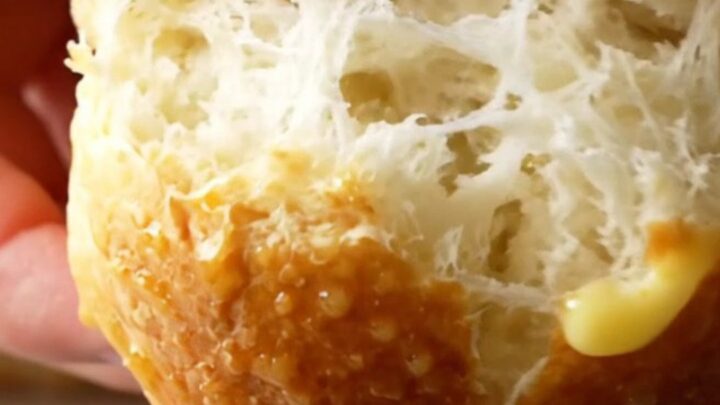
The buns will be beautifully golden brown, with a glossy sheen from the egg wash. The butter brushing will make the crust soft and fragrant. When you tear one open, the crumb should be pillowy, with fine, even air pockets.
Common mistakes
A common mistake is using liquid that is too hot, which kills the yeast and prevents the dough from rising. Another is over-flouring the dough, leading to dry, dense buns.
Be patient with the rises; a warm, draft-free spot is essential. If the dough doesn't double in the first rise, give it more time. When shaping, ensure the seams are pinched well, or the buns may unroll during baking.
How to tell it’s done
The buns are done when they are deep golden brown on top and sound hollow when tapped on the bottom. The internal temperature should read 190°F (88°C) on an instant-read thermometer.
If you do not have a thermometer, gently press the side of a bun; it should feel firm yet spring back. Overbaking will dry them out, so check at the 18-minute mark.
- Egg dishes: 160°F (71°C) in the thickest part
Up next · Part 3 of 3
4 variations · storage & make-ahead · 5 answers · printable card
Tips, FAQ & printable recipe (Part 3)← Back to the ingredients (Part 1)