Dinner · Part 2 of 3: Instructions
Smoky Penang Char Kway Teow with Wok Hei Step-by-step instructions
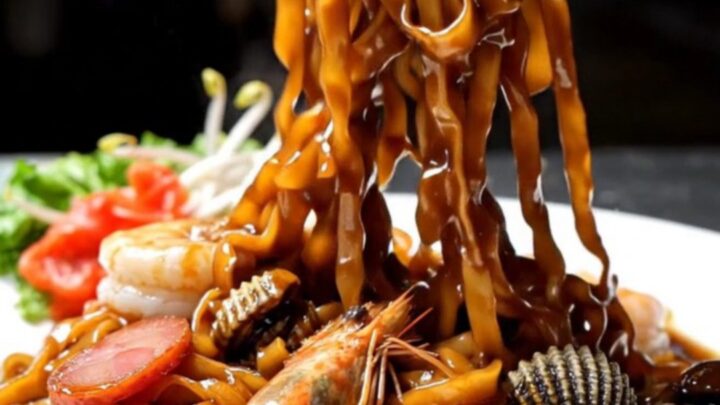
- Prep
- Cook
- Total
- Serves
- 2
Before you start
Preparation is the most important step for this fast-paced recipe. Have all ingredients measured, chopped, and placed within reach of the stove before you turn on the heat. The cooking process happens in under five minutes, so there is no time to chop or measure once the wok is hot.
Ensure your prawns are cleaned and deveined, the sausage is sliced thinly, and the noodles are loosened to prevent clumping. Proper mise en place ensures a smooth, stress-free cooking experience.
Ingredients at a glance (9)
- 2 tbsp pork lard
- 80 g Chinese lap cheong sausage, sliced
- 150 g prawns, peeled and deveined
- 1 tbsp garlic, minced
- 300 g flat hor fun noodles
- 45 ml dark caramel soy chili paste
- 1 egg, duck egg preferred
- 1/2 cup garlic chives, cut into 2-inch pieces
- 1 cup bean sprouts, rinsed
Instructions
Render and Sear
- Render and SearHeat the carbon-steel wok over high heat. Add the pork lard and sliced Chinese lap cheong sausage, rendering until the fat releases. Add the prawns and sauté until they start to turn pink and opaque.Look for Sausage fat is rendered and prawns are partially cooked.Safe temperature 145°F (63°C) internal temperature (shellfish)Tip Ensure the wok is very hot before adding ingredients.
The pork lard should be fully melted and fragrant. The Chinese sausage should be browned and releasing its oils, and the prawns should be pink and firm.
This initial phase sets the flavor foundation for the entire dish, ensuring that the savory components are adequately prepared before the noodles are added to the wok.
Stir-fry Noodles
- Stir-fry NoodlesAdd the garlic and the flat hor fun noodles to the wok. Pour in the dark caramel soy chili paste. Toss everything vigorously to ensure the noodles are evenly coated and charred by the heat.Look for Noodles are coated in dark sauce and showing char marks.Tip Stir constantly to prevent burning.
The flat rice noodles must be thoroughly coated in the dark soy paste and show signs of charring on the edges. The aroma should be intensely savory and slightly smoky. Check that the noodles are not sticking to the bottom of the wok and that the sauce has thickened slightly.
Final Toss
- Final TossPush the noodles to one side of the wok and crack the egg into the center. Let it set slightly, then toss it through the noodles along with the garlic chives and bean sprouts. Stir-fry for another 60 seconds until the egg is fully cooked to 160°F (71°C) and the chives are wilted.Look for Egg is fully cooked and vegetables are tender.Safe temperature 160°F (71°C) internal temperature (egg dishes)Tip Work quickly to maintain the high heat.
The egg should be fully cooked, coating the noodles with a creamy texture. The bean sprouts and garlic chives should be wilted but still recognizable. The final dish should be glossy, aromatic, and ready to serve immediately while steaming hot to ensure the best possible texture and flavor.
Common mistakes
A common mistake is overcrowding the wok, which drops the temperature and causes the noodles to steam rather than sear, leading to a loss of the signature wok hei. Another error is failing to have all ingredients ready, which leads to overcooked or burnt components while you scramble to add the next item.
Avoid using too much liquid, as this will prevent the sauce from caramelizing correctly. Finally, ensure the heat is consistently high; if the wok cools down, the dish will lack its distinct smoky character.
How to tell it’s done
The dish is done when the noodles are hot, glossy, and show visible signs of charring. The prawns should be opaque and cooked through to an internal temperature of 145°F (63°C). The duck egg should be fully integrated into the noodles and cooked through to 160°F (71°C).
The bean sprouts should be slightly wilted but still retain a subtle crunch, and the garlic chives should be soft and fragrant. The entire mixture should have a uniform, dark, and appetizing appearance.
- Shellfish: 145°F (63°C) in the thickest part
- Egg dishes: 160°F (71°C) in the thickest part
- Ground meat: 160°F (71°C) in the thickest part
- Steaks, chops and roasts: 145°F (63°C) in the thickest part, then a 3-minute rest
Up next · Part 3 of 3
2 variations · storage & make-ahead · 3 answers · printable card
Tips, FAQ & printable recipe (Part 3)← Back to the ingredients (Part 1)