Dinner · Part 1 of 3: Ingredients
Smoky BBQ Beef Brisket with Mashed Potatoes and Baked Beans
- Prep
- Cook
- Total
- Serves
- 8
A slice of brisket that bends instead of breaks, a bark so peppery it crackles, and that unmistakable pink smoke ring — this is the plate the video promises. Low-and-slow smoking does the real work, and the mashed potatoes and baked beans come together in the hours the smoker is quietly doing its job.
Smoked beef brisket is the centerpiece of true Southern barbecue, and it asks for only three things: a coarse salt-and-pepper rub, steady low heat, and patience. This version smokes a 5-lb brisket at 250°F (121°C) until it reaches 200°F (93°C) at the flat, then rests a full hour before it is sliced against the grain.
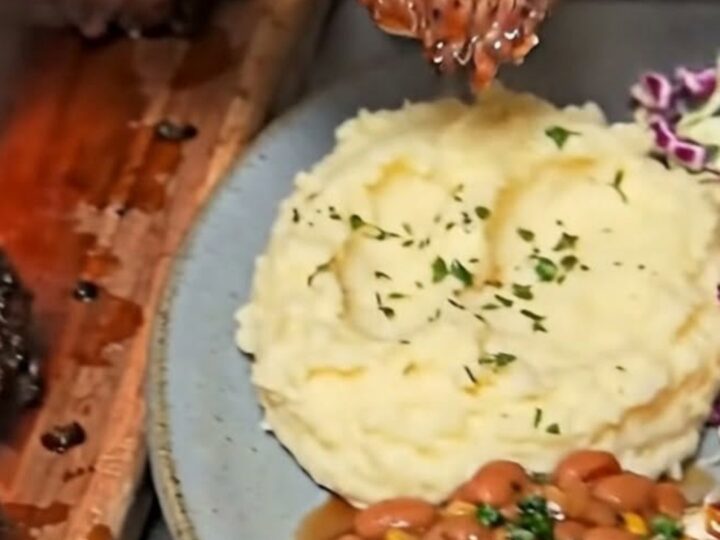
The video shows the payoff — tender, glistening slices lifted with tongs, a defined smoke ring under the bark, plated beside mashed potatoes and baked beans. Those sides are not an afterthought: russets boil and mash while the smoke rolls, and a skillet of molasses-sweetened beans simmers in the last half hour. Everything lands on the table at once, steaming and warm.
Ingredients
- 5 lb beef brisket, fat cap trimmed to 1/4 inch
- 1/4 cup kosher salt
- 1/4 cup coarsely ground black pepper
- 2 tbsp smoked paprika
- 1 tbsp garlic powder
- 1 tbsp onion powder
- 2 tbsp brown sugar
- 1 cup water, for spritzing
- 1 cup barbecue sauce, plus more for serving
Mashed Potatoes
- 3 lb russet potatoes, peeled and cut into chunks
- 6 tbsp unsalted butter, softened
- 3/4 cup whole milk, warmed
- 1/2 cup sour cream
- Kosher salt, to taste
Baked Beans
- 4 bacon slices, chopped
- 1 yellow onion, finely chopped
- 2 (15-oz) cans pinto beans, drained and rinsed
- 1/2 cup ketchup
- 1/3 cup brown sugar
- 2 tbsp molasses
- 1 tbsp yellow mustard
- 1 tbsp apple cider vinegar
Why this recipe works
Brisket is a tough, heavily worked muscle full of connective tissue, and that is exactly why it suits the smoker. Held at 250°F (121°C) for hours, the collagen dissolves slowly into gelatin, basting the fibers from within, while the fat cap renders and keeps the flat moist.
The coarse pepper-and-salt rub dries the surface, then sets into the dark, crumbly bark that gives every slice its bite — and the long exposure to wood smoke is what paints the pink ring just under it.
Wrapping in butcher paper once the bark is set is the second half of the method. The paper lets steam escape rather than trapping it, so the bark stays firm instead of turning soft, while the meat pushes through the final stretch to 200°F (93°C), where the fibers give up completely.
Cooking to temperature instead of to the clock is what makes the fork-tender bite the video shows: pull-apart soft, glossy with juices, still holding a clean slice.
Notes and substitutions
Choose a brisket with a fat cap of at least 1/2 inch so there is something to trim down to 1/4 inch; a flat alone works, but the point adds richer, fattier slices.
Kosher salt and coarsely ground black pepper are the backbone — table salt measures differently, so weigh or use kosher. Any neutral wood suits this rub; oak is the classic choice for beef. Butcher paper beats foil here because it breathes and protects the bark.
For the sides, starchy russets mash fluffiest; warm the milk before it goes in so the potatoes stay creamy rather than gluey. Canned pinto beans keep the baked beans to a 30-minute simmer — drain and rinse them well so the sauce, not the can, sets the flavor. If the smoker runs small, cook the beans in a cast-iron skillet on the stove and set them near the smoker for a whisper of smoke at the end.
- beef brisket: A beef chuck roast smokes well on the same schedule; pull it at 200°F (93°C) for shredding instead of slicing.
- whole milk: Half-and-half makes even richer mashed potatoes; warm it before adding so the mash stays creamy.
- canned pinto beans: Navy beans or kidney beans work the same way; drain and rinse them before they hit the skillet.
- yellow mustard: Dijon mustard adds a sharper edge to the beans; use the same tablespoon amount.
Equipment
- cutting board and sharp slicing knife
- small bowl for the rub
- offset smoker or charcoal grill set up for indirect heat
- spray bottle
- instant-read or leave-in meat thermometer
- butcher paper or unwrapped aluminum foil
- large pot and potato masher
- cast-iron skillet or Dutch oven
Up next · Part 2 of 3
10 steps · 8 h of cooking · what to look for at each stage
Step-by-step instructions (Part 2)