Dinner · Part 2 of 3: Instructions
Slow-Simmered Roasted Tomato Beef Ragù Step-by-step instructions
- Prep
- Cook
- Total
- Serves
- 4
Before you start
Before cooking, dice the carrot, celery, and onion into small, even pieces. Mince the garlic. Measure out the tomato paste, oregano, salt, and pepper. Grate the parmesan and cube the fresh mozzarella.
Have the crushed tomatoes and olive oil ready. Bring a large pot of salted water to a boil for the pasta, and reserve a mug to scoop out pasta water. Set out a large skillet or Dutch oven, tongs, and a wooden spoon.
Ingredients at a glance (16)
- 2 tbsp olive oil
- 1 lb ground beef
- 1 medium carrot, finely diced
- 1 stalk celery, finely diced
- 1/2 medium yellow onion, finely diced
- 3 cloves garlic, minced
- 3 tbsp tomato paste
- 2 cans (28 oz each) crushed San Marzano tomatoes
- 1 tsp dried oregano
- Salt to taste
- Black pepper to taste
- 12 oz fresh tagliatelle
- 1/2 cup pasta water, reserved
- 1/2 cup grated parmesan cheese, plus more for serving
- 4 oz fresh mozzarella, cubed
- 1/4 cup fresh basil leaves, torn
Instructions
Building the Base
- Sear the Beef and VegetablesHeat the olive oil in a large skillet or Dutch oven over medium-high heat. Add the ground beef and cook, breaking it up with a wooden spoon, until it is deeply browned and caramelized, about 5 minutes. Add the diced carrot, celery, onion, and minced garlic. Cook, stirring occasionally, until the vegetables are soft and the onion is translucent, about 5 more minutes.Look for The beef is browned with a rich crust, and the vegetables are tender and fragrant.Safe temperature 160°F (71°C) internal temperature (ground meat)Tip Do not stir too often; let the beef sit to develop a deep brown crust.
- Build the Sauce BaseStir in the tomato paste and cook for 1 minute, until it darkens slightly. Pour in the crushed San Marzano tomatoes, dried oregano, salt, and black pepper. Stir everything together, scraping up any browned bits from the bottom of the pan. Bring the sauce to a gentle simmer.Look for The sauce is a deep red and smells richly of tomatoes and oregano.Tip Tomato paste darkening in the oil adds a deep, savory flavor.
- Simmer the RagùReduce the heat to low and let the sauce simmer gently, uncovered, for 30 minutes. Stir occasionally to prevent sticking. The sauce should thicken slightly and the flavors meld together. If it becomes too thick, add a splash of water or reserved pasta water later.Look for The sauce is glossy, thick, and bubbling gently with a concentrated tomato aroma.Tip A low, steady simmer is key—do not boil, which can make the sauce bitter.
After this phase, the beef should be deeply browned and the vegetables soft and translucent. The sauce should be a deep red, bubbling gently, with a rich tomato aroma.
The oil may separate slightly, which is fine—it will emulsify later. The sauce should be thick enough to coat a spoon but still pourable. Taste and adjust salt and pepper before moving on.
Bringing It Together
- Cook the TagliatelleBring a large pot of salted water to a boil. Add the fresh tagliatelle and cook until al dente according to package directions, usually 2-3 minutes for fresh pasta. Reserve at least 1/2 cup of the pasta water before draining. Drain the pasta in a colander.Look for The pasta is tender but still has a slight bite in the center.Tip Fresh pasta cooks quickly—watch it closely to avoid overcooking.
- Toss Pasta with SauceAdd the drained tagliatelle directly into the skillet with the simmering sauce. Toss well with tongs to coat every strand. Add the reserved pasta water a little at a time to loosen the sauce and help it cling to the pasta.Look for The pasta is evenly coated with the rich sauce.Tip The starchy pasta water helps the sauce emulsify and cling to the noodles.
- Melt in the CheesesRemove the skillet from the heat. Sprinkle the grated parmesan over the pasta and toss to combine. Add the cubed fresh mozzarella and gently fold it in until the cheese begins to melt and become silky. The residual heat is enough—do not return to the stove.Look for The cheese is melted and stringy, and the sauce is creamy and glossy.Tip Off-heat tossing prevents the cheese from becoming rubbery.
- Finish with Fresh BasilTear the fresh basil leaves directly over the pasta and toss once more to distribute. The basil will wilt slightly from the heat, releasing its aroma. Taste and adjust seasoning with salt and pepper if needed.Look for Bright green basil flecks the pasta, adding a fresh, herbal note.Tip Add basil at the very end to keep its color and fragrance vivid.
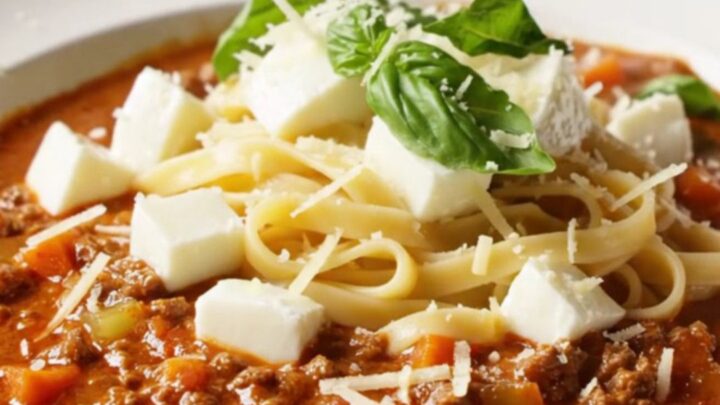
The pasta should be al dente and the sauce clinging to every strand. The parmesan should melt into the sauce, making it glossy and creamy. The mozzarella cubes should be soft and slightly melted, with a few stringy pulls. The basil should be bright green and fragrant. The dish should look and smell irresistibly cozy.
Serving the Ragù
- Plate and GarnishTwirl a generous portion of the ragù-coated tagliatelle into wide ceramic bowls. Shower each bowl with extra grated parmesan and a few fresh basil leaves. Serve immediately while hot and silky.Look for The pasta is beautifully twirled, with melted cheese and basil on top.Tip Wide bowls show off the glossy sauce and make twirling easy.
The final dish should be served immediately, with extra parmesan and basil on top. The sauce should be silky and rich, coating the pasta without being overly thick. Each bite should have tender beef, soft vegetables, and a savory, slightly sweet tomato flavor. The cheese should be melted and creamy, and the basil should add a fresh, herbal finish.
Common mistakes
One common mistake is not browning the beef enough. If you stir too often, the meat steams instead of caramelizing, and you lose that deep flavor. Another is boiling the sauce too vigorously, which can make it bitter and thin.
Keep the simmer low and gentle. Also, add the pasta water gradually—too much can make the sauce watery. Finally, do not add the mozzarella over high heat; it will become tough and stringy.
How to tell it’s done
The ragù is done when the sauce has thickened to a glossy, spoon-coating consistency and the beef is fully cooked, reaching an internal temperature of 160°F (71°C). The pasta should be al dente—tender but still firm to the bite.
When you toss the pasta with the sauce, it should be well-coated and the cheese melted into a silky, creamy finish. Taste for salt and pepper, and serve immediately.
- Ground meat: 160°F (71°C) in the thickest part
Up next · Part 3 of 3
4 variations · storage & make-ahead · 5 answers · printable card
Tips, FAQ & printable recipe (Part 3)← Back to the ingredients (Part 1)