Dinner · Part 2 of 3: Instructions
Slow-Simmered Pakistani Beef Nihari for Tender Results Step-by-step instructions
- Prep
- Cook
- Total
- Serves
- 6
Before you start
Before beginning, ensure the beef shanks are properly trimmed of excessive surface fat but retain their marrow bones, as these are essential for the gravy's richness. Prepare the caramelized onions by cooking them in a separate skillet until they reach a deep, dark brown color, which provides the base flavor and color for the stew.
Measure out all spices carefully to avoid overwhelming the delicate balance of the Nihari masala. Ensure the slow cooker is clean and ready, and have the whole-wheat flour measured for the final thickening step.
Ingredients at a glance (7)
- 3 lb cross-cut beef shanks with marrow bones
- 2 large caramelized onions
- 2 tbsp ginger-garlic paste
- 3 tbsp Nihari masala (fennel, dry ginger, pippali long pepper)
- 4 cups beef stock
- 1/2 cup whole-wheat atta flour, toasted
- ginger juliennes, sliced green chilies, cilantro, lime, and hot khameeri naan for serving
Instructions
Ingredient Layering
- Layering the CrockpotPlace the beef shanks with marrow bones into the ceramic slow cooker insert. Add the caramelized onions, ginger-garlic paste, the Nihari masala blend of fennel, dry ginger, and long pepper, and pour in the beef stock. Ensure the meat is well-distributed to allow even cooking during the long simmer.Look for The beef shanks should be partially submerged in the liquid to ensure they remain moist throughout the cooking process.Tip Caramelizing the onions until they are deep brown before adding them to the slow cooker significantly enhances the depth of the final gravy color and flavor.
At this stage, the crockpot should be filled with the beef shanks and aromatics, with the beef stock just covering the ingredients. The kitchen should begin to smell faintly of ginger and warming spices. Ensure the shanks are nestled snugly in the ceramic insert to promote even cooking during the long simmer ahead.
Slow Simmering Process
- Slow SimmeringSet the slow cooker to the low setting and cook for eight hours. This long, gentle simmer is essential for breaking down the connective tissue in the beef shanks until they become fork-tender and the marrow bones release their richness into the gravy. Ensure the internal temperature reaches at least 145°F (63°C) and let the meat rest for at least 3 minutes before serving.Look for The beef should be pulling away from the bone easily when tested with a fork.Safe temperature 145°F (63°C) internal temperature (steaks, chops and roasts)Tip Avoid lifting the lid frequently during the cooking process to ensure a consistent temperature and moisture level inside the cooker.
After eight hours of slow cooking, the beef shanks should appear significantly softened, with the meat visibly tender and potentially falling off the bones. The gravy will have taken on a deep, rich color and a fragrant aroma. The marrow bones will have contributed their essence, signaling the dish is ready for the final thickening step.
Final Thickening and Garnish
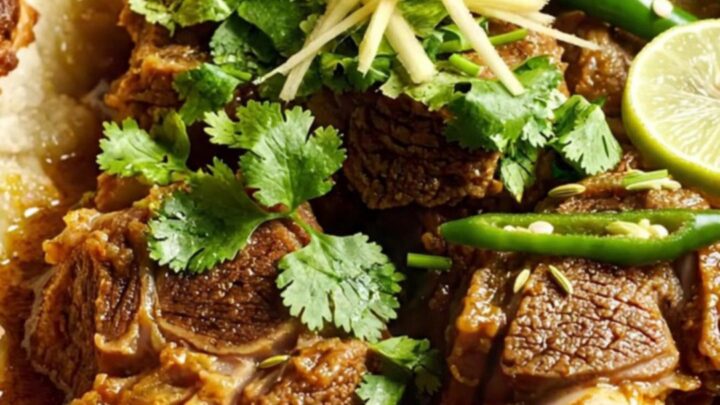
- Thickening and ServingWhisk the toasted whole-wheat atta flour with a small amount of warm water to form a smooth slurry. Gradually whisk this mixture into the simmering gravy until it reaches a silky, velvet consistency. Let the stew rest for 10 minutes before serving with fresh ginger juliennes, green chilies, cilantro, lime, and hot khameeri naan.Look for The gravy will transform from thin to a rich, glossy consistency that coats the back of a spoon.Tip Toasting the flour slightly in a dry pan before making the slurry removes any raw flour taste and adds a subtle nutty depth to the finished dish.
Once the atta slurry is whisked in, the gravy should transform into a thick, velvety sauce that is glossy and uniform. It should coat the back of a spoon without dripping off too quickly.
The final addition of fresh ginger, chilies, cilantro, and lime will provide a bright, sharp contrast to the deep, savory notes of the slow-cooked beef.
Common mistakes
A common mistake is failing to toast the whole-wheat flour, which can lead to a raw, powdery taste in the finished gravy. Another error is rushing the cooking time; eight hours on low is necessary for the tough collagen in the shanks to fully convert into gelatin.
Avoid adding the flour slurry too early or in one large clump, as this can result in a lumpy sauce. Finally, ensure the beef is not overcrowded, as this prevents consistent heat distribution and leads to uneven cooking.
How to tell it’s done
The beef is perfectly done when the meat is exceptionally tender and pulls away from the bone with minimal pressure from a fork. The internal temperature of the meat should reach at least 145°F (63°C).
The gravy will have reduced slightly, appearing thick, glossy, and dark amber in color. Before serving, let the dish rest for at least 10 minutes to allow the flavors to meld and the gravy to set into a silky consistency that coats the meat evenly.
- Steaks, chops and roasts: 145°F (63°C) in the thickest part, then a 3-minute rest
Up next · Part 3 of 3
2 variations · storage & make-ahead · 3 answers · printable card
Tips, FAQ & printable recipe (Part 3)← Back to the ingredients (Part 1)