Dinner · Part 1 of 3: Ingredients
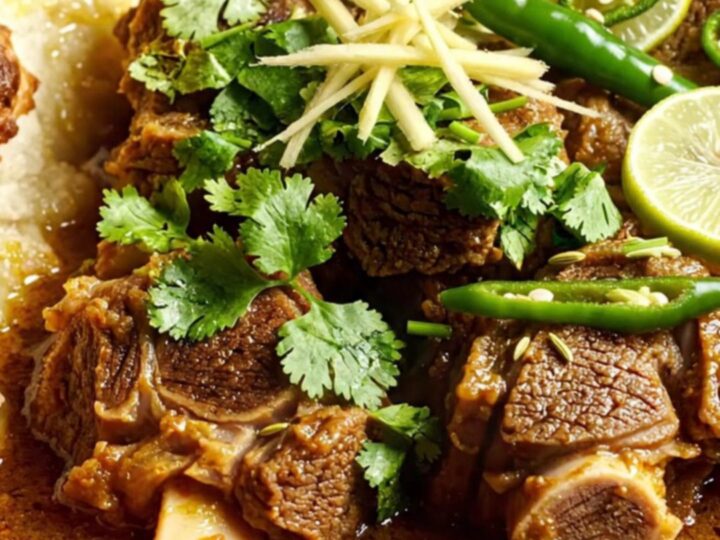
Slow-Simmered Pakistani Beef Nihari for Tender Results
- Prep
- Cook
- Total
- Serves
- 6
Discover the secret to authentic Pakistani Beef Nihari, a dish celebrated for its incredibly tender meat and deep, complex spice profile. By utilizing a long, slow-simmering process in a ceramic slow cooker, the tough beef shanks are transformed into succulent pieces that melt on contact, while the marrow bones contribute to an exceptionally rich and velvety gravy that coats every bite perfectly.
Beef Nihari is a cornerstone of traditional Pakistani cooking, often served as a hearty breakfast or a comforting dinner. This recipe relies on the methodical layering of aromatics and spices, combined with the patience of an eight-hour low-temperature cook.
The inclusion of fennel, dry ginger, and long pepper creates a distinctively fragrant base, while the toasted whole-wheat flour thickener provides the signature glossy texture that defines an authentic Nihari experience. Perfectly suited for slow cookers, this method ensures the meat reaches peak tenderness without constant monitoring.
Ingredients
Main
- 3 lb cross-cut beef shanks with marrow bones
- 2 large caramelized onions
- 2 tbsp ginger-garlic paste
- 3 tbsp Nihari masala (fennel, dry ginger, pippali long pepper)
- 4 cups beef stock
Thickener
- 1/2 cup whole-wheat atta flour, toasted
Serving
- ginger juliennes, sliced green chilies, cilantro, lime, and hot khameeri naan for serving
Why this recipe works
The slow-cooking method is vital because it provides a consistent, low-heat environment that gently breaks down the collagen found in beef shanks. This process takes time, but it is the only way to achieve the characteristic 'melt-on-contact' texture that defines a classic Nihari.
Over eight hours, the marrow bones also slowly release their richness, which emulsifies into the spiced gravy, creating a mouthfeel that is both luxurious and deeply satisfying.
Layering the ingredients at the start ensures that the aromatic base of ginger, garlic, and spices infuses the beef thoroughly. The addition of the toasted atta flour slurry at the very end is a critical technique that bridges the gap between a simple stew and a refined, velvet-like gravy. By whisking the flour in gradually, the sauce gains body and sheen without becoming clumpy, resulting in a professional-grade finish that holds onto the meat beautifully.
Notes and substitutions
The choice of beef shanks is non-negotiable for this recipe. The combination of meat, connective tissue, and marrow bones is essential to achieving the correct texture and flavor profile. If using a different cut, the result will lack the gelatinous quality that makes Nihari special.
Caramelizing the onions beforehand is equally important; this step develops the dark, amber color of the sauce and adds a foundational sweetness that balances the heat of the long pepper and ginger.
For the best results, use a high-quality, freshly ground Nihari masala blend. If specific spices like pippali long pepper are hard to source, a small amount of black pepper mixed with a dash of cinnamon can mimic the profile.
Ensure that the slow cooker insert is not overcrowded, as this allows for proper heat circulation. The toasted atta flour is the traditional thickener; while other flours might work, they will not provide the same nutty flavor or silky mouthfeel.
- whole-wheat atta flour: all-purpose flour can be used if atta flour is unavailable
- pippali long pepper: black pepper mixed with a pinch of cinnamon
Equipment
- Slow cooker
- Skillet for caramelizing onions
- Whisk
- Small bowl
Up next · Part 2 of 3
3 steps · 8 h of cooking · what to look for at each stage
Step-by-step instructions (Part 2)