Dinner · Part 2 of 3: Instructions
Slow-Roasted Lamb Shoulder with Crispy Potatoes Step-by-step instructions
- Prep
- Cook
- Total
- Serves
- 6
Before you start
Before beginning, gather all ingredients and equipment to ensure a smooth cooking process. Remove the bone-in lamb shoulder from the refrigerator thirty minutes prior to prep, allowing it to lose its chill for more even roasting.
Wash and scrub the potatoes thoroughly, then slice them into uniform half-inch rounds. Measure out the herb garlic paste and broth. Preheat the oven to 325°F (163°C) and position the oven rack in the lower-middle slot to accommodate the roasting pan.
Ingredients at a glance (4)
- 1 whole bone-in lamb shoulder (4 to 5 pounds)
- 1/2 cup herb garlic paste
- 3 lb potatoes, sliced into 1/2-inch rounds
- 2 cups broth
Instructions
Preparation and Coating
- Prepare the Roasting PanIn a large roasting pan, arrange the sliced potatoes in an even, slightly overlapping layer. Carefully pour the rich broth around the potatoes, ensuring they are partially submerged but not completely covered. This liquid will keep the potatoes tender and create a savory steam during the long roasting process.Look for The potatoes should form a flat, even bed.Tip Layering the potatoes evenly ensures they cook at the same rate under the lamb.
- Coat the LambPat the bone-in lamb shoulder dry with paper towels. Rub the herb garlic paste generously all over the lamb, pressing it into all the crevices to ensure the meat is fully coated. This flavorful paste will form a delicious, aromatic crust as the lamb slow-roasts.Look for The lamb should be fully coated in the paste.Tip Drying the meat first helps the paste adhere better to the surface.
By the end of this phase, the lamb shoulder is completely covered in the fragrant herb garlic paste, and the sliced potatoes are neatly arranged at the bottom of the roasting pan. The broth should be poured in, surrounding the potatoes without submerging them. The lamb should rest squarely on top of the potato layer, ready to go into the preheated oven.
The Slow Roast
- Roast the Lamb and PotatoesPlace the coated lamb shoulder directly on top of the layered potatoes in the roasting pan. Transfer the pan to the preheated oven. Roast uncovered at 325°F (163°C) for about 3.5 to 4 hours, allowing the lamb fat to render down and crisp the potatoes.Look for The kitchen will smell rich and aromatic.Tip If the top browns too quickly, tent it loosely with aluminum foil.
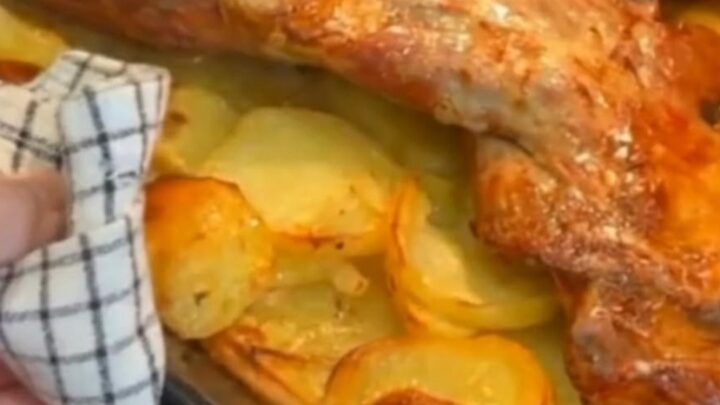
At the end of the roasting phase, the lamb shoulder should have a beautiful, deep golden-brown crust, and the meat should look slightly retracted from the bone.
The potatoes underneath should be sizzling in the reduced broth and rendered lamb fat, looking tender and golden. The aroma of roasted garlic, herbs, and savory lamb should fill the entire kitchen.
Resting and Shredding
- Check Doneness, Rest, and ShredVerify that the lamb is cooked through. Ensure the internal temperature of the lamb reaches at least 145°F (63°C) on a meat thermometer, though for fall-apart tender meat, cook it to 203°F (95°C). Remove the pan from the oven and let the lamb rest for at least 3 minutes. Use two forks to shred the tender meat directly over the glistening, golden potatoes before serving.Look for The meat should shred easily with zero resistance.Safe temperature 145°F (63°C) internal temperature (steaks, chops and roasts)Tip Resting the lamb allows the savory juices to redistribute, keeping the meat succulent.
At this final stage, the lamb shoulder has rested to lock in its juices and is ready to shred. When you press two forks into the meat, it should pull apart with absolutely no resistance, releasing steam and savory juices over the crispy, tender potatoes below. The potatoes should be soft, rich, and glistening with the pan drippings.
Common mistakes
One common mistake is roasting the lamb at too high a temperature, which causes the exterior to dry out and burn before the tough collagen inside has a chance to melt.
Another frequent error is slicing the potatoes too thin, causing them to disintegrate into a mushy texture during the long roasting process. Finally, failing to let the roasted lamb rest before shredding will cause all the delicious, savory juices to run out onto the pan, leaving the meat dry.
How to tell it’s done
To determine perfect doneness, insert a meat thermometer into the thickest part of the lamb shoulder, avoiding the bone.
The safe minimum internal temperature for lamb is 145°F (63°C) followed by a three-minute rest, but for optimal fall-apart tenderness, aim for an internal temperature of around 203°F (95°C). The ultimate test of doneness is when the meat easily pulls away from the bone and shreds effortlessly with two forks.
- Steaks, chops and roasts: 145°F (63°C) in the thickest part, then a 3-minute rest
Up next · Part 3 of 3
2 variations · storage & make-ahead · 3 answers · printable card
Tips, FAQ & printable recipe (Part 3)← Back to the ingredients (Part 1)