Dinner · Part 2 of 3: Instructions
Slow-Roasted Honey Garlic Pork Shoulder for Tender Results Step-by-step instructions
- Prep
- Cook
- Total
- Serves
- 6
Before you start
Before beginning the roast, ensure that the pork is removed from its packaging and patted dry with paper towels. Keep the meat in the refrigerator until the exact moment you are ready to prepare it to maintain food safety.
Preheat the oven well in advance to ensure a consistent environment from the moment the pork is introduced. Have all glaze ingredients measured and ready, and ensure the roasting pan is clean and ready to accommodate the size of the meat without being unnecessarily large.
Ingredients at a glance (3)
- 3 lb pork shoulder, trimmed of excess fat
- 1/2 cup honey
- 4 cloves garlic, minced
Instructions
Preparation and Scoring
- Prepare the PorkPreheat the oven to 325°F (163°C). Score the fat cap of the pork shoulder in a crosshatch pattern using a sharp knife to allow the glaze to penetrate deep into the meat during the roasting process.Look for The fat cap should be deeply scored without cutting into the meat below.Tip Keep the pork refrigerated until you are ready to score and glaze it.
The pork shoulder should be clean, dry, and scored with a sharp knife. The oven must be fully preheated to the target temperature. At this stage, the meat should be kept cold until the moment of seasoning, and the roasting pan should be positioned on the center rack for optimal airflow.
Glazing the Roast
- Create and Apply GlazeWhisk together the honey and minced garlic in a small bowl. Brush the mixture generously over the entire surface of the pork shoulder, ensuring the scored areas are well-coated with the sticky glaze.Look for The pork should be thoroughly coated and glistening with the honey garlic mixture.Tip Reserve a small amount of the glaze to reapply during the final stages of cooking for extra caramelization.
The honey and garlic mixture should be combined into a smooth, uniform glaze. The pork should be thoroughly brushed, ensuring the glaze covers the entire surface and sinks into the scored fat.
The meat should look glossy and fragrant, with the garlic evenly distributed across the surface, preparing it for the transformation in the oven.
Roasting and Shredding
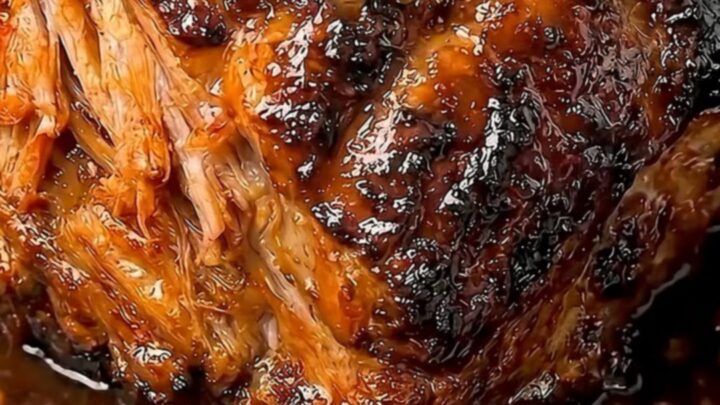
- Slow Roast and RestPlace the pork in a roasting pan and roast in the preheated oven for approximately 4 hours. Ensure the internal temperature reaches 145°F (63°C). Remove from the oven and let the roast rest for at least 15 minutes before shredding with a fork.Look for The pork should be tender enough to pull apart easily with a fork, with a dark, caramelized exterior.Safe temperature 145°F (63°C) internal temperature (steaks, chops and roasts)Tip Cover the pan with foil if the glaze begins to darken too quickly before the meat is fully tender.
The pork should be deeply browned and caramelized, with the sugars in the honey having turned a rich mahogany color. The meat must be fork-tender, pulling away in distinct, moist strands. After the required resting period, the meat should be succulent and aromatic, ready to be shredded and served with the accumulated pan juices.
Common mistakes
A common mistake is rushing the roasting process by increasing the temperature, which can lead to a burnt exterior while the interior remains tough. Another error is failing to score the fat cap, which prevents the glaze from adhering and the fat from rendering properly.
Avoid opening the oven door frequently, as this causes significant temperature fluctuations that can extend the cooking time. Finally, do not discard the pan juices, as they contain the concentrated flavors of the honey and garlic that are essential for drizzling over the shredded meat.
How to tell it’s done
The pork is done when it reaches an internal temperature of 145°F (63°C) and the meat fibers pull apart easily with minimal pressure from a fork. Visually, the exterior should appear dark, sticky, and well-caramelized, with the fat rendered down significantly.
If the roast feels resistant when poked with a fork, it requires more time. Always use a digital meat thermometer inserted into the thickest part of the meat to verify the internal temperature, ensuring it has rested for at least 15 minutes to redistribute the juices.
- Steaks, chops and roasts: 145°F (63°C) in the thickest part, then a 3-minute rest
Up next · Part 3 of 3
2 variations · storage & make-ahead · 3 answers · printable card
Tips, FAQ & printable recipe (Part 3)← Back to the ingredients (Part 1)