Dinner · Part 2 of 3: Instructions
Slow-Roasted Honey Garlic Pork Shoulder for Tender Results Step-by-step instructions
- Prep
- Cook
- Total
- Serves
- 8
Before you start
Before beginning, ensure that your pork shoulder has been removed from the refrigerator about 30 minutes before cooking to help it reach room temperature. Preheat your oven to the specified 325°F (165°C) to ensure a consistent cooking environment.
Prepare your baking pan by lining it with parchment paper if you want easier cleanup, though it is not strictly necessary. Have your whisk and small bowl ready for mixing the glaze, and ensure your meat thermometer is calibrated and within reach for checking the doneness once the roasting process is complete.
Ingredients at a glance (3)
- 4 lb pork shoulder
- 1/2 cup honey
- 4 cloves garlic, minced
Instructions
Preparation and Glazing
- Prepare the glaze and meatPreheat the oven to 325°F (165°C). In a small mixing bowl, whisk together the honey and minced garlic until well combined. Place the pork shoulder into a large metal baking pan and pour the honey garlic mixture evenly over the top of the meat, ensuring it is well coated.Look for The meat should be fully coated with the glaze.Tip Ensure the baking pan is large enough to contain the meat and any juices that will render during cooking.
At the end of this phase, the pork shoulder should be thoroughly coated in the honey garlic mixture and placed in the baking pan. The oven should be fully preheated, and the pan should be tightly sealed with foil. Ensure that the garlic is evenly distributed and the honey is well emulsified before placing the pan in the oven, as this creates the foundation for the deep, savory-sweet flavor that will develop during the long roasting process.
Slow Roasting
- Slow roast the porkCover the baking pan tightly with aluminum foil to trap the moisture. Place the pan in the preheated oven and roast for approximately 4 to 5 hours. This slow cooking process is essential for breaking down the connective tissues, resulting in the desired tender, shreddable texture.Look for The meat should be very tender and easily pierced with a fork.Tip Check the oven occasionally to ensure the liquid in the pan does not evaporate entirely.
After several hours, the pork should be significantly softer and the kitchen should be filled with the rich aroma of roasting meat and garlic. The meat should look slightly shrunk and the juices in the pan should be abundant.
If you lift a corner of the foil, the pork should appear moist. This is the stage where the magic happens, so keep the pan covered to maintain the internal environment that ensures the pork remains tender and succulent throughout the long cooking time.
Caramelizing and Finishing
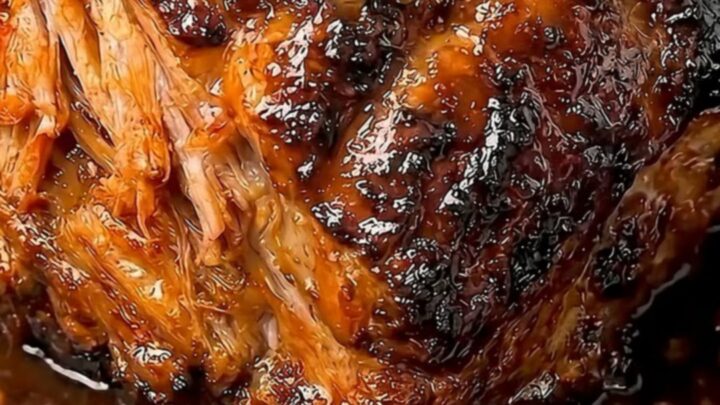
- Glaze and finishRemove the foil and increase the oven temperature to 400°F (200°C). Roast for another 15 to 20 minutes to caramelize the exterior glaze. Ensure the internal temperature of the pork reaches 145°F (63°C). Remove from the oven and let the meat rest for at least 3 minutes before shredding with a fork to serve.Look for The glaze should be sticky and dark, and the meat should reach an internal temperature of 145°F (63°C).Safe temperature 145°F (63°C) internal temperature (steaks, chops and roasts)Tip Allowing the meat to rest is crucial for retaining the juices.
Once the foil is removed and the oven temperature is increased, the glaze should begin to bubble and turn a deep, golden-brown color. The meat should be tender enough to pull apart easily with a fork. Check the internal temperature with your meat thermometer to confirm it has reached 145°F (63°C). The final result should be a beautiful, glistening roast that smells caramelized and savory, ready to be shredded and served to your guests or family for a delicious, hearty meal.
Common mistakes
Avoid the temptation to rush the cooking process by raising the oven temperature too early, as this will result in a tough, dry exterior before the inside has had a chance to become tender.
Another common error is failing to cover the pan tightly with foil, which allows moisture to escape and prevents the meat from reaching that signature shreddable texture. Finally, do not skip the resting phase, as cutting into the pork immediately upon taking it out of the oven will cause the juices to run out, leaving the meat dry and less enjoyable.
How to tell it’s done
The pork is perfectly done when it reaches an internal temperature of 145°F (63°C). At this stage, the meat should be exceptionally tender, and the exterior glaze should be dark, sticky, and well-caramelized. Use a meat thermometer inserted into the thickest part of the shoulder to confirm the temperature.
Once done, remove the pan from the oven and let the pork rest for at least 3 minutes; this resting period is mandatory to allow the internal juices to redistribute throughout the meat, ensuring every bite is succulent and flavorful.
- Steaks, chops and roasts: 145°F (63°C) in the thickest part, then a 3-minute rest
Up next · Part 3 of 3
2 variations · storage & make-ahead · 3 answers · printable card
Tips, FAQ & printable recipe (Part 3)← Back to the ingredients (Part 1)