Dinner · Part 2 of 3: Instructions
Slow-Roasted Beef Tenderloin with Herb Potatoes Step-by-step instructions
- Prep
- Cook
- Total
- Serves
- 4
Before you start
Before beginning, ensure all ingredients are measured and ready, as the cooking process moves quickly once the heat is applied. Scrub the baby potatoes thoroughly to remove any dirt, then slice them into uniform halves to ensure they roast at the same rate.
Pat the beef tenderloin completely dry to ensure a perfect, deep-brown sear. Allow the beef to sit at room temperature for 30 minutes to ensure it cooks evenly, and keep your meat thermometer accessible to monitor the internal temperature precisely.
Ingredients at a glance (4)
- 2 lb beef tenderloin, trimmed
- 1 lb baby potatoes, scrubbed and halved
- 4 tbsp unsalted butter
- 2 tbsp fresh herbs, chopped
Instructions
Preparation and Seasoning
- Prepare the IngredientsBegin by cleaning the baby potatoes and slicing them into uniform halves to ensure even cooking. Pat the beef tenderloin dry with paper towels to facilitate a better sear. Ensure the beef is at room temperature for about 30 minutes before starting the cooking process to promote uniform heat distribution throughout the roast.Look for The beef should be dry and the potatoes should be clean and halved.Tip Removing the beef from the refrigerator early helps the center reach the target temperature without overcooking the exterior.
At this stage, the beef is properly prepared and at room temperature. The potatoes are sliced uniformly, and all equipment is laid out within reach. The kitchen is organized, ensuring a smooth transition to the high-heat cooking phase. Everything is ready to go into the pan, with the meat and vegetables prepared to ensure they cook evenly and efficiently once the searing process begins.
Searing and Basting
- Sear and Baste the BeefHeat a heavy cast iron skillet over medium-high heat. Add the beef tenderloin and sear it until a deep golden-brown crust forms on all sides. Once seared, add the butter and fresh herbs to the pan. Baste the beef continuously with the foaming, aromatic butter to infuse flavor into the crust. Continue cooking until the meat reaches an internal temperature of 145°F (63°C) for medium-rare, then let the meat rest at least 3 minutes.Look for The butter will foam and smell aromatic, and the beef will develop a deep brown crust.Safe temperature 145°F (63°C) internal temperature (steaks, chops and roasts)Tip Use a large spoon to continuously pour the melted herb butter over the meat during the final minutes of cooking.
The beef is now beautifully seared on all sides, with a deep, rich brown crust. The butter has melted and is foaming, releasing the aromatic oils from the fresh herbs. The kitchen smells of toasted butter and savory beef, indicating that the flavors are successfully penetrating the meat. The beef is approaching the target temperature, and the exterior is perfectly caramelized and ready for the final roast.
Final Roast and Resting
- Roast Potatoes and RestAdd the halved baby potatoes to the skillet, tossing them in the remaining juices and butter. Roast until they are tender and golden brown on the edges. Remove the beef from the heat and transfer it to a cutting board. Once rested, slice the beef against the grain and serve alongside the hot, seasoned potatoes.Look for The potatoes should be fork-tender and golden, and the beef juices should settle during the resting period.Tip Resting the meat is essential to ensure the juices redistribute, resulting in a tender and succulent final slice.
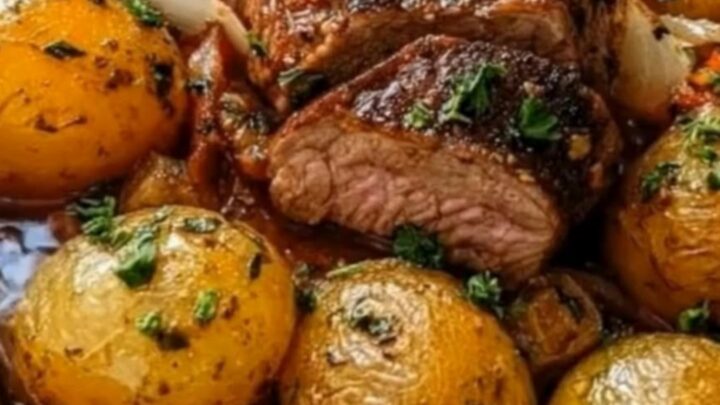
The potatoes are now golden brown, tender, and coated in the flavorful pan drippings. The beef has finished cooking and is resting on a cutting board, allowing the juices to settle.
The final product is visually appealing, with the contrast between the browned crust of the beef and the roasted potatoes. The dish is now ready for slicing and immediate service to ensure the best possible temperature and texture.
Common mistakes
Avoid overcrowding the skillet, as this will cause the beef and potatoes to steam rather than sear, preventing the development of a crispy crust. If the pan becomes too crowded, cook the ingredients in batches.
Additionally, resist the urge to move the beef prematurely while it is searing; let it develop a dark brown crust undisturbed. Finally, do not use a high-smoke-point oil if you are relying on butter alone; monitor the heat levels carefully to prevent the butter from burning during the basting phase.
How to tell it’s done
To verify the beef is cooked to perfection, use an instant-read thermometer inserted into the thickest part of the meat. For a perfect medium-rare, look for an internal temperature of 145°F (63°C).
The meat should feel firm yet yielding to the touch, and the juices should run clear. Do not skip the resting period, as it is the most critical step for achieving the desired tenderness. The potatoes are done when they are fork-tender and possess a golden, crispy skin.
- Steaks, chops and roasts: 145°F (63°C) in the thickest part, then a 3-minute rest
Up next · Part 3 of 3
2 variations · storage & make-ahead · 3 answers · printable card
Tips, FAQ & printable recipe (Part 3)← Back to the ingredients (Part 1)