Dinner · Part 1 of 3: Ingredients
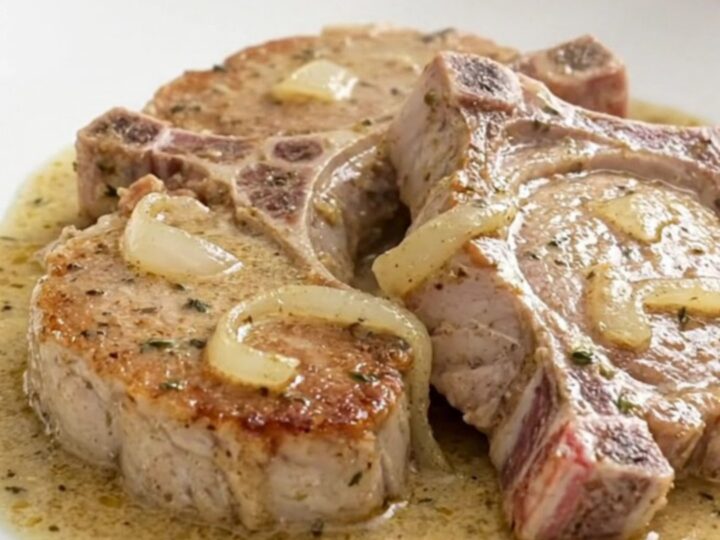
Slow Cooker White Wine Pork Chops in Creamy Onion Sauce
- Prep
- Cook
- Total
- Serves
- 6
A slow cooker dinner that tastes far more effortful than it is: boneless pork chops braised over sweet onion rings, smashed garlic and thyme, then drowned in a sauce of white wine whisked with cream of chicken soup. Hours of gentle heat turn an everyday cut into fork-tender meat, and the sauce you pour over it at the end is thick, creamy and studded with soft onions. It is the kind of meal that fills the house with a savory aroma all afternoon and asks almost nothing of the cook.
This is the slow cooker at its most reliable. Raw chops go straight into the ceramic insert — no browning, no extra pan — followed by sliced onions, garlic and a sprinkle of thyme. White wine is whisked with condensed cream of chicken soup until smooth, poured over the top, and the lid goes on.
Four to five hours on low later, the chops are tender enough to cut with a fork and sitting in a pale, creamy sauce that tastes like it simmered on a stovetop all day. Serve the chops with mashed potatoes, rice or egg noodles to catch every drop, and let the cooker do the rest. It is a five-ingredient dinner that solves the weeknight question before it is even asked.
Ingredients
- 6 boneless pork chops (about 1 1/2 inches thick)
- 1 large yellow onion, sliced into rings
- 4 garlic cloves, smashed
- 1 tsp fresh thyme leaves
- 3/4 cup dry white wine
- 1 (10.5-oz) can condensed cream soup, cream of chicken style
Why this recipe works
Braising in a slow cooker works because the low, steady temperature gives the connective tissue in pork chops time to break down without squeezing the juices out. A quick skillet sear hits the meat with high heat at once; this method does the opposite, letting the chops steep in liquid until they turn tender from edge to edge.
The onions and garlic sit below and around the meat, releasing their sweetness into the braising liquid, so the sauce builds flavor without any browning step at all.
The sauce is the quiet trick here. Whisking condensed cream of chicken soup with white wine before it goes into the cooker does two things: the soup's starch and fat stabilize the sauce through the long cook, and the wine's acidity and fruit lift what could otherwise be a flat, canned flavor.
Because the sauce cooks with the meat rather than being stirred in at the end, it thickens naturally and absorbs every savory note the chops release, arriving at the table glossy and cohesive.
Notes and substitutions
Choose boneless pork chops about 1 1/2 inches thick; thin breakfast-cut chops dry out over the long cook. For the wine, pick a dry, inexpensive white such as a Pinot Grigio or an unoaked Chardonnay — anything you would happily sip — and skip sweet varieties, which make the sauce cloying.
Condensed cream of chicken soup straight from the can is exactly what the recipe wants; do not dilute it before whisking, since the wine and the meat juices supply all the extra liquid the sauce needs.
A 6-quart oval slow cooker holds six chops in a single layer without crowding. An instant-read thermometer is the one piece of equipment worth insisting on here, because pork is safest and best at 145°F (63°C) — past that, the meat tightens. If the sauce seems thinner than expected at the end, lift the chops out, stir a tablespoon of cornstarch whisked with cold water into the liquid, and cook on high for 15 minutes before serving.
- Dry white wine: Use chicken broth with a splash of white wine vinegar for acidity; the sauce will be slightly less fragrant but just as creamy.
- Cream of chicken soup: Cream of mushroom soup works the same way and deepens the savory flavor of the sauce.
- Fresh thyme: Swap in 1/2 teaspoon dried thyme, or use fresh rosemary for a woodier note.
- Boneless pork chops: Bone-in chops of the same thickness work well; add 30 minutes on low and check for 145°F (63°C).
Equipment
- 6-quart slow cooker
- Whisk
- Medium mixing bowl
- Cutting board
- Chef's knife
- Instant-read thermometer
Up next · Part 2 of 3
6 steps · 4 h of cooking · what to look for at each stage
Step-by-step instructions (Part 2)