Appetizers · Part 2 of 3: Instructions
Slow-Cooker Surf and Turf Truffle Cheddar Dip Step-by-step instructions
- Prep
- Cook
- Total
- Serves
- 8
Before you start
Before beginning, ensure all ingredients are properly prepped. Shred the truffle cheddar and Gruyere cheese manually for better melting properties. Mince the garlic finely to ensure even flavor distribution.
Keep the raw beef and lobster in the refrigerator until ready to handle, never allowing them to stand at room temperature for more than 30 minutes. Cube the filet mignon and sear it in a hot skillet until it develops a rich brown crust. Lightly poach the lobster in butter and cut it into bite-sized chunks.
Ingredients at a glance (8)
- 1 lb filet mignon, seared and cut into bite-sized cubes
- 2 cups lobster tail, butter-poached and cut into chunks
- 16 oz cream cheese, softened
- 2 1/2 cups truffle cheddar and Gruyere cheese, shredded
- 4 cloves garlic, minced
- 1 tbsp black truffle drizzle, for serving
- 2 tbsp chives, for serving
- black truffle chips and brioche, for serving
Instructions
Preparation and Initial Layering
- Prepare and combineKeep the raw beef and raw lobster tail refrigerated until ready to prepare, leaving them at room temperature for at most 30 minutes before cooking. In a hot skillet, sear the cubed filet mignon briefly until browned on all sides and reaching at least 145°F (63°C), then let the meat rest for at least 3 minutes before transferring it to the slow cooker insert. Add the butter-poached lobster chunks, softened cream cheese, shredded truffle cheddar and Gruyere cheese, and minced garlic.Look for The cream cheese and shredded cheeses should be evenly distributed among the beef and lobster pieces.Safe temperature 145°F (63°C) internal temperature (steaks, chops and roasts)Tip Ensure the cream cheese is softened to help it melt smoothly into the other cheeses.
At this phase, the ingredients should be neatly arranged in the slow cooker. The seared beef and poached lobster should be evenly distributed. The cream cheese should be cut into chunks to facilitate melting.
The garlic should be dispersed, and the shredded cheese blend should cover the top, creating a uniform base ready for the slow-cooking process. Ensure the slow cooker insert is clean and positioned correctly before starting the heating cycle.
Slow-Cook Simmering
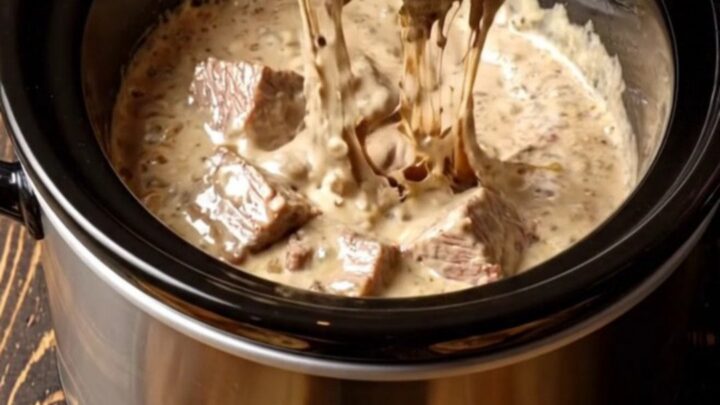
- Slow cook the dipCover the slow cooker with its lid and cook on the LOW setting for 90 minutes. Ensure the lobster chunks heat through completely to an internal temperature of at least 145°F (63°C). Stir occasionally toward the end to combine the melted cheeses and meat juices into a velvety fondue.Look for The mixture should be completely melted, bubbling gently, and have a uniform, thick, and velvety texture.Safe temperature 145°F (63°C) internal temperature (shellfish)Tip Avoid overcooking on high heat to prevent the lobster from becoming rubbery or the cheese from separating.
During this phase, check that the slow cooker is set to the low temperature setting. The mixture will begin to emit a rich, savory aroma as the cheeses begin to liquefy and combine with the juices from the beef and lobster. You should observe the cheese melting into a cohesive, bubbling fondue. Periodically ensure the edges are not drying out; the texture should remain consistently velvety and creamy throughout the entire cooking duration.
Final Garnish and Service
- Finish and serveOnce the dip is fully melted and hot, remove the lid. Drizzle the black truffle drizzle over the surface and sprinkle with fresh chopped chives. Serve immediately directly from the ceramic insert with black truffle chips and brioche on the side.Look for The dip should look glossy with a rich truffle aroma and vibrant green chives on top.Tip Keep the slow cooker on the warm setting if serving over a long duration to maintain the perfect dipping consistency.
In the final stage, the dip will look glossy and rich, with the truffle oil adding a sheen to the surface. The chives should be added just before serving to maintain their vibrant color and fresh, onion-like bite. The dip should be kept warm in the slow cooker. Check that the serving platter is ready with the truffle chips and brioche slices, ensuring they are crisp and ready for immediate, elegant presentation to your guests.
Common mistakes
A common mistake is using pre-shredded cheese, which is often coated in anti-caking agents that prevent a smooth, velvety melt. Always grate your own cheese for the best fondue texture.
Another error is leaving raw meats or seafood sitting on the kitchen counter for extended periods; always follow proper refrigeration guidelines. Finally, avoid boiling the dip on high heat in the slow cooker, as excess heat can cause the cheese proteins to seize, curdle, and separate into an oily layer.
How to tell it’s done
The dish is considered done when the cheese mixture is completely melted, smooth, and bubbling gently. The filet mignon cubes should be tender and fully cooked through to a safe internal temperature of 145°F (63°C), followed by a 3-minute rest.
The lobster chunks must reach a safe internal temperature of 145°F (63°C). The dip should have a thick, velvety consistency that coats the back of a spoon. Use a digital instant-read thermometer inserted into the protein pieces to verify safety.
- Steaks, chops and roasts: 145°F (63°C) in the thickest part, then a 3-minute rest
- Shellfish: 145°F (63°C) in the thickest part
Up next · Part 3 of 3
2 variations · storage & make-ahead · 3 answers · printable card
Tips, FAQ & printable recipe (Part 3)← Back to the ingredients (Part 1)