Dinner · Part 3 of 3: Tips & recipe card
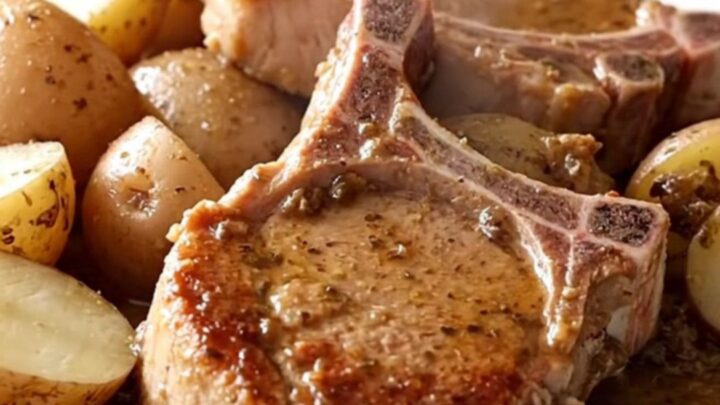
Slow Cooker Steakhouse Pork Chops and Potatoes Tips, FAQ & printable recipe
- Prep
- Cook
- Total
- Serves
- 4
Tips for success
If you prefer a thicker sauce, you can remove the pork and potatoes once finished and whisk a small amount of cornstarch slurry into the remaining liquid in the slow cooker, then cook on high for an additional 10 minutes.
This creates a glossy, restaurant-style gravy that coats the pork and potatoes beautifully when served.
For a deeper flavor, you can sear the pork chops in a hot skillet for two minutes per side before placing them in the slow cooker.
This extra step adds color and depth to the meat, although it is optional and not strictly necessary for achieving a tender and delicious result using this simple braising method.
Variations
- Herbed Pork Chops: Add a sprig of fresh rosemary and thyme to the slow cooker before cooking. The herbs infuse the broth with a fragrant, earthy aroma that pairs perfectly with the pork and potatoes.
- Garlic Butter Finish: Stir in a tablespoon of butter and a teaspoon of minced garlic right before serving. This adds a rich, glossy finish to the braising liquid and enhances the overall flavor of the dish.
Storage and make-ahead
- Fridge
- Keep in an airtight container for up to 4 days.
- Freezer
- Freeze for up to 2 months in a freezer-safe container.
- Reheat
- Reheat gently in the microwave or on the stovetop until heated through.
Store any leftovers in an airtight container in the refrigerator. To maintain the best texture, keep the pork and potatoes together in their cooking juices, which will help prevent the meat from drying out during storage. Consume the leftovers within three to four days for optimal quality and safety.
You can prepare the ingredients in the slow cooker insert the night before and keep it covered in the refrigerator.
In the morning, simply place the insert into the slow cooker base and start the cooking process. If starting from a cold insert, you may need to add an extra 30 minutes to the total cooking time.
Serving ideas
Serve the pork chops and potatoes hot, spooning some of the seasoned braising liquid from the slow cooker over the top of each plate.
The potatoes act as a natural side dish, soaking up the savory juices, but you can also serve this with a side of steamed green beans or a crisp garden salad to balance the meal.
The meal is best served family-style directly from the slow cooker or plated individually. Because the pork is cooked in a flavorful broth, it does not require additional sauces, but a touch of fresh parsley can be added as a garnish if desired to provide a pop of color and a fresh finish to the plate.
Frequently asked questions
Can boneless pork chops be used instead of bone-in?
Is it necessary to sear the pork chops first?
How can the sauce be thickened?
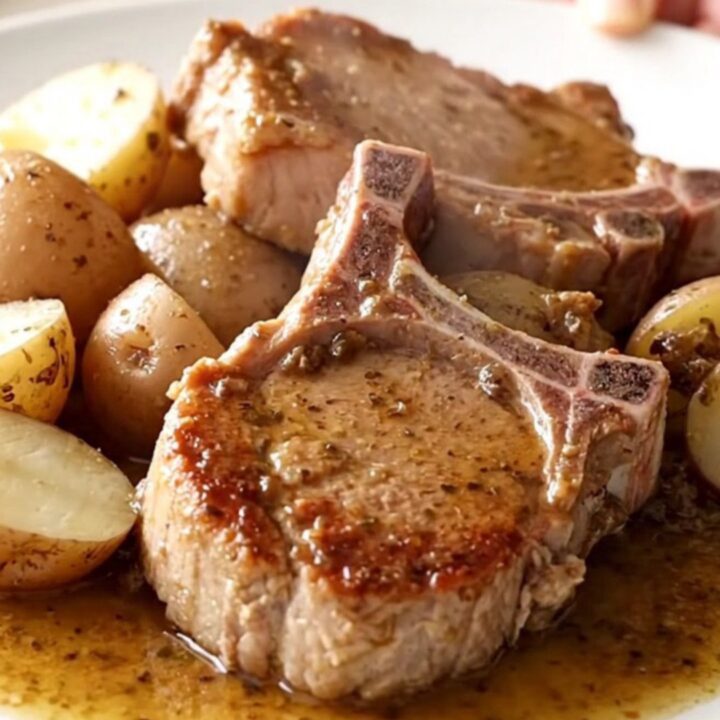
Slow Cooker Steakhouse Pork Chops and Potatoes
Ingredients
- 4 bone-in pork chops
- 1 lb baby red potatoes, halved
- 2 tbsp steak seasoning
- 1 cup beef broth
Instructions
- Arrange the bone-in pork chops in the base of the slow cooker, fanning them out to ensure even cooking. Add the halved baby red potatoes around the pork chops, tucking them into the gaps to maximize surface area contact with the cooking liquid.
- Sprinkle the steak seasoning evenly over the pork chops and potatoes to coat everything thoroughly. Pour the beef broth over the ingredients, ensuring it reaches the bottom of the slow cooker to create a braising base. Cover with the lid.
- Cook on low for 6 hours or high for 3 hours until the pork is tender. Verify the internal temperature of the pork chops reaches at least 145°F (63°C) using a meat thermometer. Let the pork rest for at least 3 minutes before serving alongside the tender potatoes.
Estimated nutrition per serving
- Calories
- 420
- Protein
- 32 g
- Carbohydrates
- 28 g
- Fat
- 18 g
- Fiber
- 3 g
- Sugar
- 1 g
- Sodium
- 650 mg
Next recipe

Easy Creamed Chipped Beef Biscuit Bake
See the recipe → →This recipe is based on a short cooking video and is published under the pen name Clara Weller. It was checked before publication, but errors can slip through. Nutrition, when shown, is an estimate. Read more in our editorial policy and on our food safety page.
More recipes to try
Slow Cooker Italian Shredded Pork Loin with Giardiniera
Total time: 8 h 10 min
Slow Cooker Chicken Drumsticks and Carrots in Onion Gravy
Total time: 6 h 15 min
Easy Chicken Shepherd's Pie Casserole
Total time: 50 min
Easy Crockpot Lemon Garlic Chicken and Carrots
Total time: 4 h 15 min
Easy One-Pan Garlic Bread Spaghetti Bake
Total time: 45 min