Dinner · Part 2 of 3: Instructions
Slow-Simmered Sichuan Dan Dan Pork Ragu for Noodle Night Step-by-step instructions
- Prep
- Cook
- Total
- Serves
- 6
Before you start
Before starting, brown the ground pork in a large skillet over medium-high heat, breaking it up into small crumbles. While the pork browns, measure out the chili oil, sesame paste, sweet bean sauce, Ya Cai, and Sichuan peppercorns.
Have the chicken stock ready. Transfer the browned pork to the slow cooker insert, then add the remaining ingredients and stir well. The slow cooker does the rest, but the initial browning is key for deep flavor.
Ingredients at a glance (10)
- 2 lb ground heritage pork
- 1/2 cup Sichuan chili oil with sediment
- 1/4 cup Chinese sesame paste
- 2 tbsp Tianmenjiang sweet bean sauce
- 1/2 cup Ya Cai preserved mustard greens
- 1 tbsp Sichuan peppercorns
- 1 cup chicken stock
- 12 oz fresh alkaline wheat noodles
- 4 heads baby bok choy, halved
- 1/2 cup crushed peanuts
Instructions
Phase 1: Build the Base
- Brown the PorkHeat a large skillet over medium-high heat. Add the ground heritage pork and cook, breaking it up with a wooden spoon, until browned and no longer pink, about 8 minutes. Transfer the browned pork to the slow cooker insert.Look for The pork is browned and crumbly, with no raw pink spots.Safe temperature 160°F (71°C) internal temperature (ground meat)Tip Browning adds depth; do not skip this step even though the slow cooker does the long simmer.
- Add the Aromatics and SaucesTo the slow cooker with the pork, add the Sichuan chili oil with sediment, Chinese sesame paste, Tianmenjiang sweet bean sauce, Ya Cai preserved mustard greens, Sichuan peppercorns, and chicken stock. Stir well to combine everything thoroughly.Look for The mixture is a deep red-brown, glossy, and well combined.Tip Make sure the sesame paste is fully incorporated to avoid lumps.
The pork is browned and waiting in the slow cooker, mixed with the chili oil, sesame paste, sweet bean sauce, Ya Cai, peppercorns, and stock.
The mixture looks glossy and deep red-brown, with the aroma of chili and sesame filling the kitchen. Everything is well combined, and the pork is coated in the sauce.
Phase 2: Slow Simmer
- Slow Cook on LowCover the slow cooker and cook on LOW for 4 hours, until the pork is deeply savory and the chili oil pools on top. Stir once halfway through if possible, but avoid lifting the lid too often.Look for After 4 hours, the ragu is thick, fragrant, and a layer of crimson oil shimmers on the surface.Safe temperature 160°F (71°C) internal temperature (ground meat)Tip Resist the urge to open the lid; each lift releases heat and extends cooking time.
After four hours on low, the ragu is bubbling gently, and a layer of crimson chili oil has risen to the top. The kitchen smells intensely of Sichuan peppercorns and roasted sesame. The pork is tender and the sauce has thickened slightly. This is the moment to taste and adjust the seasoning.
Phase 3: Assemble and Serve
- Cook the Noodles and Bok ChoyBring a large pot of salted water to a boil. Add the fresh alkaline wheat noodles and cook according to package directions until just tender. In the last 2 minutes, add the halved baby bok choy and blanch until bright green and crisp-tender. Drain both.Look for Noodles are springy and bok choy is vibrant green.Tip Reserve a cup of noodle water to loosen the sauce if needed.
- Assemble and ServeDivide the noodles and bok choy among bowls. Ladle the hot Dan Dan pork ragu over the top, letting the chili oil coat the noodles. Sprinkle with crushed peanuts and serve immediately.Look for Each bowl is topped with a generous ladle of ragu and a shower of peanuts.Tip For extra heat, add a drizzle of chili oil from the top of the ragu.
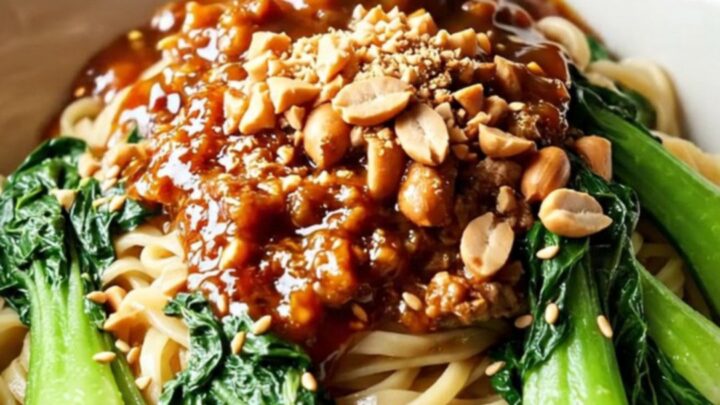
The noodles are cooked and the bok choy is blanched, both drained and ready. The ragu is ladled over the noodles, coating them in a glossy, spicy sauce. Crushed peanuts add a final crunch. Each bowl is a beautiful combination of red, green, and golden brown.
Common mistakes
One common mistake is skipping the browning step, which robs the ragu of a layer of savory depth. Another is lifting the slow cooker lid too often, which lets heat escape and extends cooking time.
Also, do not add extra liquid beyond the stock; the ragu should be thick, not soupy. Finally, be careful with the Sichuan peppercorns—too many can make the dish overly numbing, so measure precisely.
How to tell it’s done
The ragu is done when the pork is tender and deeply infused with the chili and sesame flavors, and the sauce has thickened slightly. The internal temperature of the pork should reach 160°F (71°C) for safety.
The chili oil should pool on the surface, and the aroma should be intensely savory with a tingle of Sichuan peppercorn. Taste and adjust seasoning if needed—it should be salty, spicy, and nutty all at once.
- Ground meat: 160°F (71°C) in the thickest part
- Steaks, chops and roasts: 145°F (63°C) in the thickest part, then a 3-minute rest
Up next · Part 3 of 3
4 variations · storage & make-ahead · 5 answers · printable card
Tips, FAQ & printable recipe (Part 3)← Back to the ingredients (Part 1)