Dinner · Part 1 of 3: Ingredients
Slow-Simmered Sichuan Dan Dan Pork Ragu for Noodle Night
- Prep
- Cook
- Total
- Serves
- 6
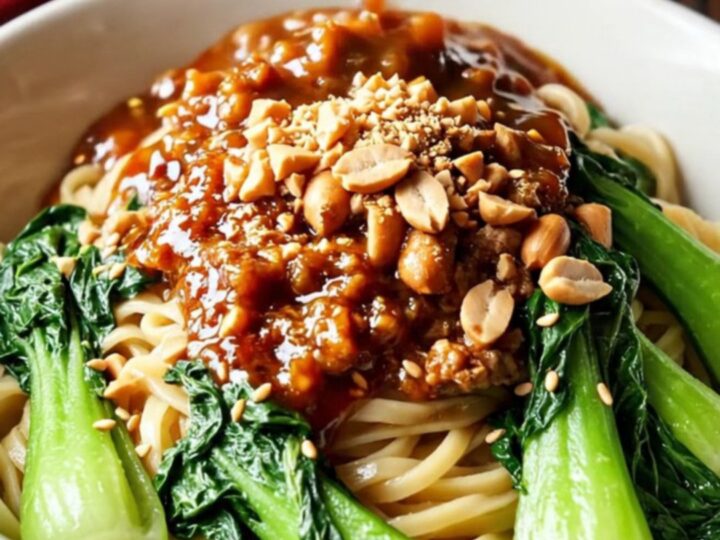
This slow-cooker Sichuan Dan Dan pork ragu brings the bold, tingly flavors of Chengdu noodle houses straight to the dinner table. Ground pork simmers for hours with chili crisp, nutty sesame paste, and Ya Cai preserved mustard greens until deeply savory and irresistibly aromatic.
Ladled over fresh alkaline wheat noodles with blanched baby bok choy and crushed peanuts, it is the ultimate noodle night upgrade. Set the crockpot in the morning and come home to a rich, spicy sauce that makes every bite sing.
Dan Dan noodles are a beloved Sichuan street food classic, traditionally built on a spicy, numbing sauce and ground pork. This version takes the slow-cooker route, letting the pork ragu develop layers of flavor over four gentle hours.
The result is a deeply savory, crimson sauce with a glossy sheen of chili oil, ready to coat noodles and greens. It is a hands-off dinner that feels special enough for a weekend and simple enough for a weeknight. Serve it with fresh alkaline noodles, baby bok choy, and a generous shower of peanuts for crunch.
Ingredients
- 2 lb ground heritage pork
- 1/2 cup Sichuan chili oil with sediment
- 1/4 cup Chinese sesame paste
- 2 tbsp Tianmenjiang sweet bean sauce
- 1/2 cup Ya Cai preserved mustard greens
- 1 tbsp Sichuan peppercorns
- 1 cup chicken stock
For serving
- 12 oz fresh alkaline wheat noodles
- 4 heads baby bok choy, halved
- 1/2 cup crushed peanuts
Why this recipe works
The slow cooker does the heavy lifting here, transforming ground pork and a handful of pantry staples into a rich, cohesive ragu.
Low, steady heat allows the chili oil to bloom and the sesame paste to meld with the pork, creating a sauce that is greater than the sum of its parts. The long simmer also lets the Sichuan peppercorns infuse their characteristic tingle throughout, not just on the surface.
Layering the ingredients in the crockpot—browned pork first, then the sauces and stock—ensures every bite carries the full spectrum of flavors.
The chili oil pools on top during cooking, which is exactly what you want: it keeps the ragu moist and provides a beautiful, spicy sheen when ladled over noodles. This method is forgiving, too, since the slow cooker maintains a gentle, even temperature that is hard to achieve on the stovetop.
Notes and substitutions
Chinese sesame paste is thicker and more intensely nutty than tahini; look for it in Asian markets or online. Sichuan chili oil with sediment—the kind with crispy bits at the bottom—adds both heat and texture. Ya Cai, or preserved mustard greens, brings a salty, umami punch that is essential to authentic Dan Dan flavor. If unavailable, a good substitute is chopped preserved Sichuan vegetable.
Fresh alkaline wheat noodles, sometimes labeled as ramen or lo mein noodles, have the right springy texture. Baby bok choy adds a fresh, bitter contrast to the rich sauce. Crushed peanuts provide a final crunch that balances the heat. For a milder version, reduce the chili oil or use a chili crisp with less heat. The recipe is flexible, so adjust the spice level to taste.
- Chinese sesame paste: Tahini mixed with a little toasted sesame oil can stand in for Chinese sesame paste in a pinch.
- Tianmenjiang sweet bean sauce: Hoisin sauce is a convenient substitute, though slightly sweeter; reduce any added sugar if using.
- Ya Cai preserved mustard greens: Finely chopped preserved Sichuan vegetable (Zha Cai) or even chopped kimchi can add a similar salty, umami punch.
- Fresh alkaline wheat noodles: Dried ramen noodles or fresh spaghetti work well; cook according to package directions.
Equipment
- Slow cooker (crockpot)
- Large skillet
- Wooden spoon
- Measuring cups and spoons
- Tongs
- Pot for noodles
- Colander
Up next · Part 2 of 3
5 steps · 4 h 5 min of cooking · what to look for at each stage
Step-by-step instructions (Part 2)