Dinner · Part 2 of 3: Instructions
Slow-Cooker Shallot Carrot Butter Beef Brisket Step-by-step instructions
- Prep
- Cook
- Total
- Serves
- 6
Before you start
Before starting, trim the brisket of any excess hard fat, leaving a thin layer. Peel the shallots if not already peeled, and rinse the baby carrots.
Have the kosher salt, black pepper, and butter ready. No other prep is needed—this recipe is designed to be as effortless as possible. Make sure your slow cooker is clean and ready to use.
Ingredients at a glance (6)
- 3 1/2 lb beef brisket, trimmed
- 8 oz whole shallots, peeled
- 1 lb baby carrots
- 1/2 cup salted butter (1 stick)
- 1 tsp kosher salt
- 1/2 tsp black pepper
Instructions
Layer and Season
- Layer the BrisketPlace the trimmed beef brisket flat in the bottom of a 6-quart slow cooker. Season the top with kosher salt and black pepper.Look for The brisket should fit comfortably in the bottom of the slow cooker.Tip Trim excess fat if desired, but leave a little for flavor and moisture.
- Add Shallots and CarrotsScatter the peeled whole shallots and baby carrots all around the brisket, tucking them into the gaps so they surround the meat.Look for The vegetables should be nestled around the brisket, not piled on top.Tip Cut any extra-large shallots in half so they cook evenly.
- Top with ButterPlace the stick of salted butter directly on top of the seasoned brisket. No need to melt it first.Look for The butter sits on the meat and will melt as the slow cooker heats.Tip Using salted butter enhances the seasoning; if using unsalted, add an extra pinch of salt.
At the end of this phase, you have a raw brisket seasoned with salt and pepper, surrounded by shallots and carrots, with a stick of butter on top. The ingredients are arranged in a single layer, and the butter is ready to melt. The slow cooker is covered and ready to turn on.
Slow-Cook and Shred
- Cook Low and SlowCover the slow cooker and cook on LOW for 8 to 10 hours, or until the brisket is fork-tender and easily shreds. Let it rest for 3 minutes before slicing.Look for The brisket should be very tender and the vegetables soft and caramelized.Safe temperature 145°F (63°C) internal temperature (steaks, chops and roasts)Tip Do not lift the lid during cooking—each peek adds 20 minutes to the cook time.
- Rest the BrisketTurn off the slow cooker. Remove the brisket to a cutting board and let it rest for at least 10 minutes before shredding.Look for The meat rests while the juices redistribute.Tip Resting is essential for moist, tender slices or shreds.
- Shred the BeefUsing two forks, shred the brisket into bite-size pieces. Return the shredded beef to the slow cooker and stir into the buttery juices.Look for The meat should pull apart easily with no resistance.Tip If the brisket is not shredding easily, cook for another 30 minutes.
After 8 to 10 hours on LOW, the brisket is fork-tender and shreds easily. The shallots are soft and caramelized, the carrots are tender, and the juices are rich and buttery. The meat has rested and been shredded, then returned to the slow cooker to soak up the sauce.
Serve and Enjoy
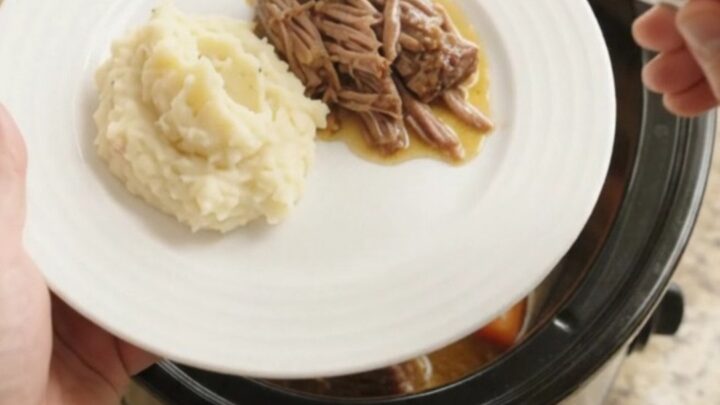
- Serve with Mashed PotatoesServe the shredded brisket and vegetables over whipped Yukon Gold mashed potatoes, spooning the buttery pan juices over the top.Look for The juices should be thick and emulsified, coating the meat.Tip Whipped potatoes are optional but make a perfect bed for the saucy beef.
The shredded brisket is piled over whipped mashed potatoes, with the caramelized shallots and carrots nestled alongside.
The buttery pan jus is spooned over everything, creating a glossy, inviting finish. The dish is ready to serve warm, with the aroma of slow-braised beef filling the kitchen.
Common mistakes
One common mistake is lifting the lid to peek. Every time the lid is lifted, heat escapes and adds 20 minutes to the cooking time. Another is using a too-lean brisket, which can dry out. Choose a well-marbled cut.
Also, don't skip the resting step—it allows the juices to redistribute, making the meat more tender. Finally, don't over-season the brisket; the salted butter adds plenty of salt, so a light hand with extra salt is best.
How to tell it’s done
The brisket is done when it is fork-tender and shreds easily with two forks. The internal temperature should read at least 145°F (63°C) for food safety, but because it cooks low and slow, it will likely be much higher—around 190°F to 200°F—which is ideal for breaking down connective tissue.
The shallots should be soft and caramelized, and the carrots should be easily pierced with a fork. The juices should be bubbly and slightly thickened.
- Steaks, chops and roasts: 145°F (63°C) in the thickest part, then a 3-minute rest
Up next · Part 3 of 3
4 variations · storage & make-ahead · 5 answers · printable card
Tips, FAQ & printable recipe (Part 3)← Back to the ingredients (Part 1)