Dinner · Part 2 of 3: Instructions
Slow Cooker Rosemary Thyme Brown Gravy Pork Shoulder Step-by-step instructions
- Prep
- Cook
- Total
- Serves
- 8
Before you start
Before starting, ensure the pork shoulder is at room temperature for no more than 30 minutes. Pat the roast dry with paper towels. Smash the garlic cloves with the flat side of a knife to release their flavor.
Rinse the fresh herbs and pat dry. Measure the gravy and cut the butter into small pats. Have the slow cooker ready and, if desired, line it with a slow cooker liner for easier cleanup.
Ingredients at a glance (7)
- 4 lb boneless Boston butt pork shoulder roast
- 12 garlic cloves, smashed
- 4 sprigs fresh rosemary
- 6 sprigs fresh thyme
- 2 cups rich brown gravy
- 4 tbsp unsalted butter, cut into pats
- 8 toasted brioche slider buns
Instructions
Layer and Cook
- Layer the RoastPlace the pork shoulder roast in the center of a 7-quart slow cooker. Scatter the smashed garlic cloves and fresh rosemary and thyme sprigs over the top of the roast. Pour the rich brown gravy over the roast, then dot with the pats of unsalted butter. Cover the slow cooker with the lid.Look for The roast is nestled in the slow cooker with garlic, herbs, gravy, and butter on top.Tip Use a slow cooker liner for easy cleanup if desired.
- Cook Low and SlowSet the slow cooker to LOW and cook for 8 hours, or until the pork is fork-tender and easily shreds. The internal temperature of the pork should reach at least 145°F (63°C) for food safety, but for shredding it will be much higher, around 200°F (93°C). Let it rest for 3 minutes before slicing.Look for The pork is fork-tender and the gravy is bubbling gently.Safe temperature 145°F (63°C) internal temperature (steaks, chops and roasts)Tip Do not lift the lid during cooking — every peek releases heat and adds time.
At the end of this phase, the slow cooker is filled with the raw roast, garlic, herbs, gravy, and butter. The aroma is fresh and savory.
The roast is fully submerged in the liquid, and the butter pats are visible on top. The slow cooker is set to LOW and the lid is on. There is nothing to check until the cooking time is complete.
Rest and Shred
- Rest the MeatWhen the pork is done, turn off the slow cooker. Remove the roast to a cutting board and let it rest for at least 3 minutes, tented loosely with foil. This allows the juices to redistribute.Look for The roast rests, steaming gently, before shredding.Tip Resting is essential for moist, tender meat.
- Shred the PorkUsing two forks, shred the pork into bite-sized pieces, discarding any large pieces of fat. Return the shredded pork to the slow cooker with the gravy and garlic confit, stirring to coat.Look for The pork shreds easily into succulent ribbons.Tip For a finer shred, use a hand mixer on low speed — but forks give the best texture.
The pork is fork-tender, and the gravy is rich and aromatic. The roast has been removed to a cutting board and rests under foil. After resting, the meat shreds easily into moist, tender ribbons. The garlic cloves have softened into a sweet confit. The shredded pork is returned to the gravy, coating every piece.
Serve
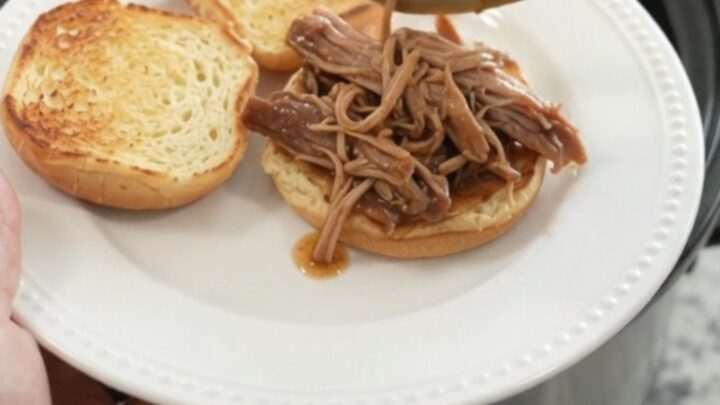
- Serve on Slider BunsSpoon the shredded pork and gravy onto toasted brioche slider buns. Serve immediately, with extra gravy on the side if desired.Look for Steaming pork piled high on toasted buns.Tip Toasting the buns adds a buttery crunch that holds up to the juicy pork.
The shredded pork is piled high on toasted brioche slider buns. The meat is glistening with gravy, and the herbs are visible throughout. The buns are golden and crisp. Serve immediately, with extra gravy on the side for dipping or spooning over the top.
Common mistakes
One common mistake is lifting the lid to check on the roast. Every time the lid is lifted, heat escapes, adding up to 30 minutes of cooking time per peek. Another mistake is using a lean cut like pork loin, which will dry out.
Stick with pork shoulder. Also, avoid overseasoning with salt, as the gravy may already contain salt. Finally, do not skip the resting time — it is crucial for juicy meat.
How to tell it’s done
The pork is done when it is fork-tender and easily shreds. The internal temperature should reach at least 145°F (63°C) for safety, but for shredding it will typically be around 200°F (93°C).
To test, insert a fork into the roast and twist — it should pull apart with little resistance. The gravy should be bubbling and slightly thickened. Let the meat rest for at least 3 minutes before shredding to allow the juices to redistribute.
- Steaks, chops and roasts: 145°F (63°C) in the thickest part, then a 3-minute rest
Up next · Part 3 of 3
4 variations · storage & make-ahead · 5 answers · printable card
Tips, FAQ & printable recipe (Part 3)← Back to the ingredients (Part 1)