Dinner · Part 2 of 3: Instructions
Slow Cooker Roasted Garlic Chicken Stew Step-by-step instructions
- Prep
- Cook
- Total
- Serves
- 4
Before you start
Before starting, ensure the chicken is properly thawed if previously frozen. Wash and peel the carrots if necessary, and cut the red potatoes into uniform halves to promote even cooking. Have the measuring cup and the seasoning packet ready nearby.
Clear enough space on the countertop for the slow cooker, ensuring it is placed on a stable, heat-resistant surface away from any water sources or clutter that might interfere with the process.
Ingredients at a glance (5)
- 4 lbs chicken thighs
- 1 lb baby carrots
- 1 lb red potatoes, halved
- 1 packet garlic seasoning
- 2 cups chicken broth
Instructions
Phase 1: Preparation
- Prepare the BasePlace the raw chicken thighs in the bottom of the slow cooker to ensure even cooking during the long simmering process. Arrange the vegetables carefully over the chicken.Look for chicken thighs in bottomTip Ensure the slow cooker is clean and dry before adding the ingredients.
At the end of this phase, the chicken should be arranged in a single layer at the bottom of the cooker. Verify that the cooker is plugged in and ready to be loaded with the remaining ingredients, ensuring a clean workspace.
Phase 2: Adding Ingredients
- Add Aromatics and LiquidScatter the baby carrots and halved red potatoes over the chicken. Sprinkle the garlic seasoning evenly over the top of the vegetables. Pour the chicken broth into the cooker.Look for broth poured over ingredientsTip Distribute the seasoning evenly for balanced flavor.
The slow cooker should look full but not overflowing, with the vegetables resting on top of the chicken. The seasoning should be distributed evenly, and the broth should be poured over the top to provide the necessary moisture for the stewing process.
Phase 3: Slow Cooking
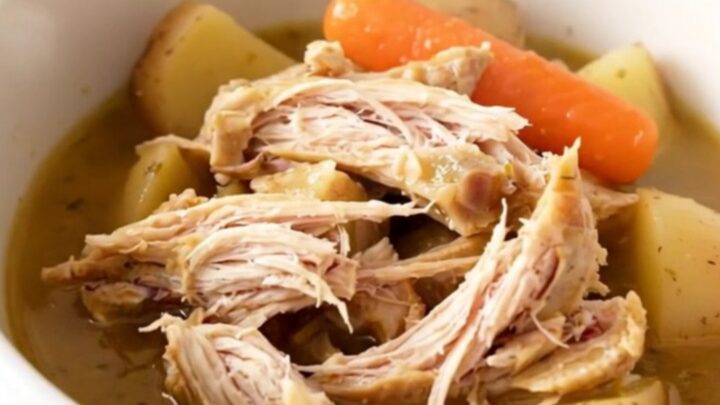
- Cook and ServeCover the slow cooker and cook on low for 6 to 8 hours. Before serving, verify that the chicken has reached an internal temperature of 165°F (74°C).Look for tender chicken and soft vegetablesSafe temperature 165°F (74°C) internal temperature (poultry)Tip Test the chicken in the thickest part to confirm it is fully cooked through.
The stew is ready when the chicken is fully cooked and tender. The liquid should have reduced slightly, and the vegetables should be soft to the touch. Check the internal temperature to confirm safety before serving.
Common mistakes
Avoid lifting the lid too frequently during the cooking process, as this releases the trapped heat and steam, which significantly increases the total cooking time and can result in unevenly cooked vegetables.
Additionally, do not overcrowd the slow cooker, as this prevents the heat from circulating properly.
Ensure that the ingredients are arranged in an even layer rather than dumped in a pile, which helps maintain consistent temperatures throughout the cooking vessel.
How to tell it’s done
The stew is finished when the chicken thighs are easily pulled apart with a fork and the vegetables are tender when pierced with a knife. Use a meat thermometer to ensure the chicken has reached an internal temperature of 165°F (74°C).
The liquid should be steaming and aromatic, with a consistency that coats the back of a spoon, signaling that the flavors have fully developed during the slow-cooking period.
- Poultry: 165°F (74°C) in the thickest part
Up next · Part 3 of 3
2 variations · storage & make-ahead · 3 answers · printable card
Tips, FAQ & printable recipe (Part 3)← Back to the ingredients (Part 1)