Dinner · Part 2 of 3: Instructions
Slow-Cooker Red Wine Stewed Chestnuts for a Cozy Dinner Step-by-step instructions
- Prep
- Cook
- Total
- Serves
- 4
Before you start
Before beginning, ensure all vegetables are washed, peeled, and sliced uniformly. Having the bouillon crumbled and the wine measured out in advance will make the assembly process seamless.
Check that the slow cooker is placed on a stable, heat-resistant surface with adequate clearance for ventilation, and ensure the power cord is clear of any water or heat sources. Being prepared with these simple steps allows for a stress-free cooking experience.
Ingredients at a glance (6)
- 1 lb whole peeled chestnuts
- 2 medium carrots, sliced
- 2 large shallots, sliced
- 1 cube vegetable bouillon cube, crumbled
- 2 bay leaves
- 1 cup dry red wine
Instructions
Preparation and layering
- Assemble the slow cookerPlace the peeled chestnuts into the bottom of the slow cooker. Layer the sliced carrots and sliced shallots evenly over the chestnuts to ensure even cooking throughout the process.Look for The base layer of chestnuts is covered by the vegetables.Tip Ensure the vegetables are sliced to a uniform thickness so they soften at the same rate as the chestnuts.
The ingredients are properly arranged in the slow cooker, forming a stable base. The carrots and shallots are distributed evenly over the chestnuts, ensuring they will be submerged in the wine. Everything is ready for the addition of the seasoning and liquid.
Seasoning and liquid addition
- Season and add liquidSprinkle the crumbled vegetable bouillon cube over the vegetables and tuck the two bay leaves into the mixture. Pour the cup of dry red wine over the top to submerge the ingredients.Look for The bouillon is distributed evenly and the wine coats the ingredients.Tip Using a dry red wine like a Cabernet or Merlot provides a robust base that complements the earthiness of the chestnuts.
The bouillon is evenly crumbled and the bay leaves are tucked in, ready to infuse their flavor. The wine is poured over the ingredients, creating the necessary liquid environment for the slow-cooking process to begin effectively.
Slow cooking and final texture
- Cook and serveSet the slow cooker to low and cook for four hours until the chestnuts are fork-tender and the wine has reduced into a fragrant, glossy sauce. Let the dish rest for five minutes before serving in warm bowls.Look for The sauce is thickened and the chestnuts are tender when pierced with a fork.Tip If the sauce is too thin after cooking, remove the lid for the final thirty minutes to allow the liquid to evaporate and concentrate further.
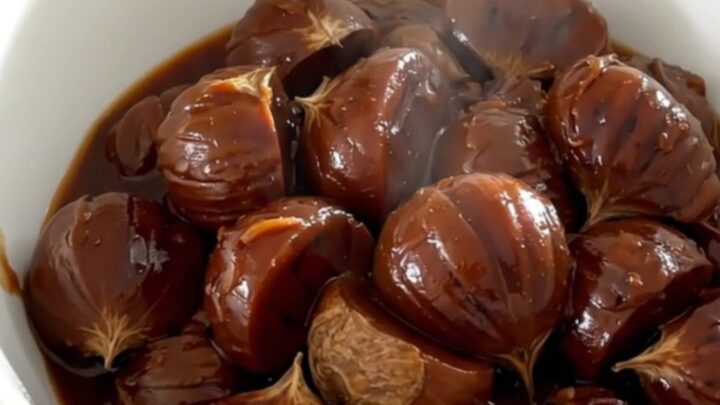
The chestnuts are tender and the sauce has reduced to a glossy, thick consistency. The vegetables are softened and the entire dish is aromatic and ready to be served warm, with the flavors perfectly balanced and integrated.
Common mistakes
A common mistake is slicing the carrots too thickly, which prevents them from cooking through at the same rate as the chestnuts, leading to uneven textures.
Another error is using a wine that is too sweet or too acidic; choosing a balanced, dry table wine is crucial for the final result.
Additionally, failing to crumble the bouillon cube adequately can result in pockets of concentrated saltiness, so ensure it is evenly distributed over the vegetables during assembly.
How to tell it’s done
The dish is done when the chestnuts are tender enough to be easily pierced with a fork but still hold their shape. The carrots should be soft, and the sauce should have reduced into a glossy, slightly thickened consistency that coats the back of a spoon.
The aroma should be rich and savory, with the bright, fruity notes of the wine mellowed by the deep base of the bouillon and aromatic herbs.
Up next · Part 3 of 3
2 variations · storage & make-ahead · 3 answers · printable card
Tips, FAQ & printable recipe (Part 3)← Back to the ingredients (Part 1)