Dinner · Part 2 of 3: Instructions
Slow Cooker Red Wine Rabbit Stew for a Tender Dinner Step-by-step instructions
- Prep
- Cook
- Total
- Serves
- 4
Before you start
Before beginning, ensure all ingredients are properly prepped. Slice the carrots and onions into even pieces to guarantee they cook at the same rate. If using whole rabbit, ensure it is cut into manageable, uniform pieces.
Dice the lardons, keeping them cold until the moment they are added to the slow cooker. Prepare the bouquet garni by securing the herbs with food-grade twine. Ensure the slow cooker is clean and placed on a stable surface with enough clearance for heat dissipation during the long cooking cycle.
Ingredients at a glance (6)
- 2 lb rabbit pieces, bone-in
- 3 carrots, sliced
- 1 yellow onion, sliced
- 4 oz lardons or bacon strips, diced
- 1 bouquet garni
- 1 1/2 cups dry red wine
Instructions
Assembly of ingredients
- Prepare the slow cooker basePlace the raw rabbit pieces at the bottom of the slow cooker to ensure they are fully submerged in the cooking liquid for even heat distribution during the long braise.Look for The rabbit is evenly distributed at the bottom.Tip Ensure the pieces are dry before placing them in the cooker.
The base is established with the raw rabbit pieces, followed by the carrots, onions, and lardons. The bouquet garni is placed centrally, and the red wine is poured over the top. The slow cooker is then covered, ensuring the seal is tight before starting the long braise. At this stage, ensure all ingredients are positioned to allow for even heat distribution, and verify the slow cooker is set to the low setting for the required cooking duration.
Braising and flavor development
- Add vegetables and aromaticsScatter the sliced carrots and onions over the rabbit pieces. Add the diced lardons on top to allow their fat to render and baste the rabbit during the cooking process.Look for The vegetables and lardons form an even layer.Tip Cut vegetables into uniform sizes for consistent texture.
- Season and deglazePlace the bouquet garni in the center of the slow cooker. Carefully pour the red wine over the ingredients to provide the base for the braising liquid.Look for The liquid level reaches about halfway up the ingredients.Tip Use a dry red wine such as Pinot Noir or Merlot.
During the middle of the cooking process, the liquid will begin to simmer gently as the wine and vegetable juices combine with the rendered fat from the lardons. The kitchen should begin to smell of red wine, herbs, and savory meat.
No intervention is needed during this time, but the slow cooker should remain undisturbed. The goal is a steady, slow transformation where the rabbit absorbs the wine's acidity and the vegetables soften into the aromatics.
Final finish and service
- Slow cook and serveCover and cook on low for 6 hours until the rabbit reaches an internal temperature of 165°F (74°C). Allow the meat to rest for 5 minutes before serving to ensure tenderness.Look for The meat pulls away from the bone easily and the sauce is glossy.Safe temperature 165°F (74°C) internal temperature (steaks, chops and roasts)Tip Check the temperature with a meat thermometer.
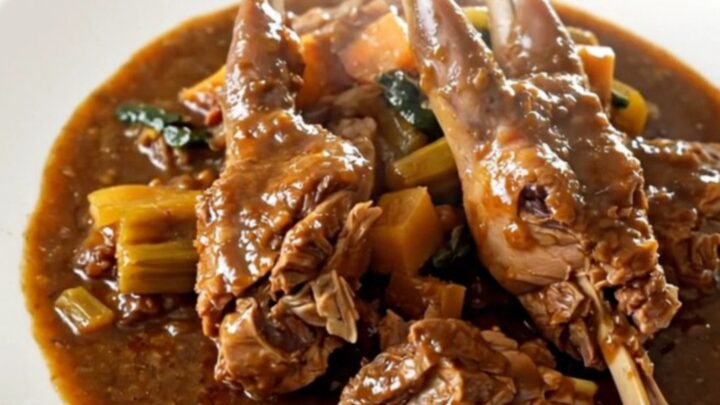
The stew is finished when the meat is tender and the sauce has reached a glossy, rich consistency. The bouquet garni should be removed and discarded before serving. Check the internal temperature of the rabbit one last time to ensure it is fully cooked. The dish should be steaming and fragrant. Allow the stew to rest for a few minutes to let the juices redistribute, ensuring every serving is as succulent as possible before being plated for dinner.
Common mistakes
A common mistake is overcrowding the slow cooker, which can prevent the ingredients from cooking evenly. Another error is using a wine that is too sweet or low-quality, which will negatively affect the flavor of the final sauce.
Avoid removing the lid frequently during the cooking process, as each time the lid is lifted, heat escapes, extending the total cooking time and potentially drying out the meat. Finally, ensure the meat is not cooked at too high a temperature, which can cause the delicate rabbit to become tough.
How to tell it’s done
The rabbit is done when it is fork-tender and pulls away from the bone with minimal effort. The meat should be succulent, not stringy or tough. Using a digital meat thermometer, ensure the thickest part of the rabbit meat has reached an internal temperature of at least 165°F (74°C).
The sauce should appear glossy and have reduced slightly, coating the back of a spoon. If the meat is still firm, continue cooking for another 30 minutes, checking the temperature and texture again.
- Steaks, chops and roasts: 145°F (63°C) in the thickest part, then a 3-minute rest
Up next · Part 3 of 3
2 variations · storage & make-ahead · 3 answers · printable card
Tips, FAQ & printable recipe (Part 3)← Back to the ingredients (Part 1)