Dinner · Part 1 of 3: Ingredients
Slow Cooker Red Wine Rabbit Stew for a Tender Dinner
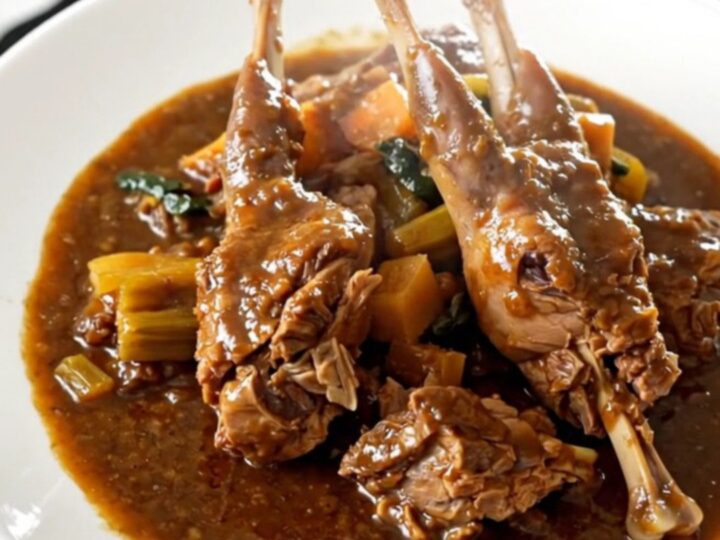
- Prep
- Cook
- Total
- Serves
- 4
Master the art of rustic French cooking with this slow cooker red wine rabbit stew. This dish transforms simple, high-quality ingredients into a sophisticated meal that requires very little active time in the kitchen.
By utilizing a slow cooker, the rabbit becomes incredibly tender, while the red wine creates a deeply flavorful, glossy sauce that tastes as though it has been simmering for hours. It is the perfect solution for busy weeknights when a hearty, restaurant-quality dinner is desired.
Rabbit is a lean, delicate meat that thrives in slow-cooking methods. In this recipe, the gentle heat of the slow cooker allows the rabbit to braise in a bath of red wine and aromatics. The inclusion of lardons adds a savory depth and a touch of fat that complements the leanness of the rabbit.
This dish is a timeless example of how patience and simple techniques create extraordinary results. Serve this stew with crusty bread or mashed potatoes to soak up every drop of the luxurious wine reduction.
Ingredients
- 2 lb rabbit pieces, bone-in
- 3 carrots, sliced
- 1 yellow onion, sliced
- 4 oz lardons or bacon strips, diced
- 1 bouquet garni
- 1 1/2 cups dry red wine
Why this recipe works
The slow cooker method is ideal for rabbit because it provides a consistent, low-temperature environment that prevents the lean meat from drying out. As the rabbit cooks, the connective tissues break down slowly, resulting in meat that is succulent and tender.
This technique ensures that the delicate flavors of the rabbit are preserved while allowing the red wine and vegetables to meld into a rich, cohesive sauce without the need for constant monitoring or intervention.
By layering the ingredients, the flavors are allowed to develop from the bottom up. The rabbit, resting at the base, absorbs the wine and the savory fat rendered from the lardons. The bouquet garni, placed in the center, infuses the entire pot with classic herbal notes, while the carrots and onions soften into a sweet, tender garnish. This methodical assembly creates a balanced profile where every element contributes to the final, complex flavor of the sauce.
Notes and substitutions
When selecting a rabbit, look for fresh pieces from a reputable butcher. If fresh rabbit is unavailable, frozen rabbit pieces can be used, provided they are completely thawed in the refrigerator before use.
For the wine, choose a dry red wine that is pleasant enough to drink, as the flavor will concentrate during the long cooking time. Pinot Noir, Burgundy, or a dry Côtes du Rhône are excellent choices that provide the necessary acidity and depth to balance the richness of the stew.
The equipment required is minimal, but a high-quality slow cooker with a well-fitting lid is essential to keep the moisture inside. A bouquet garni can be made by tying together fresh sprigs of thyme, parsley, and a bay leaf with kitchen twine. This bundle is easy to remove before serving. Ensure that the lardons are diced into small, uniform cubes to allow the fat to render efficiently, which is vital for the overall mouthfeel and savory quality of the finished sauce.
- rabbit: chicken thighs or legs
- lardons: thick-cut pancetta or smoked bacon
Equipment
- Slow cooker
- Measuring cup
- Chef knife
- Cutting board
Up next · Part 2 of 3
4 steps · 6 h of cooking · what to look for at each stage
Step-by-step instructions (Part 2)