Dinner · Part 2 of 3: Instructions
Slow Cooker Provencal Pork Cheeks for a Tender Dinner Step-by-step instructions
- Prep
- Cook
- Total
- Serves
- 4
Before you start
Before you begin, ensure your workspace is clean and organized. Trim any excess silverskin from the pork cheeks if necessary, as this can become chewy during the long cooking process. Have all your ingredients measured and ready, especially the herbes de Provence, which are best added early to infuse the meat.
Verify that your slow cooker is clean and positioned on a stable, heat-resistant surface away from any water sources. Taking these few minutes to prepare will make the assembly process seamless and stress-free.
Ingredients at a glance (5)
- 2 lb pork cheeks
- 2 large yellow onions, sliced
- 1 tbsp herbes de Provence
- 2 cups crushed tomatoes
- 1/2 cup black olives, pitted
Instructions
Layering the ingredients
- Assemble ingredientsPlace the pork cheeks into the bottom of the slow cooker. Scatter the sliced onions over the meat, sprinkle the herbes de Provence evenly on top, and pour the crushed tomatoes over the entire mixture. Ensure the ingredients are distributed well for even cooking.Look for Ingredients are layered and ready for cooking.Tip Layering the onions underneath helps create a base for the meat to braise properly.
At this stage, you should see the pork cheeks arranged in a single layer at the bottom of the slow cooker, topped with the sliced onions and a generous dusting of herbes de Provence.
The crushed tomatoes should partially cover the meat, creating a moist environment for the braising process to begin. Ensure everything is neatly arranged before you secure the lid, as this sets the stage for even heat distribution throughout the long cooking cycle.
Slow cooking the pork
- Slow cook the porkCover the slow cooker and cook on low for 8 hours. This slow process allows the collagen in the pork cheeks to break down completely, resulting in a tender texture. Add the black olives during the final hour of cooking to prevent them from becoming too soft. Ensure the meat reaches an internal temperature of 145°F (63°C) and let it rest for at least 3 minutes before serving.Look for The meat is very tender and easily pulled apart with a fork.Safe temperature 145°F (63°C) internal temperature (steaks, chops and roasts)Tip Avoid lifting the lid frequently to maintain a consistent temperature inside the cooker.
The kitchen should smell wonderful, with the aroma of herbs and tomatoes filling the air as the pork slowly breaks down. By the end of this phase, the meat should be incredibly tender and the sauce should have a deep, concentrated color.
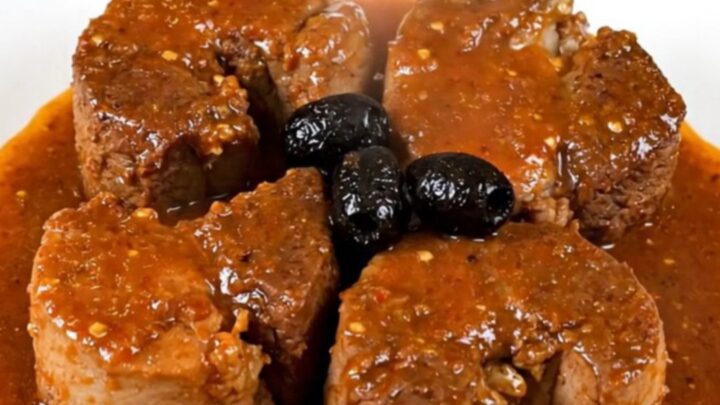
Check that the olives have been added during the last hour; they should be warm and plump. The meat will appear glossy and should pull apart easily when prodded with a fork, indicating it is perfectly cooked.
Resting and serving
- Rest and serveOnce finished, turn off the slow cooker and allow the meat to rest for at least 5 minutes before serving. This rest period ensures the juices redistribute throughout the meat, maximizing flavor and moisture in every bite.Look for The sauce has thickened slightly and the meat is glossy.Tip Serve immediately while warm for the best texture and flavor profile.
After the resting period, the pork should be moist and the sauce should be thick enough to cling to the meat. If you notice any excess fat on the surface, you can skim it off before serving. The dish is now ready to be portioned onto plates. Check that the meat is steaming hot and that the flavors have melded into a cohesive, savory sauce. It is now ready to enjoy with your preferred side dishes, such as crusty bread or mashed potatoes.
Common mistakes
A common mistake is overcrowding the slow cooker, which can prevent even cooking and lead to soggy vegetables. Ensure the ingredients are spread out in an even layer. Another oversight is adding the olives too early; they can lose their shape and become overly salty if cooked for the full 8 hours.
Finally, avoid lifting the lid during the first 6 hours of cooking, as this lets out essential steam and heat, which significantly increases the time needed to reach the desired tenderness.
How to tell it’s done
The pork cheeks are done when they are fork-tender, meaning a fork should easily slide into the meat with almost no resistance. The internal temperature must reach at least 145°F (63°C) for safety. The sauce should appear rich and slightly thickened, coating the back of a spoon. If the meat still feels firm or rubbery, continue to cook for another 30 minutes, as different slow cooker models operate at slightly different heat levels.
- Steaks, chops and roasts: 145°F (63°C) in the thickest part, then a 3-minute rest
Up next · Part 3 of 3
2 variations · storage & make-ahead · 3 answers · printable card
Tips, FAQ & printable recipe (Part 3)← Back to the ingredients (Part 1)