Dinner · Part 2 of 3: Instructions
Slow-Cooker Old Bay Butter Snow Crab and Shrimp Step-by-step instructions
- Prep
- Cook
- Total
- Serves
- 4
Before you start
Before you start, make sure the snow crab clusters are thawed if frozen. Peel and devein the shrimp, removing the shells but leaving the tails on if you like. Dice the bell peppers and onions, and slice the celery into thin ribbons.
Melt the garlic herb butter in a small saucepan or microwave-safe bowl. Measure the Old Bay seasoning. Have your slow cooker ready and a serving platter nearby.
Ingredients at a glance (9)
- 2 lb snow crab clusters
- 2 lb raw jumbo shrimp, peeled and deveined
- 1 cup diced red and green bell peppers
- 1 cup sweet Vidalia onions, diced
- 1/2 cup celery, sliced into ribbons
- 1/2 cup melted garlic herb butter
- 2 tbsp Old Bay seasoning
- lemon wedges, for serving
- steamed jasmine rice, for serving
Instructions
Layer and Season
- Layer the Seafood and VegetablesPlace the snow crab clusters and raw jumbo shrimp in the bottom of a 6-quart slow cooker. Scatter the diced red and green bell peppers, sweet Vidalia onions, and celery ribbons evenly over the seafood. Do not stir.Look for The slow cooker should be filled with an even layer of seafood and vegetables.Tip Keep the crab clusters on top of the shrimp so they steam evenly.
- Add the Butter and SeasoningPour the melted garlic herb butter over the entire surface of the seafood and vegetables. Sprinkle the Old Bay seasoning generously over the top, covering as much of the surface as possible.Look for The butter and seasoning should coat the top layer of the ingredients.Tip For extra heat, add a pinch of cayenne with the Old Bay.
At the end of this phase, the slow cooker should contain an even layer of seafood and vegetables. The crab clusters and shrimp are nestled together, topped with diced peppers, onions, and celery. The melted butter and Old Bay are drizzled and sprinkled over the top, creating a vibrant red and golden surface. The aroma is already enticing, with hints of garlic and spice.
Slow Cook
- Slow Cook Until TenderCover the slow cooker and cook on low for 4 hours, or on high for 2 hours. The seafood is done when the shrimp are pink and opaque and the crab meat is heated through. Do not stir during cooking to keep the crab clusters intact.Look for The butter will be bubbling gently around the edges and the seafood will be fragrant.Safe temperature 145°F (63°C) internal temperature (shellfish)Tip Check the shrimp at the minimum time to avoid overcooking.
- Check the Internal TemperatureVerify that the thickest part of the shrimp and the crab meat reaches 145°F (63°C) using an instant-read thermometer. If not, continue cooking for another 15 minutes and check again.Look for The thermometer should read 145°F (63°C) when inserted into the thickest part of the shrimp.Safe temperature 145°F (63°C) internal temperature (shellfish)Tip Crab legs are often pre-cooked; they only need to be heated through.
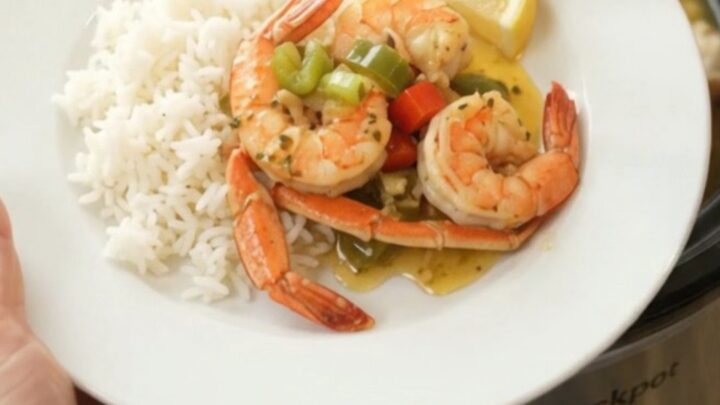
After cooking, the slow cooker will be bubbling gently, and the butter will have turned a rich golden color. The shrimp are pink and curled, and the crab clusters are bright orange-red.
The vegetables have softened and released their juices, mingling with the butter to form a savory sauce. Steam rises with the scent of Old Bay and garlic. The seafood should be tender and fragrant.
Serve and Enjoy
- Serve with Rice and LemonUsing a slotted spoon, transfer the seafood and vegetables to a large serving platter or individual plates. Serve immediately with steamed jasmine rice and lemon wedges on the side. Spoon some of the garlic butter sauce over the top.Look for The seafood should be glossy with butter and the vegetables tender.Tip Provide extra melted butter and Old Bay on the table for guests to add.
As you lift the seafood with a slotted spoon, the butter sauce drips off, coating the crab and shrimp. The vegetables are tender and glistening. The dish is ready to be plated over rice with lemon wedges. The final presentation is colorful and inviting, with the golden butter pooling on the plate. The first bite is juicy, buttery, and full of coastal flavor.
Common mistakes
One common mistake is stirring the ingredients during cooking, which can break the crab clusters and make the shrimp tough. Another is using frozen shrimp without thawing; they will release excess water and dilute the sauce.
Overcooking is a frequent issue—start checking at the minimum time. Also, avoid adding too much liquid; the seafood and vegetables release their own juices, creating a flavorful broth. Finally, don't skip the lemon wedges; they brighten the rich butter sauce.
How to tell it’s done
The dish is done when the shrimp are pink and opaque throughout, and the crab meat is heated through. To be safe, insert an instant-read thermometer into the thickest part of the shrimp; it should read 145°F (63°C).
The crab legs should be hot and the meat easily pulled from the shell. The vegetables should be tender but not mushy. The butter sauce will be bubbling and fragrant. Do not overcook, as shrimp can become rubbery.
- Shellfish: 145°F (63°C) in the thickest part
Up next · Part 3 of 3
4 variations · storage & make-ahead · 5 answers · printable card
Tips, FAQ & printable recipe (Part 3)← Back to the ingredients (Part 1)