Dinner · Part 2 of 3: Instructions
Slow-Cooker Louisiana Seafood and Okra Gumbo Step-by-step instructions
- Prep
- Cook
- Total
- Serves
- 6
Before you start
Before you begin, ensure all your vegetables are cleaned and finely diced. Having the holy trinity ready in uniform pieces ensures they cook evenly throughout the six-hour process. Prepare your seafood by peeling and deveining the shrimp and cutting the catfish into bite-sized, even chunks.
Keep your seafood in the refrigerator until the very last moment to maintain food safety and optimal freshness. Have your measuring cups and your slow cooker ready on a flat, heat-resistant surface near an electrical outlet, and ensure all ingredients are at room temperature if possible before starting the assembly.
Ingredients at a glance (12)
- 1 cup dark roux
- 1 cup diced onion
- 1 cup diced celery
- 1 cup diced bell pepper
- 2 cups sliced okra
- 8 oz smoky tasso ham, diced
- 4 cups seafood stock
- 1 lb blackened catfish fillets, cut into chunks
- 1 lb jumbo gulf shrimp, peeled and deveined
- 3 cups steamed white rice
- 1 tsp file powder
- 1/4 cup sliced scallions
Instructions
Base assembly
- Prepare the baseAdd the dark roux, diced onion, diced celery, diced bell pepper, sliced okra, smoky tasso ham, and seafood stock into the slow cooker ceramic insert. Stir everything together until the roux is thoroughly incorporated into the stock to create a smooth, flavorful base for the gumbo.Look for The mixture should be uniform in color and texture.Tip Ensure the roux is fully dissolved to prevent clumps in the final sauce.
At the end of this phase, all ingredients should be combined in the slow cooker with the roux fully integrated into the stock. The mixture will look dark and thick, reflecting the rich flavors of the roux. Ensure the ingredients are stirred well so that the vegetables and ham are evenly distributed before you secure the lid to begin the long simmer.
Slow simmering
- Slow simmerCover the slow cooker and cook on the low setting for six hours. Allow the flavors of the holy trinity, tasso ham, and seafood stock to meld together into a deep, savory foundation. The slow cooking process ensures the vegetables soften perfectly and the smoky flavor of the ham permeates the liquid base.Look for The gumbo base should be fragrant and thickened.Tip Avoid lifting the lid during this phase to maintain a consistent internal temperature.
After six hours, the gumbo will have transformed into a deeply aromatic, mahogany-colored stew. The holy trinity will have softened significantly, and the stock will have reduced slightly, concentrating the flavors.
The mixture should smell rich and smoky, indicating that the tasso ham has released its essence into the liquid base, creating the perfect foundation for the seafood.
Seafood finishing
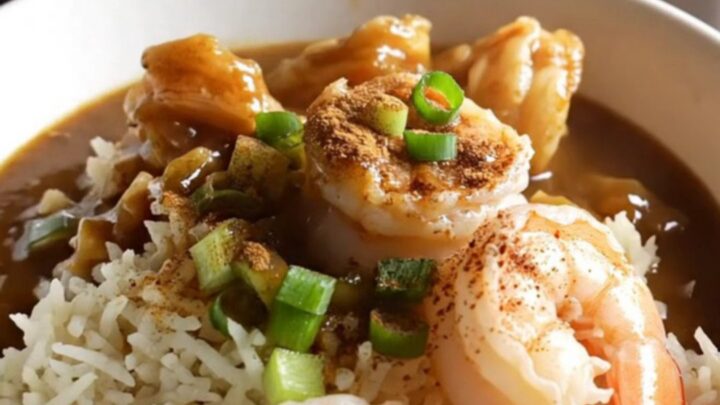
- Add seafood and serveFold in the chunks of blackened catfish and jumbo gulf shrimp. Continue to cook on low for an additional thirty minutes until the fish is opaque and flakes easily and the shrimp are cooked through to 145°F (63°C). Ladle the gumbo over steamed white rice, then sprinkle with file powder and fresh scallions before serving.Look for The shrimp should be pink and curled, and the catfish should flake easily with a fork.Safe temperature 145°F (63°C) internal temperature (shellfish)Tip Do not overcook the seafood, as it can become rubbery if left in the slow cooker for too long.
Once the seafood has cooked for thirty minutes, the final gumbo should be visually appealing with tender chunks of catfish and perfectly pink shrimp. The texture should be thick and coating. Before serving, check that the fish is opaque and the shrimp are cooked through. The final garnish of scallions and file powder adds a fresh, earthy finish that completes the dish.
Common mistakes
One common mistake is overcrowding the slow cooker, which can prevent the gumbo from reaching the proper temperature and consistency. Another frequent error is adding the seafood too early; always reserve the fish and shrimp for the final thirty minutes to avoid a rubbery texture.
Additionally, never skip the roux, as it provides the essential body and flavor profile that defines a true gumbo; using a base that is too light or thin will result in a soup rather than a proper, hearty stew.
How to tell it’s done
The gumbo is ready when the base has thickened into a rich, dark stew and the seafood is perfectly cooked. The catfish should flake easily when tested with a fork, and the shrimp must be opaque, firm, and curled into a distinct 'C' shape.
For food safety, ensure the seafood reaches an internal temperature of 145°F (63°C). The vegetables should be very tender, almost melting into the sauce, and the overall aroma should be deeply smoky and savory.
- Fish: 145°F (63°C) in the thickest part
- Shellfish: 145°F (63°C) in the thickest part
Up next · Part 3 of 3
2 variations · storage & make-ahead · 3 answers · printable card
Tips, FAQ & printable recipe (Part 3)← Back to the ingredients (Part 1)