Dinner · Part 2 of 3: Instructions
Slow Cooker Lamb Stew with Wholegrain Mustard Step-by-step instructions
- Prep
- Cook
- Total
- Serves
- 4
Before you start
Before starting, ensure your slow cooker is clean and placed on a flat, heat-resistant surface. Peel and slice your carrots into uniform rounds, and chop the yellow onion into bite-sized pieces.
If the lamb cubes are larger than one inch, trim them down to ensure they reach the desired tenderness within the cooking timeframe. Have all your ingredients measured and ready to go, as this recipe is designed to be assembled quickly, allowing you to walk away and let the slow cooker handle the rest.
Ingredients at a glance (5)
- 2 lb lamb shoulder or leg, cut into 1-inch cubes
- 3 large carrots, peeled and sliced
- 1 large yellow onion, chopped
- 3 tbsp wholegrain mustard
- 2 cups poultry broth
Instructions
Assembling the Pot
- Prepare the Slow CookerPlace the cubed lamb pieces into the bottom of the slow cooker. Arrange the sliced carrots and chopped onions evenly over the top of the meat.Look for The meat is evenly distributed at the base.Tip Ensure the lamb pieces are uniform in size to promote even cooking.
The base of the slow cooker should be neatly packed with the lamb on the bottom, followed by the colorful layer of carrots and onions. Everything should look organized and ready for the liquid.
Ensure the power cord is clear and the unit is plugged into a dedicated outlet. The ingredients should be cold from the refrigerator, setting the stage for the long, slow transition to a hot, cooked meal.
Adding Aromatics and Liquid
- Add Seasoning and LiquidSpoon the wholegrain mustard directly onto the vegetables and meat. Pour the poultry broth over all the ingredients until everything is partially submerged.Look for The mustard is spread across the surface.Tip Do not stir yet; the liquids will combine during the cooking process.
The mustard should be visible as a distinct layer atop the vegetables, and the broth should be poured gently to avoid splashing. The liquid level should be sufficient to cover most of the ingredients, though they do not need to be completely submerged at this point. The kitchen should remain quiet, with the slow cooker ready to begin the gentle process of heating everything through.
Finalizing the Stew
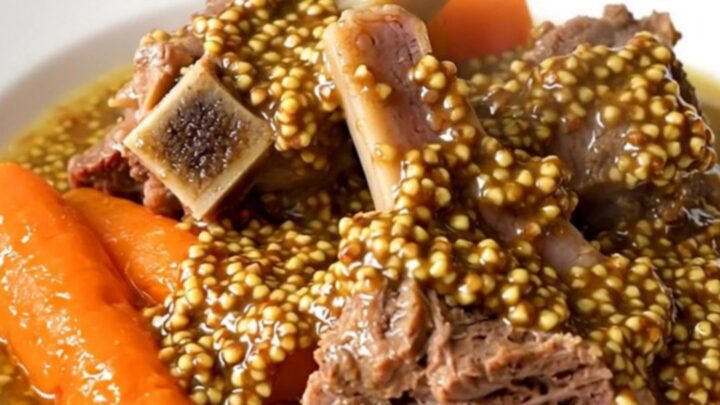
- Slow Cook and ServeCover and cook on low for 6 hours. Check that the lamb reaches an internal temperature of 145°F (63°C). Let the meat rest for 5 minutes before serving the stew hot.Look for The sauce is thick and the lamb pulls apart easily with a fork.Safe temperature 145°F (63°C) internal temperature (steaks, chops and roasts)Tip Serve immediately while the stew is steaming and glossy.
The stew is ready when the kitchen smells savory and inviting. The lamb should be tender, the broth reduced slightly into a glossy sauce, and the vegetables perfectly softened. Before serving, check the internal temperature of the largest piece of lamb to confirm it has reached 145°F (63°C). The texture should be cohesive and the appearance should be consistent with a slow-cooked, hearty dish.
Common mistakes
A common mistake is overcrowding the slow cooker, which can prevent the ingredients from cooking evenly. Ensure there is enough space for the broth to circulate. Another error is stirring the ingredients too early; leaving the mustard and broth to settle on top allows the flavors to develop properly as the heat rises.
Finally, avoid lifting the lid during the first few hours of cooking, as this releases essential heat and moisture, significantly increasing the total cooking time.
How to tell it’s done
The lamb is done when it is fork-tender and pulls apart easily with minimal pressure. It must reach an internal temperature of at least 145°F (63°C).
The carrots should be soft but still hold their shape, and the sauce should appear slightly thickened and glossy. If the meat feels tough or resistant when pierced with a fork, continue cooking for an additional thirty minutes before checking again.
- Steaks, chops and roasts: 145°F (63°C) in the thickest part, then a 3-minute rest
Up next · Part 3 of 3
2 variations · storage & make-ahead · 3 answers · printable card
Tips, FAQ & printable recipe (Part 3)← Back to the ingredients (Part 1)