Dinner · Part 2 of 3: Instructions
Slow Cooker Lamb Shanks with Dried Apricots Step-by-step instructions
- Prep
- Cook
- Total
- Serves
- 2
Before you start
Before beginning, ensure the lamb shanks are thoroughly trimmed of any excess external fat to keep the sauce from becoming too greasy. Peel and slice the red onions into uniform strips to ensure they cook down at the same rate.
Prepare the workspace by clearing sufficient room for the slow cooker and having all ingredients measured and ready to go. Check that the slow cooker is clean and that the heating element is functioning correctly before starting the assembly process.
Ingredients at a glance (5)
- 2 lamb shanks, trimmed of excess fat
- 1 medium red onion, thinly sliced
- 1/2 cup dried apricots
- 1/2 tsp ground cinnamon
- 1 cup warm water
Instructions
Preparation and assembly
- Assemble the slow cookerPlace the raw lamb shanks into the bottom of the slow cooker. Evenly distribute the sliced red onions and the dried apricots over the meat. Ensure the ingredients are arranged in a single layer to promote even heat distribution during the cooking process.Look for The lamb shanks are positioned securely at the bottom of the vessel.Tip Ensure the slow cooker is clean and dry before adding the raw meat.
At the end of this phase, the lamb shanks are resting at the base of the slow cooker, covered with a layer of sliced red onions and dried apricots.
The ingredients should be distributed evenly to ensure that every part of the meat is exposed to the aromatic components. Verify that the ingredients are arranged in a stable manner so they do not shift excessively when the water is added in the next step.
Seasoning and liquid addition
- Season and add liquidSprinkle the ground cinnamon evenly over the ingredients. Pour the warm water carefully into the slow cooker, ensuring it covers the base without displacing the onions and apricots too much. Cover the slow cooker with the lid to trap the heat and moisture inside.Look for The water level should partially submerge the shanks to create a braising liquid.Tip Use warm water to help the cooking process start immediately once the heat is turned on.
Once the cinnamon is sprinkled and the water is poured, the slow cooker is ready to be sealed. The water should be visible around the shanks, creating the environment necessary for the braising process. Check that the lid is tightly fitted to maintain the internal steam pressure, which is vital for achieving the desired tenderness during the long cooking duration ahead.
Slow cooking and final resting
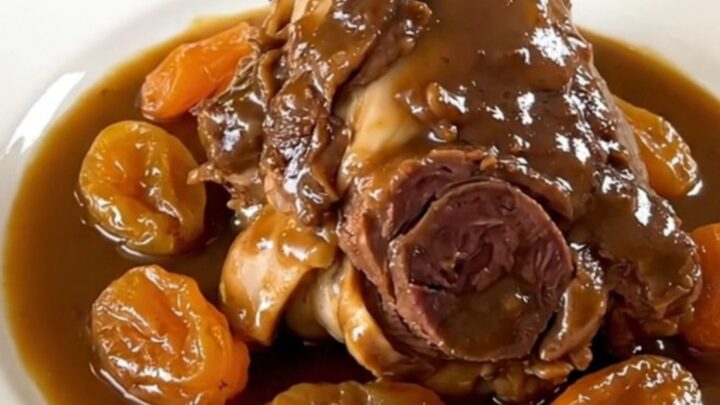
- Cook and serveCook on low heat for six hours until the meat is fork-tender and pulls away from the bone. Once cooked, ensure the internal temperature reaches at least 145°F (63°C). Remove the lamb carefully from the pot and let it rest for five minutes before serving with the softened apricots and onions.Look for The meat is extremely tender and the sauce has thickened slightly.Safe temperature 145°F (63°C) internal temperature (steaks, chops and roasts)Tip Letting the meat rest ensures the juices redistribute for a better texture.
The final phase concludes when the lamb is fork-tender and the sauce has reduced into a flavorful, glossy coating. The meat should be removed carefully and allowed to rest for five minutes, which allows the juices to stabilize. Ensure the final temperature is confirmed before serving, and check that the apricots have softened sufficiently to provide the intended sweetness to the dish.
Common mistakes
A common mistake is overcrowding the slow cooker, which prevents the heat from circulating evenly and can result in unevenly cooked meat. Another error is failing to trim the excess fat from the shanks, which can make the final sauce feel heavy and oily.
Additionally, using water that is too cold can unnecessarily delay the start of the cooking cycle. Always ensure the shanks are fully submerged to allow for consistent braising, and avoid lifting the lid frequently, which causes heat loss.
How to tell it’s done
The lamb is perfectly done when the meat is exceptionally tender and begins to pull away from the bone with only a slight tug of a fork. The internal temperature must reach at least 145°F (63°C) for safety. The texture should be soft and succulent, not stringy or dry.
If the meat still offers resistance when pierced, continue cooking for an additional thirty minutes, as the connective tissue needs more time to break down properly into a tender, melt-in-the-mouth consistency.
- Steaks, chops and roasts: 145°F (63°C) in the thickest part, then a 3-minute rest
Up next · Part 3 of 3
2 variations · storage & make-ahead · 3 answers · printable card
Tips, FAQ & printable recipe (Part 3)← Back to the ingredients (Part 1)