Dinner · Part 2 of 3: Instructions
Slow Cooker Kielbasa Pasta Shells with Boursin Step-by-step instructions
- Prep
- Cook
- Total
- Serves
- 6
Before you start
Before starting, slice the kielbasa into 1/2-inch thick diagonal medallions. Measure out the pasta shells and the roasted red pepper cream sauce. If using a store-bought sauce, have it ready.
Shred the fontina cheese if not already shredded. Have the Boursin cheese at room temperature for easier melting, though it can be added straight from the fridge. Ensure the slow cooker is clean and ready to use.
Ingredients at a glance (5)
- 2 lb smoked kielbasa, sliced diagonally into 1/2-inch medallions
- 12 oz medium conchiglie pasta shells
- 2 cups smoky roasted red pepper cream sauce
- 1 wheel garlic-and-fine-herbs Boursin cheese (5.2 oz)
- 1 1/2 cups shredded Italian fontina cheese
Instructions
Layer and Cook
- Layer the IngredientsPlace the sliced kielbasa medallions in the bottom of a 6-quart slow cooker in an even layer. Add the pasta shells on top, then pour the roasted red pepper cream sauce over the pasta, making sure the sauce coats the shells and kielbasa evenly.Look for The kielbasa should be mostly covered by the sauce.Tip Use a spoon to gently toss the pasta and sauce together if needed, but avoid stirring too much.
- Add CheesesPlace the wheel of garlic-and-fine-herbs Boursin cheese in the center of the slow cooker. Sprinkle the shredded fontina cheese over the top, covering the Boursin and the pasta surface.Look for The top should be covered with shredded cheese.Tip Keep the Boursin whole so it melts slowly and creates a creamy sauce.
After layering, the slow cooker should look neat with the kielbasa on the bottom, pasta in the middle, and sauce covering everything.
The Boursin wheel sits in the center, and the fontina covers the top. As it cooks, the sauce will begin to bubble and the cheese will melt, filling the kitchen with a savory, creamy aroma.
Stir and Finish
- Cook on LowCover the slow cooker and cook on low for 3 to 4 hours, until the pasta is tender and the cheese is melted and bubbly. Do not stir during the first 2 hours to allow the pasta to absorb the sauce and cook evenly.Look for After 3 hours, the sauce should be bubbling and the cheese fully melted.Tip If the sauce looks too thick, add a splash of water or broth, but not too much.
- Stir GentlyAfter the pasta is tender, stir the mixture gently to combine the melted Boursin and fontina with the sauce and pasta. Be careful not to break the shells. The sauce should be creamy and coat each shell.Look for The sauce should be smooth and the cheese fully incorporated.Tip Use a soft spatula or large spoon to fold the ingredients together.
Once the pasta is tender and the cheese is melted, the mixture should look cohesive and creamy. The sauce should be thick enough to cling to the pasta, and the kielbasa should be glistening. The smell will be rich and cheesy with a hint of smokiness. Stir gently to combine, then serve.
Serve and Enjoy
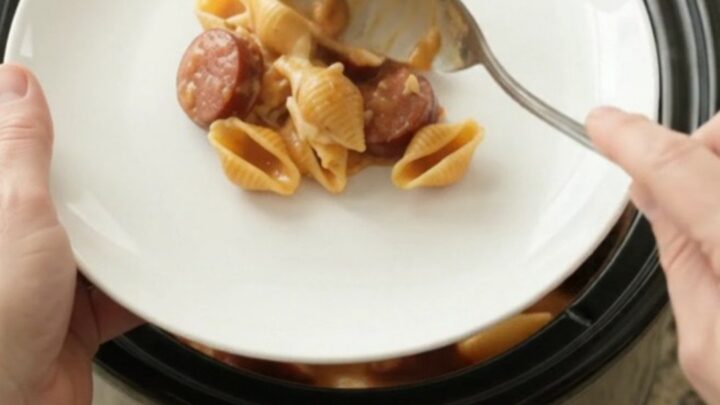
- Serve HotSpoon the hot pasta onto plates or into bowls. Serve immediately while the cheese is still stretchy and the sauce is bubbling. The dish is best enjoyed fresh from the slow cooker.Look for The pasta should be steaming and the cheese pulls in long strands.Tip For an extra touch, sprinkle with fresh parsley or black pepper before serving.
When serving, the pasta should be steaming and the cheese should stretch as you spoon it. The dish will look appetizing with the creamy red sauce and chunks of kielbasa. The texture should be creamy and satisfying, with each bite delivering a mix of pasta, sausage, and cheese.
Common mistakes
One common mistake is stirring the pasta too early, which can cause the shells to break and the starch to make the sauce gummy. Another is using too much liquid, which can make the dish soupy.
Stick to the recommended sauce amount and avoid adding extra liquid unless the sauce looks too thick. Also, resist the urge to open the lid frequently, as this lets out heat and prolongs cooking time.
How to tell it’s done
The dish is done when the pasta is tender but still holds its shape, and the cheese is fully melted and bubbly. The sauce should be creamy and coat the pasta and kielbasa evenly.
To check, taste a piece of pasta to ensure it is cooked through. There is no raw protein in this recipe, so no internal temperature check is needed.
Up next · Part 3 of 3
4 variations · storage & make-ahead · 5 answers · printable card
Tips, FAQ & printable recipe (Part 3)← Back to the ingredients (Part 1)