Dinner · Part 2 of 3: Instructions
Slow Cooker Jerk Spareribs with Orange Glaze Step-by-step instructions
- Prep
- Cook
- Total
- Serves
- 4
Before you start
Start by ensuring your pork spareribs are clean and cut into manageable rib sections. If the ribs are very long, trimming them into smaller, uniform pieces will help them fit better in the slow cooker and ensure they cook evenly.
Have all your measured ingredients ready on your counter before you begin to streamline the assembly process. Verify that your slow cooker insert is clean and dry.
Ingredients at a glance (4)
- 3 lb pork spareribs, cut into individual rib sections
- 1 large red onion, sliced into half-moons
- 1/4 cup jerk seasoning with brown sugar
- 1/2 cup orange juice
Instructions
Preparation and layering
- Layering the ingredientsPlace the pork sparerib sections into the slow cooker insert, arranging them around the walls to ensure even cooking. Add the sliced red onion on top of the ribs.Look for Ribs should be packed snugly against the sides of the slow cooker insert.Tip Avoid overfilling the slow cooker beyond its recommended capacity to ensure even heat distribution.
The ribs should be arranged neatly in the slow cooker to allow for even heat distribution. Ensure the red onion slices are distributed throughout the ribs to infuse the dish with their savory, slightly sweet flavor as they soften during the cooking process.
Seasoning and braising
- Seasoning and braisingSprinkle the jerk seasoning with brown sugar evenly over the ribs and onions. Pour the orange juice over the top to provide moisture and acidity for the braising liquid.Look for Ensure the seasoning covers the meat surface thoroughly.Tip The brown sugar in the seasoning will caramelize during the long, slow cook, creating a deep, rich color.
The jerk seasoning and orange juice should be added uniformly to ensure every piece of meat is adequately coated.
Once covered, the slow cooker should be set to the appropriate low heat setting to begin the slow, steady process of rendering the fat and softening the meat.
Slow cooking and resting
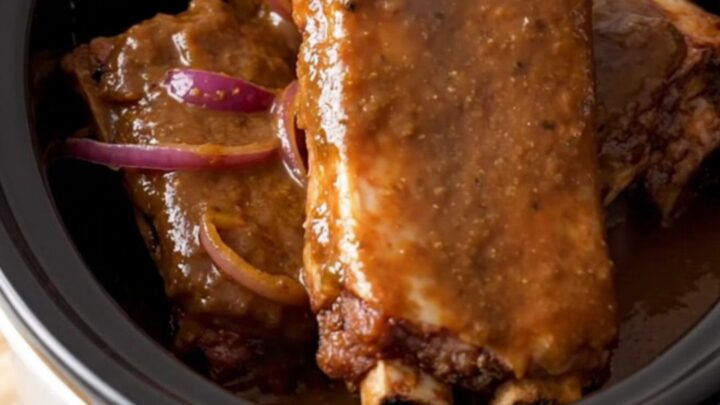
- Slow cookingCover and cook on low for 6 hours or until the ribs reach an internal temperature of 145°F (63°C). Let the meat rest for at least 5 minutes before serving to ensure tenderness.Look for The sauce should be thick and glossy, and the meat should pull away easily from the bone.Safe temperature 145°F (63°C) internal temperature (steaks, chops and roasts)Tip Check the internal temperature in the thickest part of the meat to confirm it is fully cooked.
At the end of the cooking cycle, the kitchen should be filled with the aromatic scent of spices and citrus. The sauce must have thickened into a sticky, pourable consistency, and the meat should be visibly tender and well-cooked, ready for a brief rest before serving.
Common mistakes
Avoid skipping the resting time, as this allows the juices to redistribute throughout the meat, ensuring every bite remains moist.
Do not be tempted to cook the ribs on a high setting for a shorter time, as this can lead to tougher meat that does not properly absorb the jerk seasoning. Finally, ensure the ribs are not overcrowded, as this prevents the heat from circulating properly.
How to tell it’s done
The ribs are perfectly done when the meat is tender enough to easily pull away from the bone with a fork. Using a meat thermometer, ensure the thickest part of the pork reaches an internal temperature of 145°F (63°C).
The sauce should appear thick, glossy, and dark, having reduced into a rich glaze that coats the ribs thoroughly without being overly watery.
- Steaks, chops and roasts: 145°F (63°C) in the thickest part, then a 3-minute rest
Up next · Part 3 of 3
2 variations · storage & make-ahead · 3 answers · printable card
Tips, FAQ & printable recipe (Part 3)← Back to the ingredients (Part 1)