Dinner · Part 3 of 3: Tips & recipe card
Slow-Cooker Kakuni Japanese Sweet Soy Braised Pork Belly Tips, FAQ & printable recipe
- Prep
- Cook
- Total
- Serves
- 6
Tips for success
For the best texture, do not rush the cooking. The low heat is essential for breaking down the collagen without drying out the meat. If your slow cooker runs hot, check the pork at the 7-hour mark.
To intensify the glaze, remove the pork after cooking and simmer the sauce on the stovetop until it thickens.
Then spoon it over the meat before serving. This extra step gives a beautiful shine and concentrated flavor.
Variations
- Spicy Kakuni: Add 1-2 dried red chilies or a teaspoon of gochujang to the braising liquid for a spicy kick. The heat balances the sweetness and adds a new dimension.
- Citrus Twist: Add a strip of orange or yuzu zest to the slow cooker during the last hour of cooking. The citrus brightens the rich flavors and adds a fresh aroma.
- Vegetable Add-ins: Add daikon radish, carrots, or hard-boiled eggs to the slow cooker during the last hour. They absorb the savory glaze and become tender and flavorful.
- Gluten-Free Option: Use tamari or coconut aminos instead of soy sauce, and ensure your mirin is gluten-free. Serve with rice and gluten-free condiments.
Storage and make-ahead
- Fridge
- Refrigerate leftovers in an airtight container for up to 4 days. Reheat gently before serving.
- Freezer
- Freeze cooked kakuni in a freezer-safe container for up to 3 months. Thaw overnight in the refrigerator and reheat gently.
- Reheat
- Reheat in a saucepan over low heat, adding a splash of water or dashi if needed. Alternatively, microwave in 30-second bursts until hot.
Store leftover kakuni in an airtight container in the refrigerator for up to 4 days. The flavors will meld and deepen overnight.
Reheat gently in a saucepan or microwave, adding a splash of water if the sauce has thickened too much.
This dish can be made up to 2 days ahead. Prepare as directed, cool, and refrigerate.
Reheat gently on the stovetop or in the microwave. The pork tastes even better the next day as the flavors meld.
Serving ideas
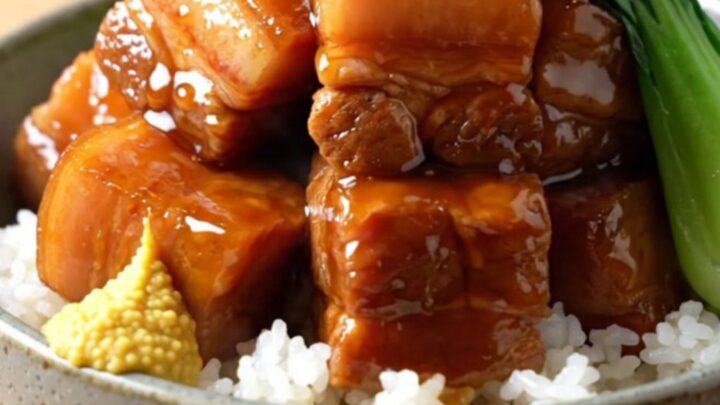
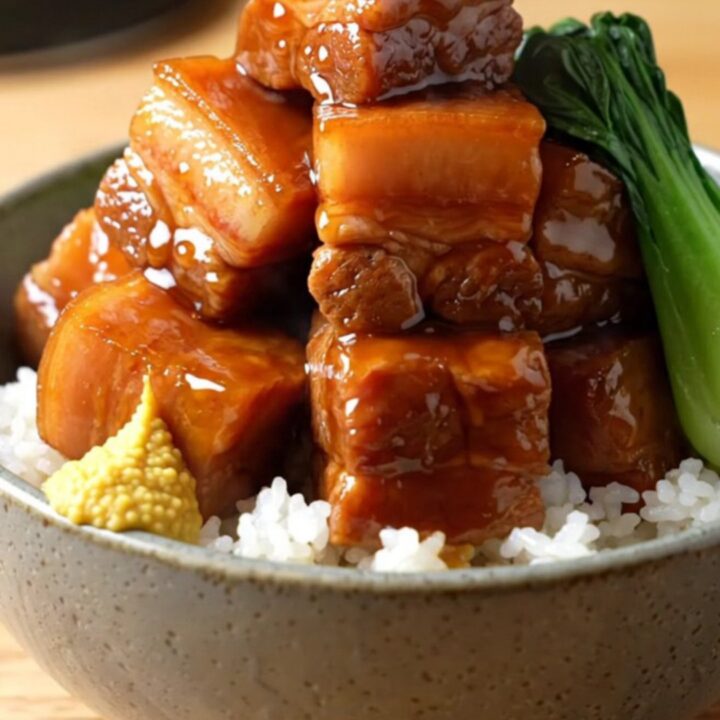
Serve kakuni over steamed rice to soak up the rich sauce. Blanched baby bok choy adds a fresh, crisp contrast.
A small dab of karashi mustard provides a subtle heat that cuts through the richness of the pork.
For a complete meal, add a simple cucumber salad or pickled vegetables on the side. The dish is also delicious with ramen noodles instead of rice, or as a filling for bao buns.
Frequently asked questions
Can this recipe be made without a slow cooker?
What is the best cut of pork for kakuni?
Can the sauce be thickened further?
Is it necessary to use dashi stock?
How do you store and reheat leftovers?
Slow-Cooker Kakuni Japanese Sweet Soy Braised Pork Belly
Ingredients
- 3 lb pork belly, cut into 2-inch cubes
- 1 cup dashi stock
- 1/2 cup soy sauce
- 1/2 cup mirin
- 1/2 cup sake
- 1/3 cup brown sugar
- 1 piece fresh ginger root, sliced
- Steamed rice, for serving
- Blanched baby bok choy, for serving
- Karashi mustard, for serving
Instructions
- Place the cubed pork belly in the slow cooker in a single layer if possible. Add the dashi stock, soy sauce, mirin, sake, brown sugar, and sliced ginger. Stir gently to combine and coat the pork evenly.
- Cover the slow cooker with the lid and set it to LOW. Cook for 7.5 hours, or until the pork belly is fork-tender and the sauce has reduced to a glossy glaze. Let it rest for 3 minutes before slicing.
- After 7.5 hours, test a piece of pork belly with a fork. It should pull apart easily and be very tender. If not, continue cooking for another 30 minutes and check again. Let it rest for 3 minutes before slicing.
- Turn off the slow cooker and let the pork rest in the warm sauce for at least 3 minutes before serving. This allows the juices to redistribute and the meat to firm up slightly.
- Bring a pot of water to a boil. Add the baby bok choy and cook for 1 to 2 minutes, until bright green and crisp-tender. Drain and set aside.
- Spoon steamed rice into bowls. Top with the braised pork belly cubes, a few pieces of blanched bok choy, and a small dab of karashi mustard on the side. Spoon a little of the braising glaze over the top.
Estimated nutrition per serving
- Calories
- 780
- Protein
- 28 g
- Carbohydrates
- 22 g
- Fat
- 62 g
Next recipe

Crockpot Apricot Ginger and Soy Glazed Pork Tenderloin
See the recipe → →This recipe is based on a short cooking video and is published under the pen name Clara Weller. It was checked before publication, but errors can slip through. Nutrition, when shown, is an estimate. Read more in our editorial policy and on our food safety page.
More recipes to try
Creamy Mushroom & Herb Smothered Pork Loin Roast
Total time: 6 h 25 min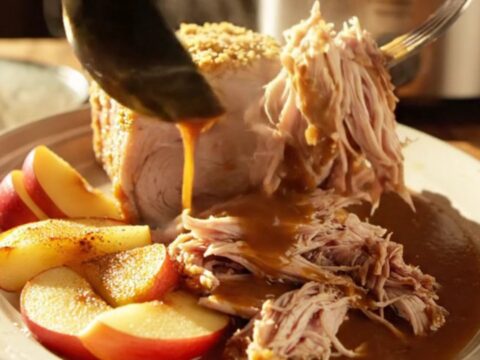
Slow-Cooker Brown Sugar and Dijon Pork Loin with Apples
Total time: 5 h 50 min
Slow-Cooker Chipotle Lime Pork Tenderloin Fajitas
Total time: 3 h 45 min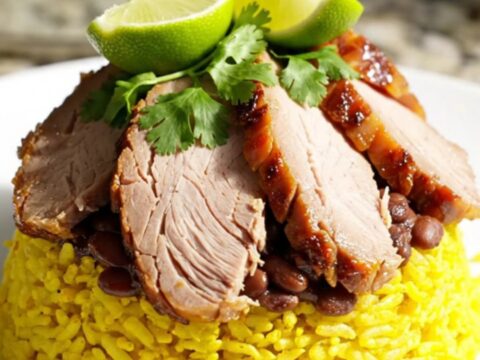
Slow-Cooker Cuban Roast Pork Loin with Black Beans
Total time: 6 h 15 min
Slow-Cooker Japanese Chashu Pork Belly for Ramen
Total time: 7 h 30 min