Dinner · Part 3 of 3: Tips & recipe card
Slow-Cooker Japanese Gyudon Beef Rice Bowls Tips, FAQ & printable recipe
- Prep
- Cook
- Total
- Serves
- 6
Tips for success
For a deeper flavor profile, you can toast your ginger slightly before grating it, or add a small piece of kombu to the slow cooker during the simmering process, removing it before serving.
If you prefer a slightly spicier kick, a small amount of shichimi togarashi, a Japanese seven-spice blend, can be sprinkled over the top of the bowls just before serving. This adds a subtle heat that cuts through the richness of the beef and egg yolk.
To achieve the perfect jammy egg yolk, you can also soft-boil your eggs for six minutes and peel them before placing them on top of the bowl. This provides a more consistent texture than using raw yolks if you are concerned about food safety or prefer a firmer consistency.
Additionally, ensure your rice is freshly steamed and fluffy, as this serves as the canvas for the flavorful beef and sauce, and the texture of the rice is just as important as the beef itself.
Variations
- Spicy Gyudon: Add two tablespoons of gochujang or a teaspoon of hot chili oil to the dashi broth mixture before cooking to provide a gentle, warming heat to the final dish.
- Mushroom Gyudon: Incorporate two cups of sliced shiitake or enoki mushrooms during the layering phase. The mushrooms absorb the dashi broth beautifully and add a wonderful earthy dimension to the beef bowl.
Storage and make-ahead
- Fridge
- Keep in an airtight container for up to 3 days. Ensure the mixture cools to room temperature within 2 hours before refrigerating.
- Freezer
- Freeze in a freezer-safe container for up to 1 month. Thaw in the refrigerator overnight before reheating.
- Reheat
- Reheat in a saucepan over low heat or in the microwave until the beef reaches an internal temperature of 165°F (74°C).
Store any leftover beef and onion mixture in an airtight container in the refrigerator for up to 3 days. Do not store the rice and beef together, as the rice will absorb too much liquid and become mushy. Keep the rice in a separate container and combine them only when you are ready to serve. If the sauce has thickened too much in the fridge, add a tablespoon of water when reheating to loosen it up.
This dish is perfect for making ahead as the flavors continue to develop while stored. You can prepare the entire beef and onion mixture a day in advance and reheat it gently on the stovetop or in the microwave. It is best to cook the rice fresh on the day of serving to ensure the best texture, and add the raw or soft-boiled egg yolk immediately before consumption to keep it at its best quality.
Serving ideas
Serve the Gyudon in deep, wide bowls to allow for easy mixing of the beef, sauce, rice, and egg yolk. The depth of the bowl helps retain the heat of the rice and the sauce, ensuring every bite is warm and comforting.
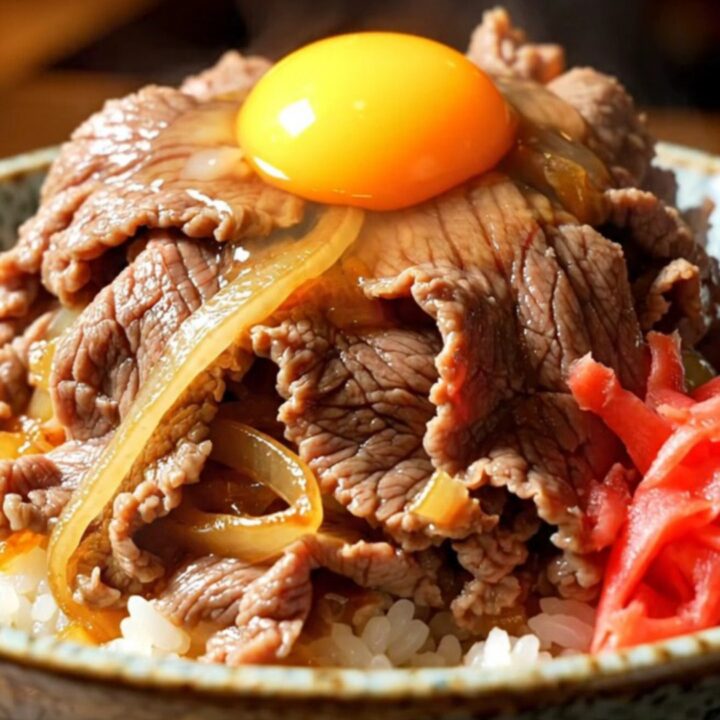
Arrange the beef and onions neatly on one side of the rice, leaving space for the egg yolk and a small pile of pickled ginger on the side, which adds a bright, acidic contrast to the savory beef.
Encourage guests to break the egg yolk and mix it thoroughly into the hot rice and beef before eating. This coats the rice in a rich, velvety sauce that creates the signature mouthfeel of a traditional Gyudon.
The pickled ginger acts as a palate cleanser, so advise diners to take small bites of it between mouthfuls of the savory beef to refresh their taste buds and appreciate the nuances of the dashi-based sauce.
Frequently asked questions
Can this be made with ground beef instead of ribeye?
Is it possible to use a different cut of meat?
Why is it important to use dashi broth?
Slow-Cooker Japanese Gyudon Beef Rice Bowls
Ingredients
- 2.5 lb thinly shaved ribeye
- 3 yellow onions, thinly sliced
- 250 ml dashi broth
- 80 ml mirin
- 80 ml soy sauce
- 1 tbsp grated fresh ginger
- Hot Japanese rice, for serving
- 6 egg yolks, for serving
- Pickled ginger, for serving
Instructions
- Place the thinly sliced onions at the bottom of the slow cooker. Layer the thinly shaved ribeye evenly over the onions. Combine the dashi broth, mirin, soy sauce, and grated ginger in a small bowl, then pour the mixture over the beef and onions.
- Cover the slow cooker and set it to cook on LOW for 4 hours. Ensure the beef reaches an internal temperature of at least 145°F (63°C) and let the meat rest at least 3 minutes before serving to ensure it is thoroughly cooked through and safe to eat.
- Prepare six bowls with a base of hot Japanese rice. Pile the cooked beef and onions on top of the rice. Carefully place one egg yolk in the center of each bowl and garnish with a portion of pickled ginger.
Estimated nutrition per serving
- Calories
- 520
- Protein
- 32.5 g
- Carbohydrates
- 45.2 g
- Fat
- 22.8 g
- Fiber
- 1.5 g
- Sugar
- 8 g
- Sodium
- 950 mg
Next recipe
Cajun Andouille Garlic-Butter Crockpot Steak Bites
See the recipe → →This recipe is based on a short cooking video and is published under the pen name Clara Weller. It was checked before publication, but errors can slip through. Nutrition, when shown, is an estimate. Read more in our editorial policy and on our food safety page.
More recipes to try
Honey Sriracha Crockpot Steak Bites with Sticky Glaze
Total time: 5 h 20 min
Slow-Cooker Korean Bulgogi Steak Tips
Total time: 5 h 15 min
Old-Fashioned Crockpot Shipwreck Beef Stew
Total time: 8 h 20 min
Easy Crockpot Beef and Broccoli Takeout Fakeout
Total time: 5 h 25 min
Creamy Tuscan Garlic Parmesan Crockpot Steak Bites
Total time: 5 h 20 min